
Loading, please wait...
LOT 1113
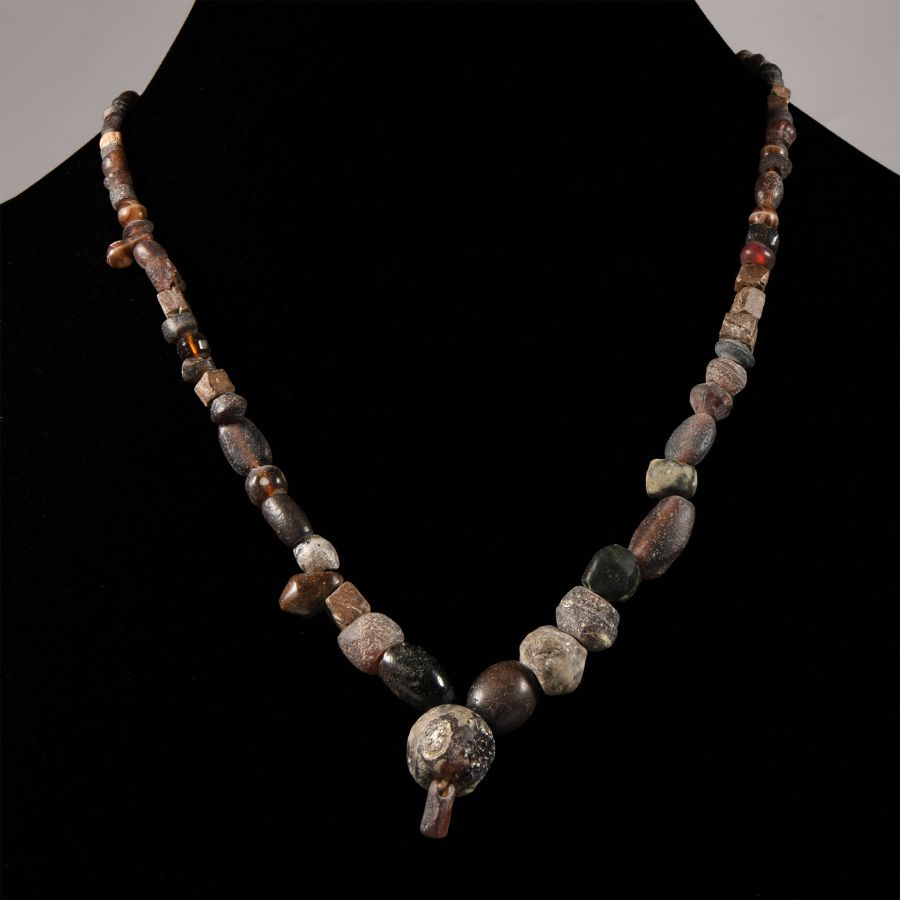
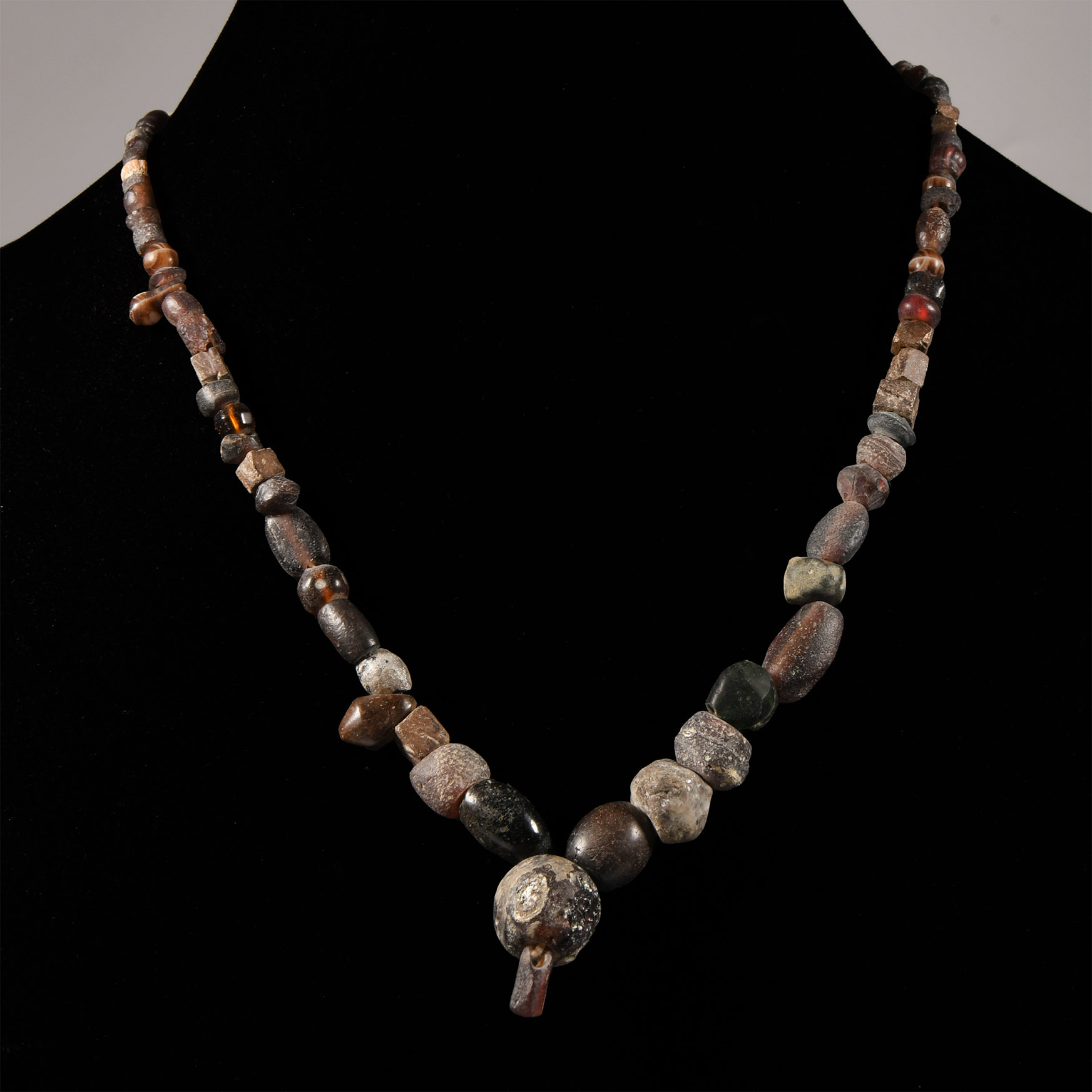
Western Asiatic Mixed Bead Necklace String
1ST MILLENNIUM B.C. AND LATER
20 in. (46 grams total, 51 cm long).
Graduated group of oblate, cuboid, annular and other beads with barrel-shaped centrepiece. [No Reserve]
ProvenanceAcquired 1980-2015.
Ex Abelita family collection.
TimeLine Auctions follows a vetting process to ensure the authenticity and legality of all items, reinforcing our commitment to integrity and responsible trading. Each antiquity, antique, and coin lot undergoes thorough examination by a vetting committee of at least ten external specialists, professional trade association members, scientists, and archaeologists: Our Vetting Process
AUCTIONS:
TimeLine is a leading auction house specialising in antiquities, ancient art, collectables, natural history, coins, medals, and books. Our auctions offer museums, collectors, historians, and enthusiasts the opportunity to acquire unique and historically significant pieces.
-
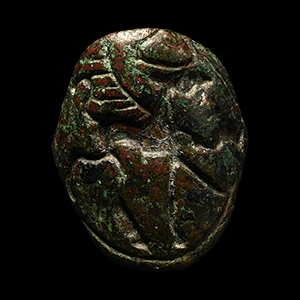
Large Luristan Bronze Ring with Animals
1st millennium B.C.Sold for (Inc. bp): £1,820
With thick hoop and opposed animal-heads to the reverse, large ellipsoid bezel with incuse winged bull motif. 34 grams, 30.15 mm overall, 22 x 20.4 mm internal diameter (approximate size British T 1/2, USA 9 3/4, Europe 21.89, Japan 21)
with Pierre Bergé & Associés, Paris, 23 April 2001, no.297 (part). Acquired by an important European family collection. Accompanied by copies of the relevant Pierre Bergé & Associés catalogue pages. This lot has been checked against the Interpol Database of stolen works of art and is accompanied by search certificate no.12055-213660. -
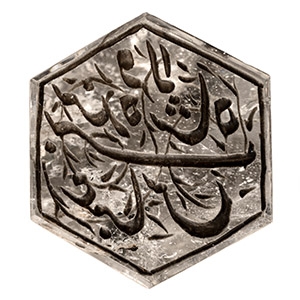
Western Asiatic Rock Crystal Stamp Seal
19th-20th century A.D.Estimate: £200 - 300 (+bp*)
Opening Bid: £80
Tapering, hexagonal in plan with incuse calligraphic inscription; pierced at the narrow end. 21.1 grams, 35 mm
Ex London, UK, gallery, 1971. -
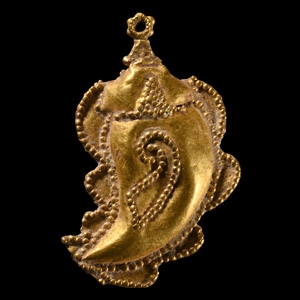
Abbasid Gold Pendant
Circa 8th-10th century A.D.Sold for (Inc. bp): £468
Formed as a paisley motif with a cusped edge and applied granulation; granulated suspension loop to the top. 5.50 grams, 34.60 mm
From a late Japanese specialist collector, 1970-2000s. Accompanied by a previous catalogue information slip.
