
Loading, please wait...
LOT 1124
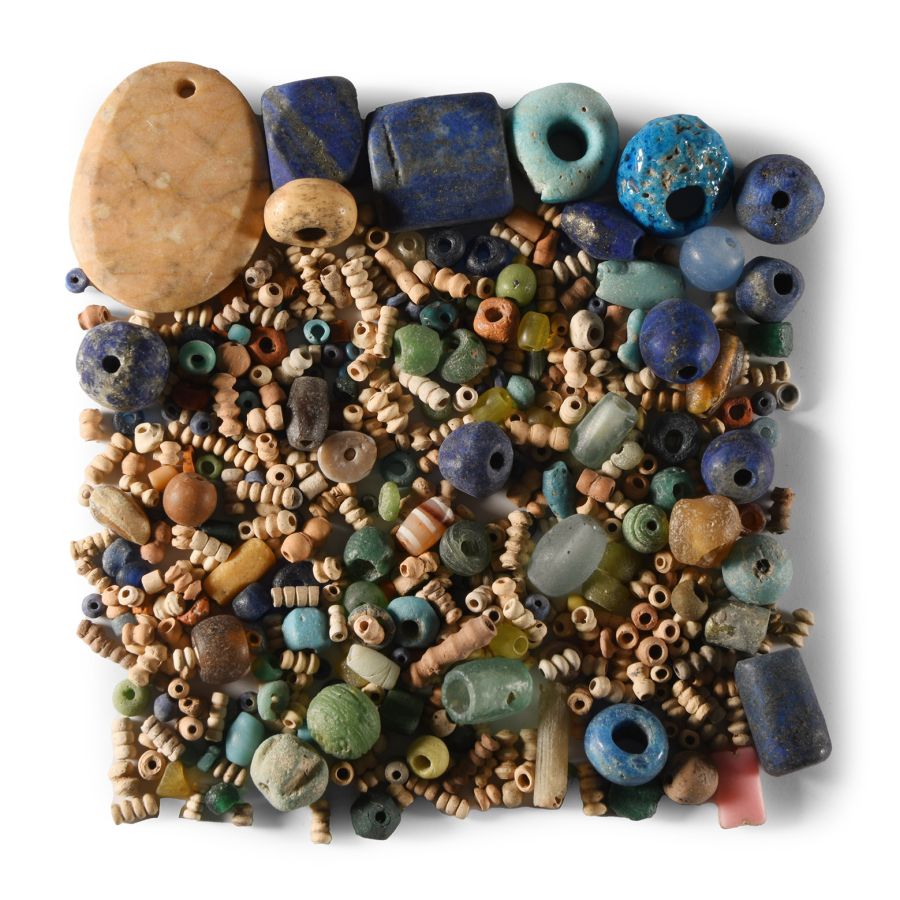
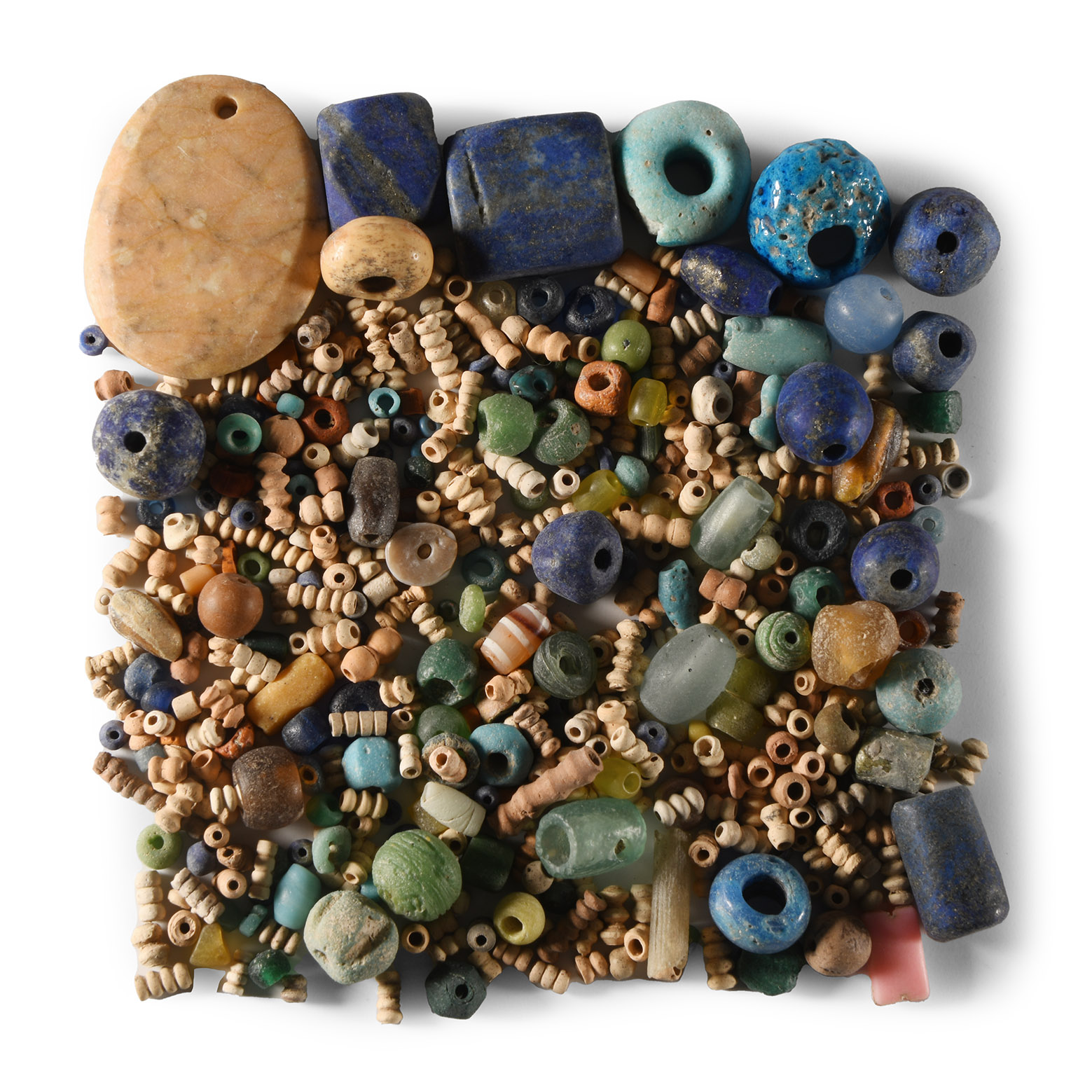
Western Asiatic Mixed Bead Group
1ST MILLENNIUM B.C. AND LATER
1/8 - 1 1/4 in. (69 grams total, 2-33 mm).
A mix of Asian, African, faience, terracotta, stone and shell beads. [No Reserve]
ProvenanceAcquired 1980-2015.
Ex Abelita family collection.
TimeLine Auctions follows a vetting process to ensure the authenticity and legality of all items, reinforcing our commitment to integrity and responsible trading. Each antiquity, antique, and coin lot undergoes thorough examination by a vetting committee of at least ten external specialists, professional trade association members, scientists, and archaeologists: Our Vetting Process
AUCTIONS:
TimeLine is a leading auction house specialising in antiquities, ancient art, collectables, natural history, coins, medals, and books. Our auctions offer museums, collectors, historians, and enthusiasts the opportunity to acquire unique and historically significant pieces.
-
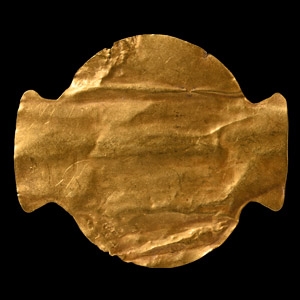
Mesopotamian Gold 'Butterfly' Bead
4th-3rd millennium B.C.Sold for (Inc. bp): £234
Flat bead formed from two sheets of gold, discoid with a trapezoidal spur to each end. 3.01 grams, 35 mm
From a late Japanese specialist collector, 1970-2000s. -
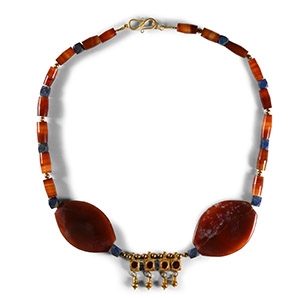
Western Asiatic Bead Necklace with Gold Pendant
1st century B.C. and laterEstimate: £2,000 - 3,000 (+bp*)
Opening Bid: £1,000
Composed of barrel-shaped carnelian beads interspersed with corner-less cubed lapis lazuli beads and spherical gold beads; central feature comprising two large delicate flattish oval-shaped carnelian beads flanking a rectangular gold-clad pendant set with four garnets, the core made of deep blue glass, four pendants below; a restrung designer necklace with a modern clasp. 51 grams, 49.5 cm
London art market before 2000. Private collection. This lot has been checked against the Interpol Database of stolen works of art and is accompanied by search certificate no.12064-214177. -
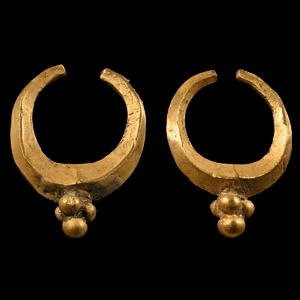
Western Asiatic Gold Earrings
6th-4th century B.C.Estimate: £400 - 600 (+bp*)
Opening Bid: £210
Matched pair, crescentic with chamfered profile, granule cluster to the apex. 5.48 grams total, 18-19 mm
From a late Japanese specialist collector, 1970-2000s.
