
Loading, please wait...
LOT 1226
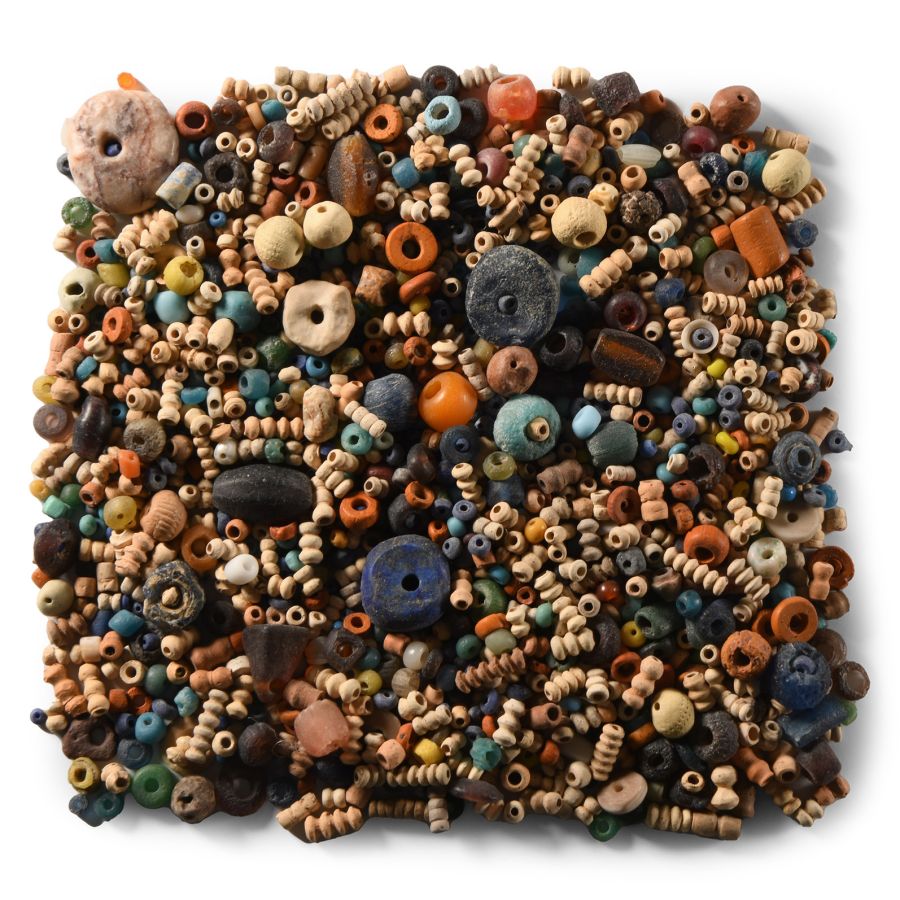
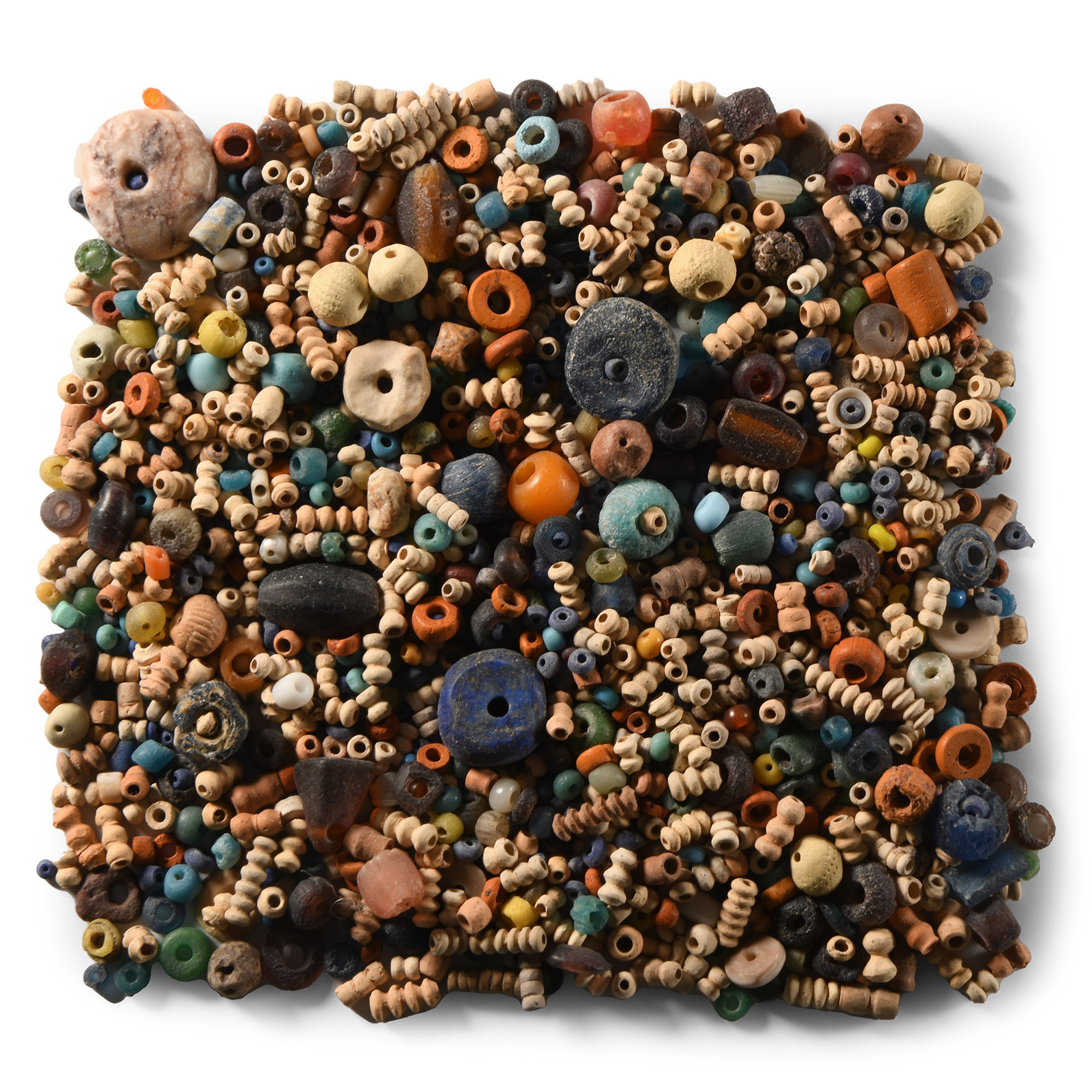
Western Asiatic Mixed Bead Group
1ST MILLENNIUM B.C. AND LATER
1/8 - 5/8 in. (65 grams total, 1-16 mm).
A mix of Asian, African, faience, terracotta, stone and shell beads. [No Reserve]
ProvenanceAcquired 1980-2015.
Ex Abelita family collection.
TimeLine Auctions follows a vetting process to ensure the authenticity and legality of all items, reinforcing our commitment to integrity and responsible trading. Each antiquity, antique, and coin lot undergoes thorough examination by a vetting committee of at least ten external specialists, professional trade association members, scientists, and archaeologists: Our Vetting Process
AUCTIONS:
TimeLine is a leading auction house specialising in antiquities, ancient art, collectables, natural history, coins, medals, and books. Our auctions offer museums, collectors, historians, and enthusiasts the opportunity to acquire unique and historically significant pieces.
-
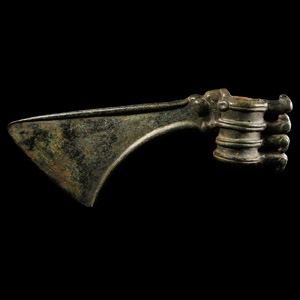
Luristan Bronze Spike-Butted Axehead
11th-8th century B.C.Estimate: £3,500 - 4,500 (‡+bp*)
Opening Bid: £1,750
Blade with folded upper and lower edge, cylindrical socket with projecting ribs formed as the necks and heads of birds, blace 'projecting' from the mouth of a roaring lion at the neck. 478 grams, 22.5 cm
Ex Parisian private collection. with Cuvreau Expertises Enchères S.A., sale 60, 21 June 2009, lot 105. This lot has been checked against the Interpol Database of stolen works of art and is accompanied by search certificate number no.11876-206787. -
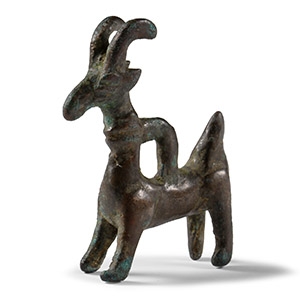
Luristan Bronze Amulet of a Goat
1000-700 B.C.Sold for (Inc. bp): £260
Standing modelled in the round with head erect, curved horns, loop to shoulder. 13.6 grams, 37 mm
Private collection, Mr. A.A., London, acquired in the 1970s. with Bonhams, London, 8 May 2013, no.229 (Part). -
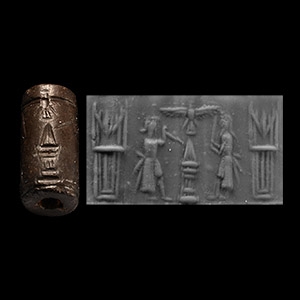
Mesopotamian Haematite Cylinder Seal with Altar
2nd-1st millennium B.C.Sold for (Inc. bp): £910
With intaglio frieze depicting two worshippers addressing an altar with faravahar above, heavy barred door to the side; supplied with a museum-quality impression. 2.83 grams, 17 mm
Ex S collection, London, UK, 1980-1990s.
