
Loading, please wait...
LOT 1296
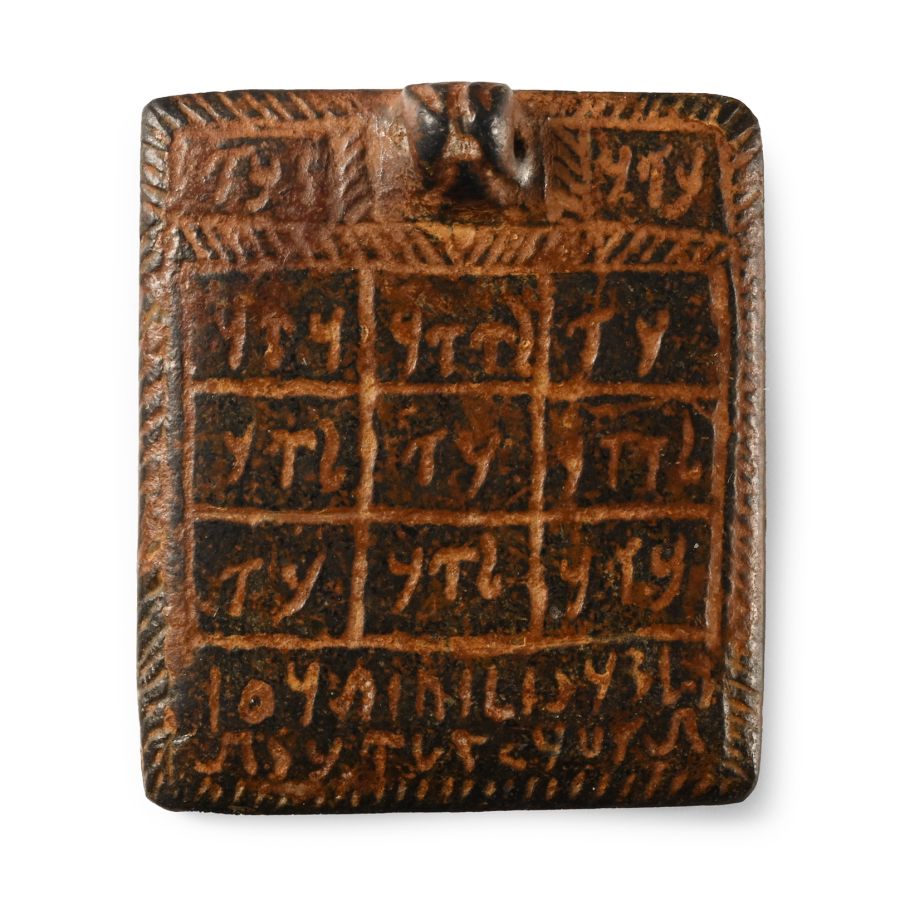
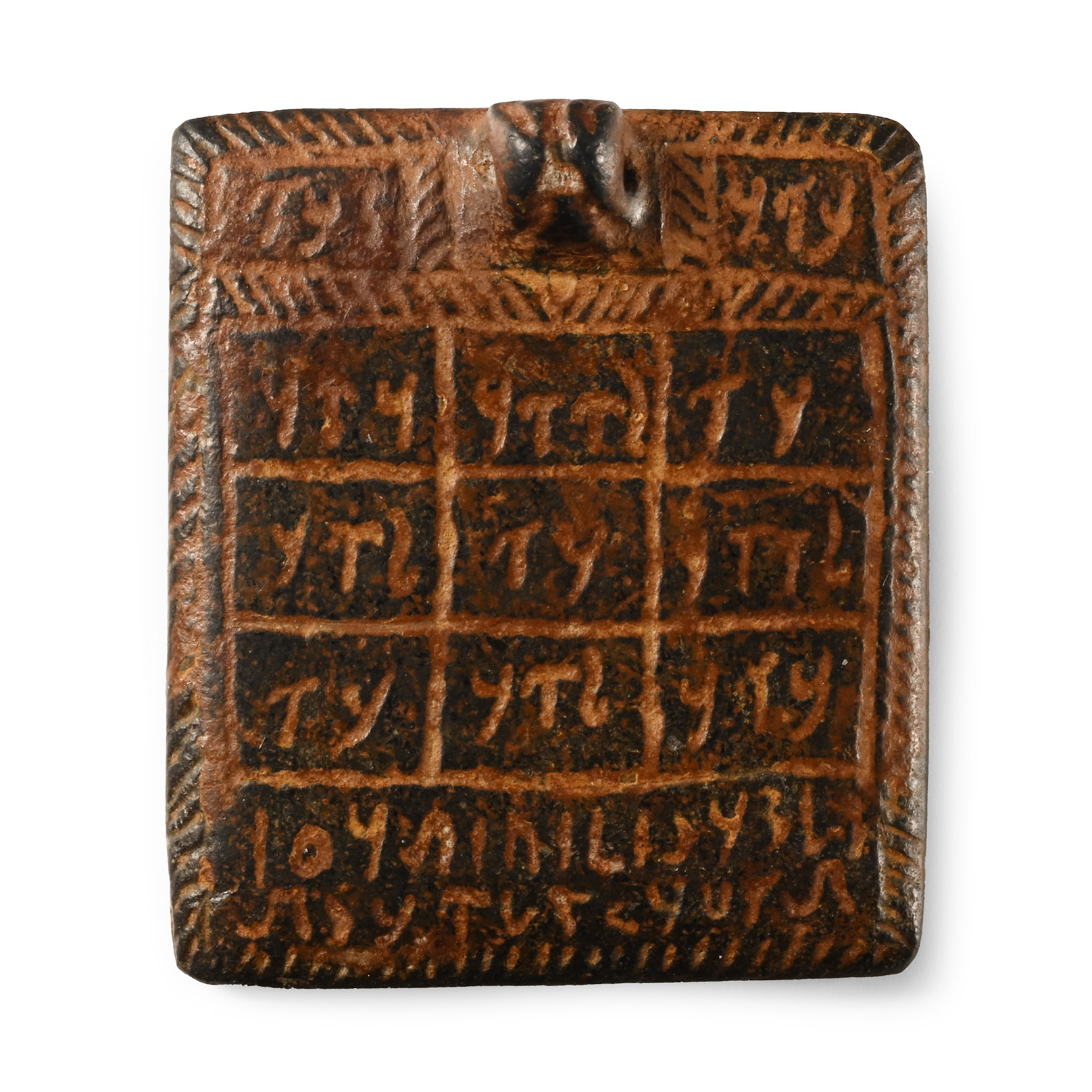
Western Asiatic Magical Aramaic Plaque Pendant
CIRCA 2ND-8TH CENTURY A.D.
1 1/2 in. (13.9 grams, 38 mm).
Square pendant with integral loop, ropework border and header, grid with numerical notation.
ProvenanceFrom the collection of a gentleman, acquired on the London art market in the 1990s.
CONDITIONTimeLine Auctions follows a vetting process to ensure the authenticity and legality of all items, reinforcing our commitment to integrity and responsible trading. Each antiquity, antique, and coin lot undergoes thorough examination by a vetting committee of at least ten external specialists, professional trade association members, scientists, and archaeologists: Our Vetting Process
AUCTIONS:
TimeLine is a leading auction house specialising in antiquities, ancient art, collectables, natural history, coins, medals, and books. Our auctions offer museums, collectors, historians, and enthusiasts the opportunity to acquire unique and historically significant pieces.
-
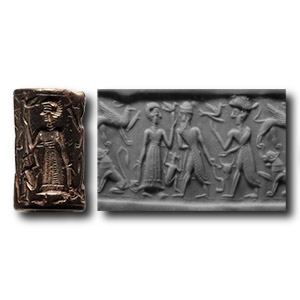
Old Babylonian Stone Cylinder Seal with Figures and Animals
Early 2nd millennium B.C.Sold for (Inc. bp): £572
Haematite with frieze depicting a male and female figure surrounded by birds and mythical beasts beside a single male. 4.32 grams, 17 mm
From the 'S' collection, acquired 1970-1990s. The collection was seen and studied by W.G. Lambert, late Professor of Assyriology at the University of Birmingham, 1970-1993. -
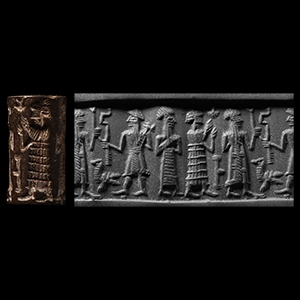
Cappadocian Cylinder Seal with Standing Figures and Lamma
Circa 1900-1800 B.C.Sold for (Inc. bp): £416
Haematite with four standing figures; accompanied by a section of an old typed scholarly note on a collection of 61 seals, typed and unsigned, by W. G. Lambert, late Professor of Assyriology, University of Birmingham, 1970-1993, which states: 'Cappadocian, c. 1900-1800 B.C. Hematite. Figure with axe over shoulder and holding symbol facing (i) figure holding different symbol, (ii) Lamma, and (iii) worshipper; bird, "vessel" and "ball staff".' 4.28 grams, 17 mm
Property of a London gentleman; part of his family collection since the 1970s with collection identification no.39. From a collection acquired from various auction houses in the UK. From the estate of Mr R.W., a private Wiltshire, UK, collector; thence by descent. Accompanied by a copy of an unsigned scholarly note by the late W.G. Lambert, Professor of Assyriology at the University of Birmingham, 1970-1993. -
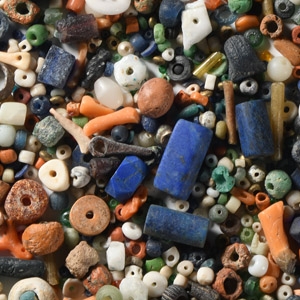
Western Asiatic and Other Stone Bead Group
1st millennium B.C. and laterSold for (Inc. bp): £52
Including tabular, oblate, tubular, square-section and other types in lapis lazuli, carnelian, terracotta and other materials. 122 grams total, 2-21 mm
From the private collection of the late Mrs Belinda Ellison, a long time member of the Egyptian Exploration Society, c.1940-2020.
