
Loading, please wait...
LOT 1222
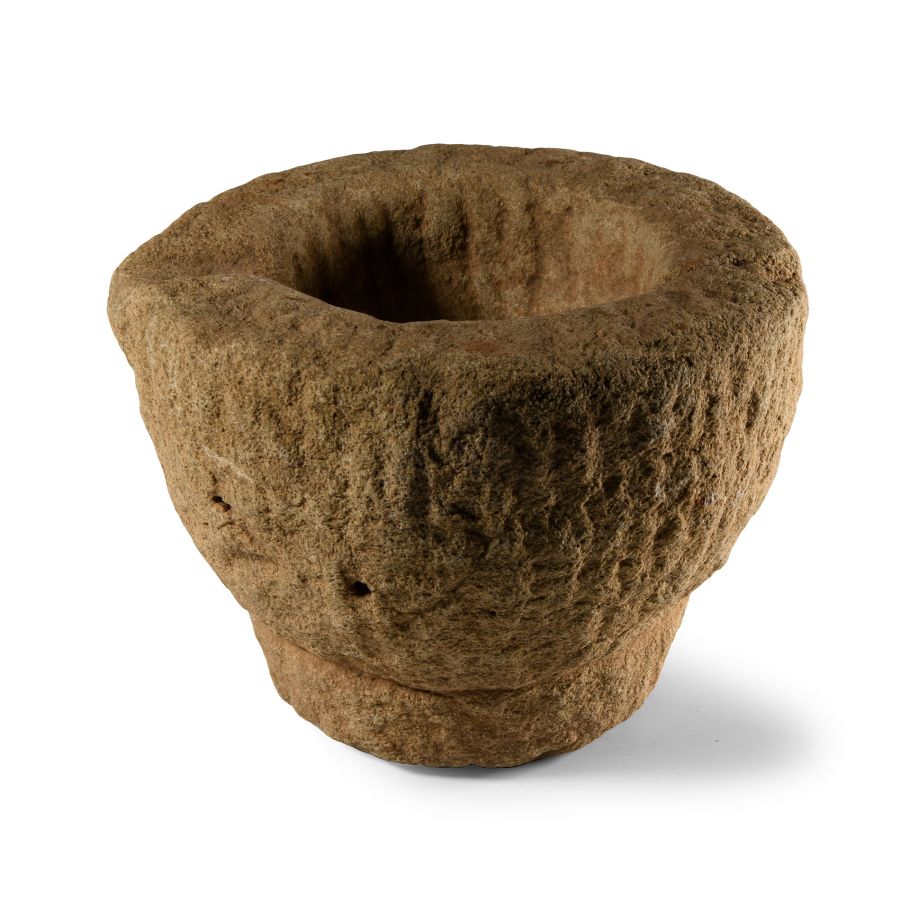
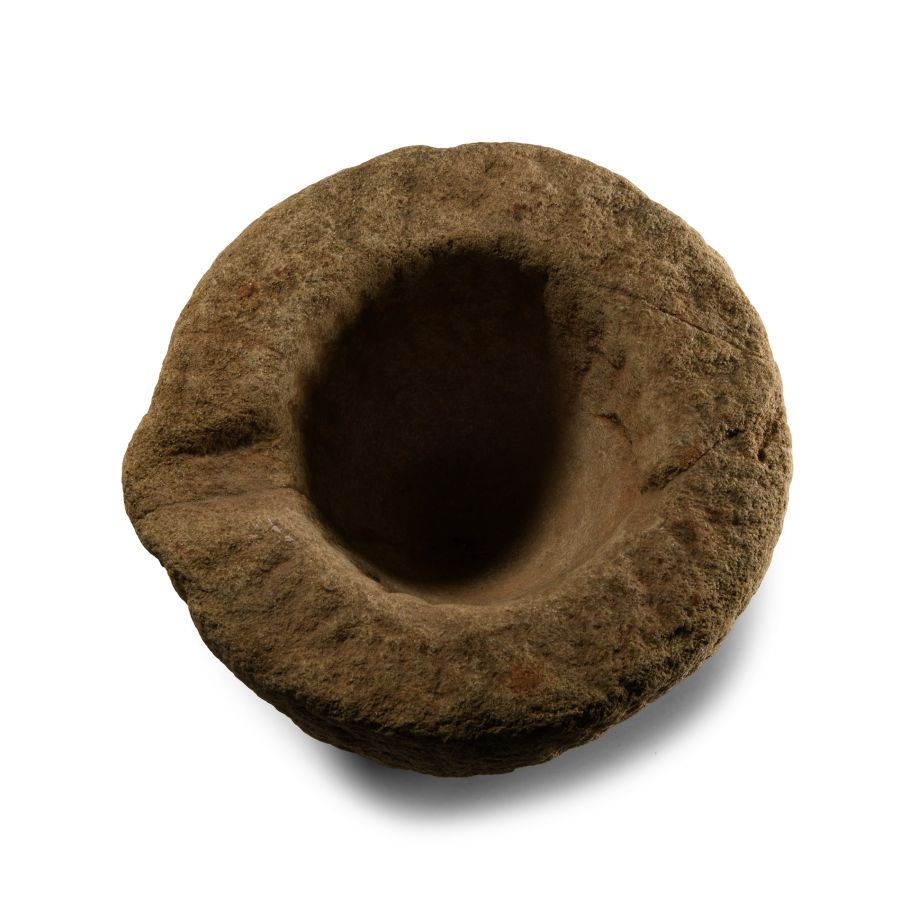
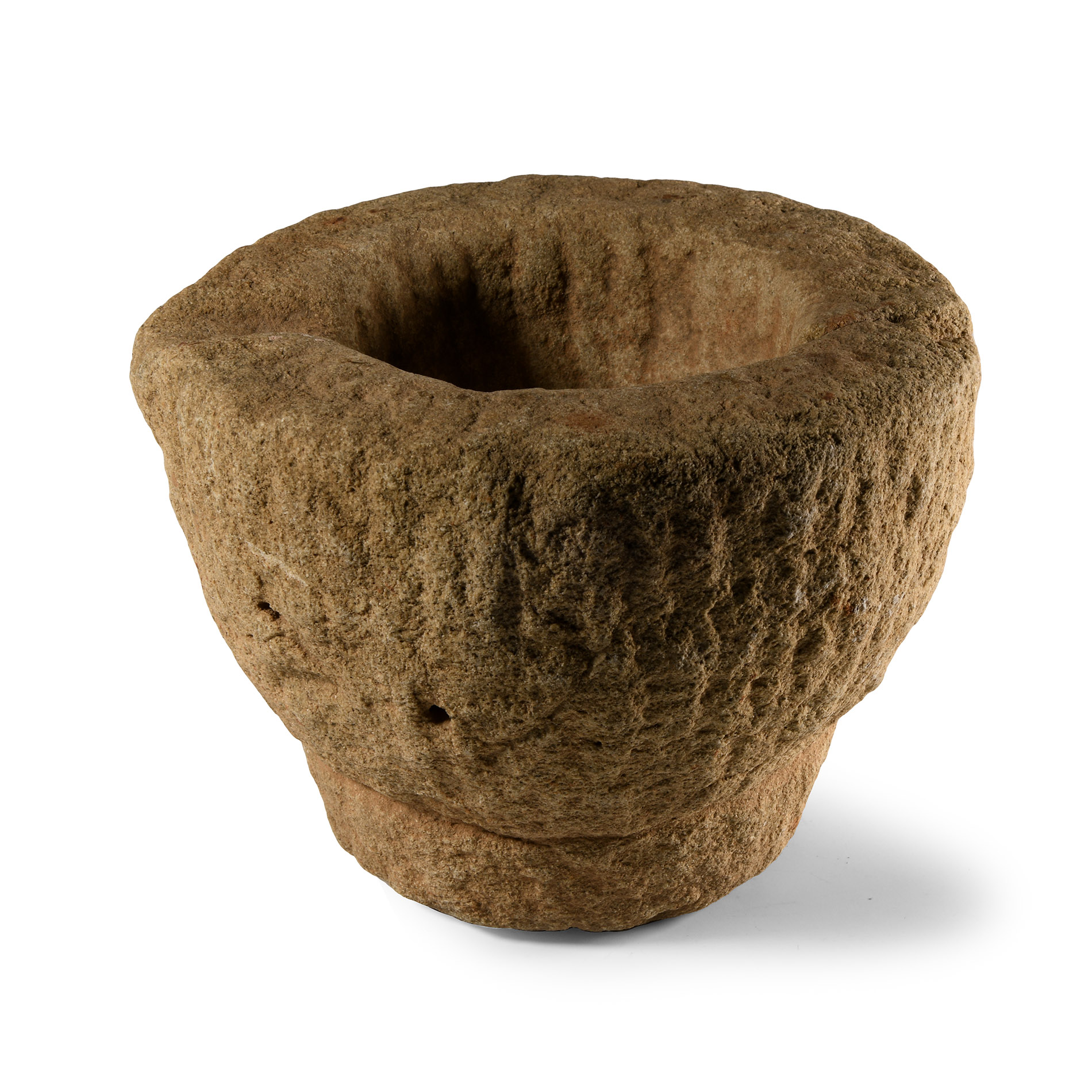
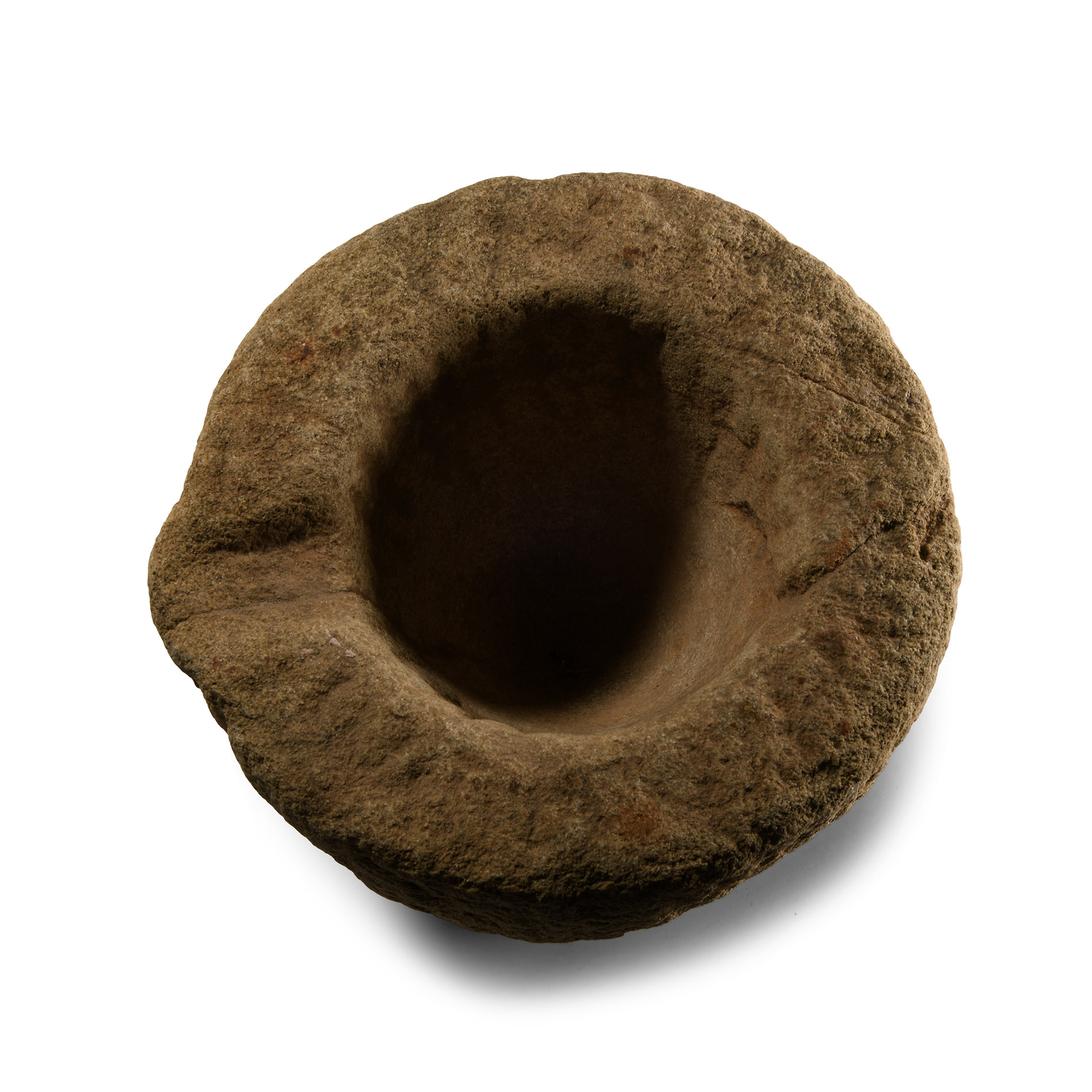
Western Asiatic Limestone Mortar
1ST MILLENNIUM B.C.
5 1/4 in. (4.85 kg, 13 cm).
With short columnar base and bulbous upper body, broad rim with pouring lip. [No Reserve]
ProvenanceFrom a collection acquired on the UK art market from various auction houses and collections mostly before 2000.
From an important Cambridgeshire estate; thence by descent.
Cf. Squitieri. A., Eitam, D. (ed.), Stone tools in the Ancient Near East and Egypt, Ground stone tools, rock-cut installations and stone vessels from Prehistory to Late Antiquity, Oxford, 2019, pp. 237-238, and 275, for examples of similar type.
FootnotesThe later (2nd -3rd century A.D.) Rabbinic tradition emphasised the difference between the permanent mortar (makhtesh kevua) and the movable one (makhtesh metaltelet), with the first being automatically sold with the house, but the second sold only if expressly stated by the vendor. This form of movable mortar was common in the Levant throughout the second half of the 1st millennium B.C.
CONDITIONTimeLine Auctions follows a vetting process to ensure the authenticity and legality of all items, reinforcing our commitment to integrity and responsible trading. Each antiquity, antique, and coin lot undergoes thorough examination by a vetting committee of at least ten external specialists, professional trade association members, scientists, and archaeologists: Our Vetting Process
AUCTIONS:
TimeLine is a leading auction house specialising in antiquities, ancient art, collectables, natural history, coins, medals, and books. Our auctions offer museums, collectors, historians, and enthusiasts the opportunity to acquire unique and historically significant pieces.
-
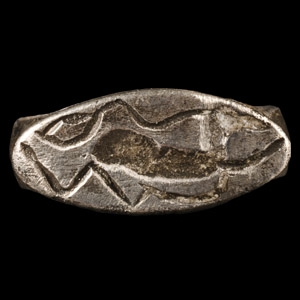
Western Asiatic Silver Ring with Animal
Circa 2nd century B.C.Sold for (Inc. bp): £59
With a wide hoop supporting a lentoid bezel, intaglio design of a running quadruped with long ear or horn projecting from the head and legs spread out beneath the body. 2.94 grams, 20.18 mm overall, 18.03 mm internal diameter (approximate size British N 1/2, USA 6 3/4, Europe 14.35, Japan 13)
UK private collection before 2000. On the UK art market. Property of a London gentleman. -
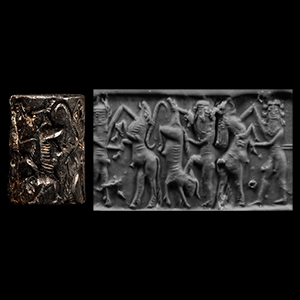
Large Akkadian Cylinder Seal with Bull-Men Contest Scenes
Late 3rd millennium B.C.Sold for (Inc. bp): £468
Haematite with a bull-man holding a rearing ibex, a naked bearded male facing frontally and holding a goat upside down, a naked bearded male facing frontally holding a rearing human-headed bull with long beard. 23.9 grams, 26 mm
From an important London collection, formed before 1990. From a collection acquired from various auction houses in the UK. From the estate of Mr R.W., a private Wiltshire, UK, collector; thence by descent. -
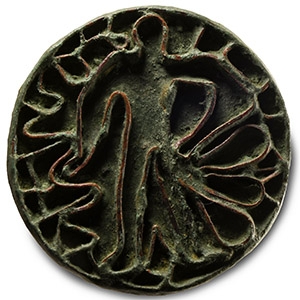
Large Bactrian Copper Stamp Seal with Standing Figure
3rd millennium B.C.Sold for (Inc. bp): £910
Discoid in plan with U-shaped handle, the obverse divided into cells forming an image of a standing figure within a meandering border. 102 grams, 74 mm
with a London, UK gallery 1971-early 2000s.
