
Loading, please wait...
LOT 1275
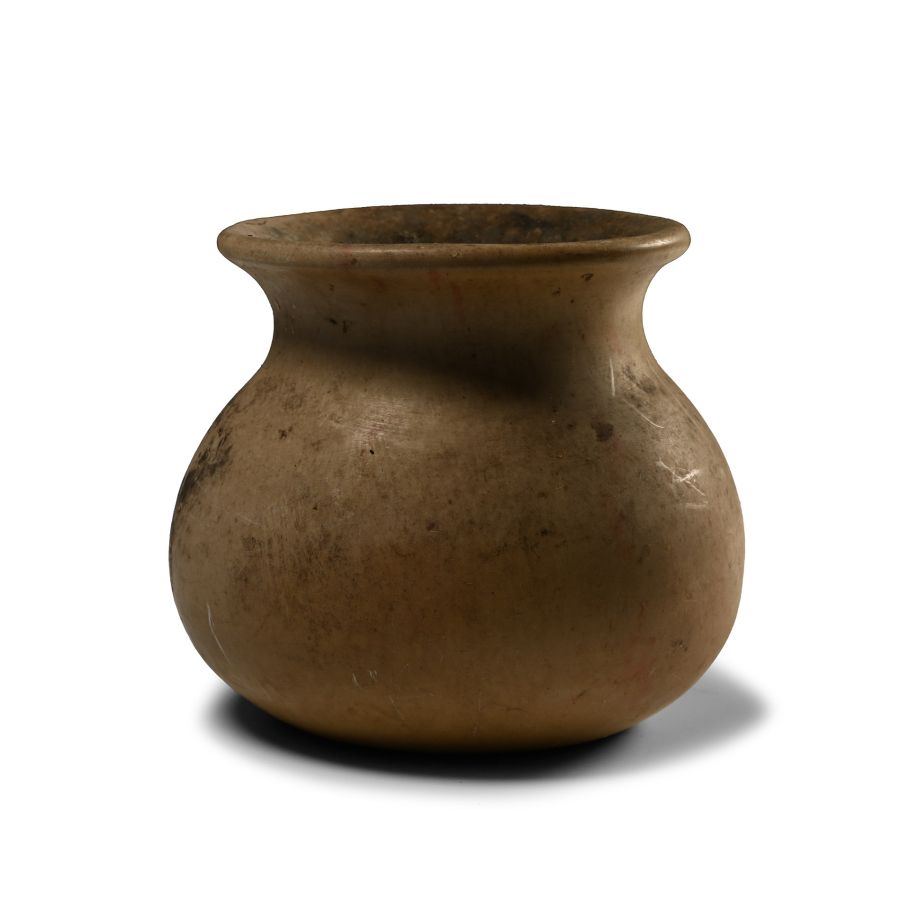
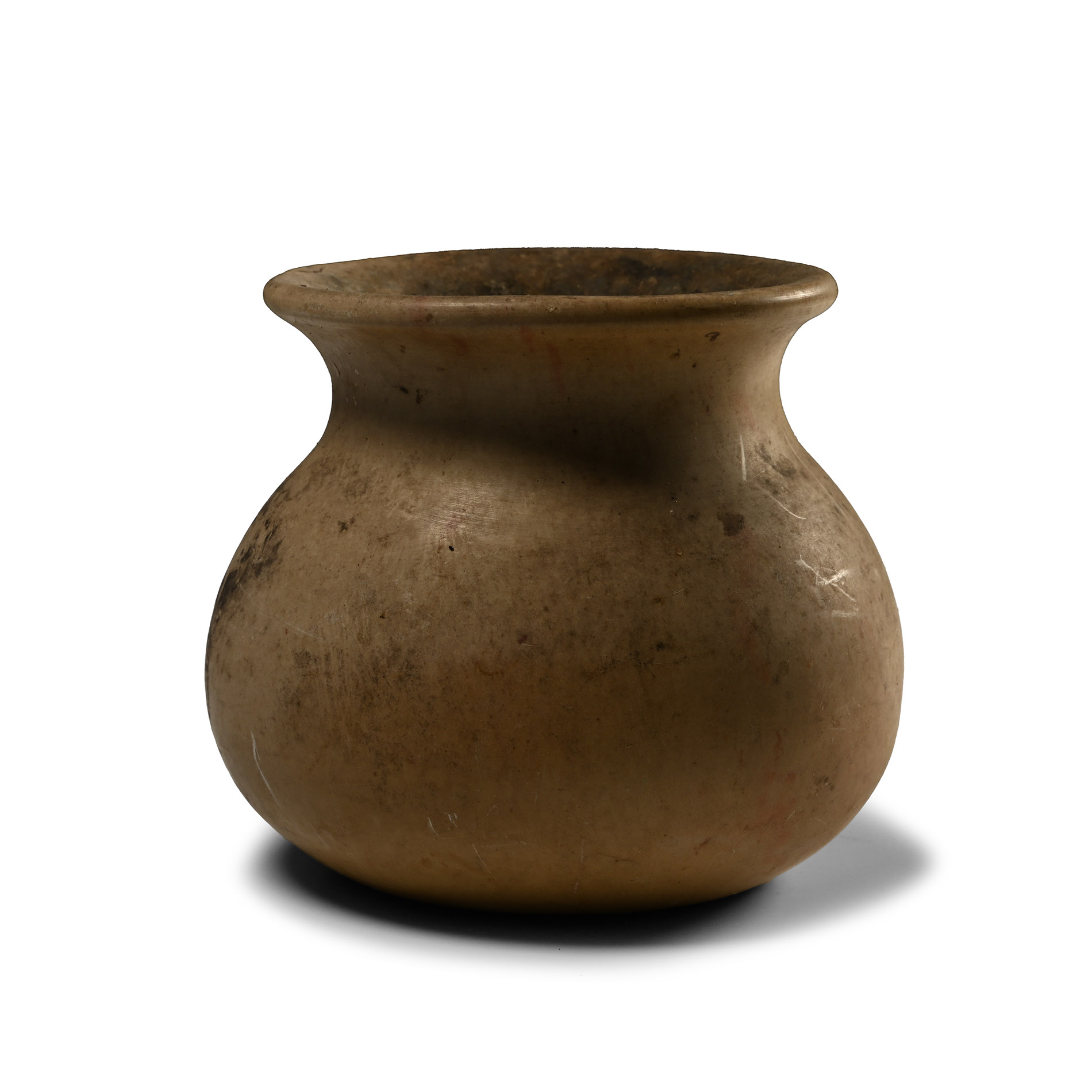
Western Asiatic Limestone Jar
1ST MILLENNIUM B.C.
3 1/2 in. (405 grams, 88 mm wide).
Indurate limestone vessel with squat profile, broad flat base, carinated shoulder and broad rounded rim.
ProvenanceFrom a London, UK, gentleman's collection of ancient pottery and artefacts, 1990s.
This lot has been cleared against the Art Loss Register database, and is accompanied by an illustrated lot declaration signed by the Head of the Antiquities Department, Dr Raffaele D'Amato.
TimeLine Auctions follows a vetting process to ensure the authenticity and legality of all items, reinforcing our commitment to integrity and responsible trading. Each antiquity, antique, and coin lot undergoes thorough examination by a vetting committee of at least ten external specialists, professional trade association members, scientists, and archaeologists: Our Vetting Process
AUCTIONS:
TimeLine is a leading auction house specialising in antiquities, ancient art, collectables, natural history, coins, medals, and books. Our auctions offer museums, collectors, historians, and enthusiasts the opportunity to acquire unique and historically significant pieces.
LOT 1275
Western Asiatic Limestone Jar
Estimate £400 - 600€460 - 700 (for guidance only)$540 - 810 (for guidance only)
-
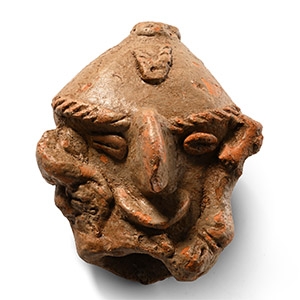
Large Western Asiatic Terracotta Statue Head
Late 1st millennium B.C.Sold for (Inc. bp): £65
A hollow-formed figure or idol head with conical cap, pinched facial form, applied brows and other detailing; mounted on a stand. 600 grams, 16 cm
Fine condition.
Property of a Cambridgeshire lady; formerly in the Igor Karmiloff collection (1925-2016), UN economist and author of Flashbacks, Icons of Impermanence, Bloomington, 2009; acquired in the 1950s-early 1990s. From the private collection of John Meredith, acquired since the 1990s; thence by descent. -
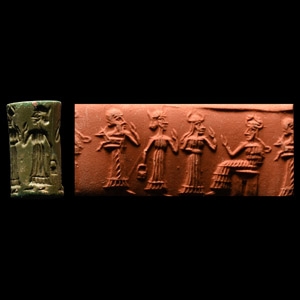
Akkadian Green Jasper Cylinder Seal with Presentation Scene
Circa 2300-2200 B.C.Sold for (Inc. bp): £650
Showing two goddesses with two other figures; accompanied by a museum quality impression and a copy of an old scholarly note by W.G. Lambert, late Professor of Assyriology, University of Birmingham, 1970-1993, which states: 'Cylinder seal of green jasper 19 x 11 mm. Presentation scene: seated goddess to right, before her one goddess, a woman holding a bucket and a man holding a kid are standing. Akkadian, c. 2300-2200 B.C., fine engraving in very good condition.' 3.96 grams, 19 mm
From the private collection of a North American lady, formed 1970s-early 1990s, with collection reference no.P108. Accompanied by a copy of a scholarly note, handwritten and signed by Professor Wilfrid George Lambert and an old photograph. -
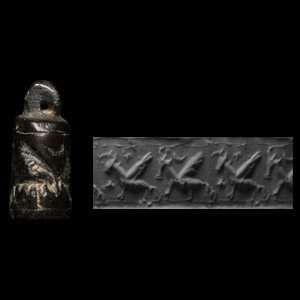
Urartu Black Stone Stamp-Cylinder Seal with Winged Quadruped
Circa 900-700 B.C.Sold for (Inc. bp): £910
With two winged monsters, accompanied by museum quality impressions and a copy of an old scholarly note, typed and signed by W.G. Lambert, late Professor of Assyriology, University of Birmingham, 1970-1993, which states: 'Description of Stamp-Cylinder Seal of black stone, 31 x 14 mm. Sides: two winged monsters of slightly differing type; lunar crescent and other fillers, the design between rules. Base: winged quadruped. The stamp-cylinder is from the ancient Urartu, the area around lake Van, and dates c. 900-700 B.C. It has a pierced lug at the top which allows the base to be used as a stamp seal. Such monsters as are depicted are typical of Urartian art, not only of their seals. Condition very good.' 7.88 grams, 30 mm
UK private collection, acquired 1990-1993. Accompanied by a copy of a scholarly note, typed and signed by Professor Wilfrid George Lambert in 1987.
