
Loading, please wait...
_900x900.jpg "Western Asiatic Lapis Lazuli Necklace Bead Collection")
_200x200.jpg "Western Asiatic Lapis Lazuli Necklace Bead Collection")
.jpg "Western Asiatic Lapis Lazuli Necklace Bead Collection")
LOT 1226
Western Asiatic Lapis Lazuli Necklace Bead Collection
20TH CENTURY A.D. AND EARLIER
1/8 - 3/4 in. (89 grams total, 2-21 mm).
Comprising a large quantity of beads including oblate seed beads, large tubular, facetted and discoid beads, and one shaped as a bird. [No Reserve]
ProvenanceUK gallery, early 2000s.
CONDITIONTimeLine Auctions follows a vetting process to ensure the authenticity and legality of all items, reinforcing our commitment to integrity and responsible trading. Each antiquity, antique, and coin lot undergoes thorough examination by a vetting committee of at least ten external specialists, professional trade association members, scientists, and archaeologists: Our Vetting Process
AUCTIONS:
TimeLine is a leading auction house specialising in antiquities, ancient art, collectables, natural history, coins, medals, and books. Our auctions offer museums, collectors, historians, and enthusiasts the opportunity to acquire unique and historically significant pieces.
-
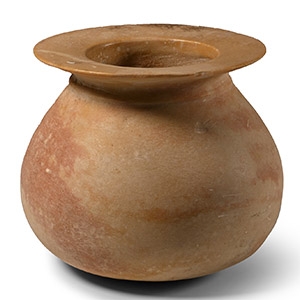
Mesopotamian Marble Vase
4rd-3rd millennium B.C.Estimate: £1,800 - 2,400 (‡+bp*)
Opening Bid: £1,000
Squat-bodied with a broad, rounded shoulder and base, short neck and flat everted rim. 1.95 kg, 13.7 cm
with Gerhard Hirsch Nachf, Germany, Auction 238|239, February 2005, no.107. Acquired by the present owner from the above. This lot has been checked against the Interpol Database of stolen works of art and is accompanied by search certificate number no.12256-222173. -
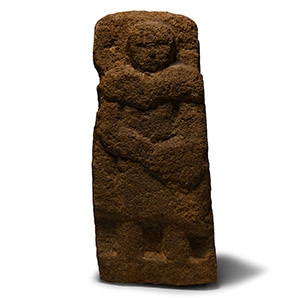
Phoenician Stone Figure
Circa 5th-3rd century B.C.Sold for (Inc. bp): £520
Wedge-shaped in section with figure carved in the half-round to one face, warrior with armoured covering to the shoulders and chest, knee-length tunic. 2.65 kg, 23.3 cm
From a collection acquired on the UK art market from various auction houses and collections mostly before 2000. From an important Cambridgeshire estate; thence by descent. -
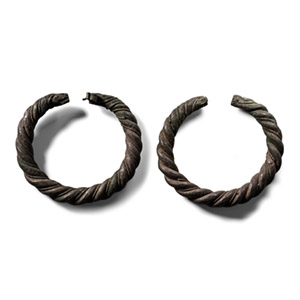
Western Asiatic Twisted Silver Bracelet Pair
10th-12th century A.D.Estimate: £1,200 - 1,700 (‡+bp*)
Opening Bid: £600
Each a penannular round-section band with a twisted filigree band coiled around the hank; clubbed finials, one with closure clip fitting. 259 grams total, 75-78 mm
Acquired in the mid 1980s-1990s. Private collection, Switzerland, thence by descent. Private collection, since the late 1990s.
