
Loading, please wait...
LOT 1201
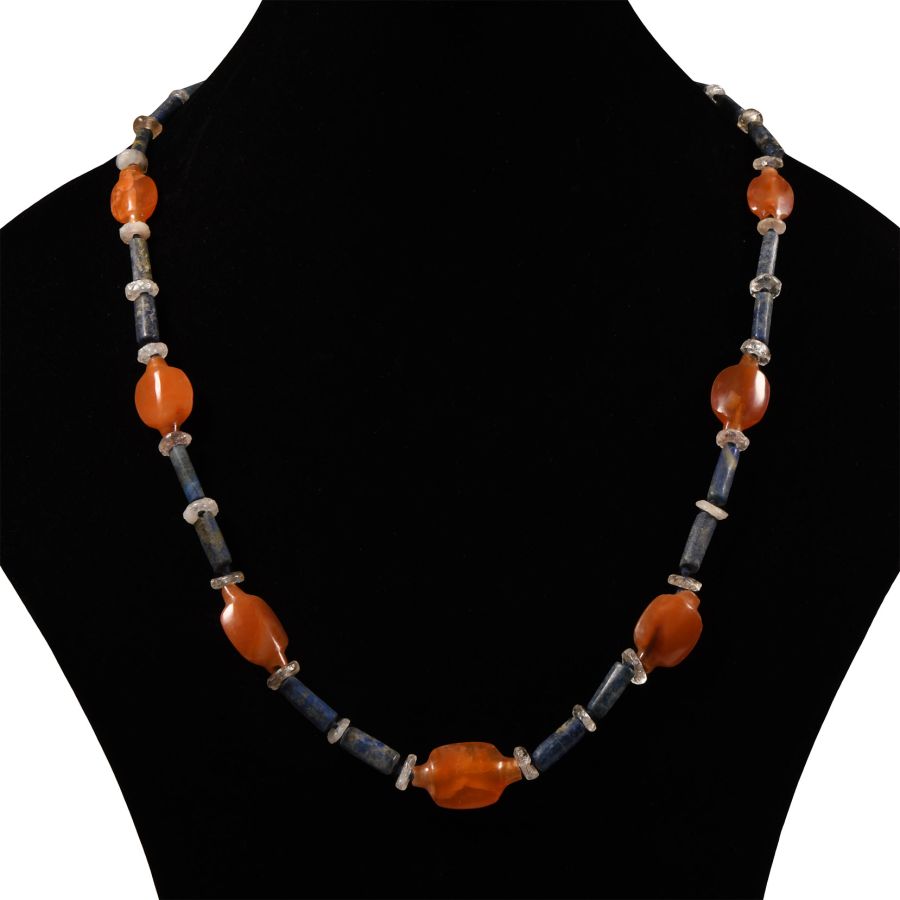
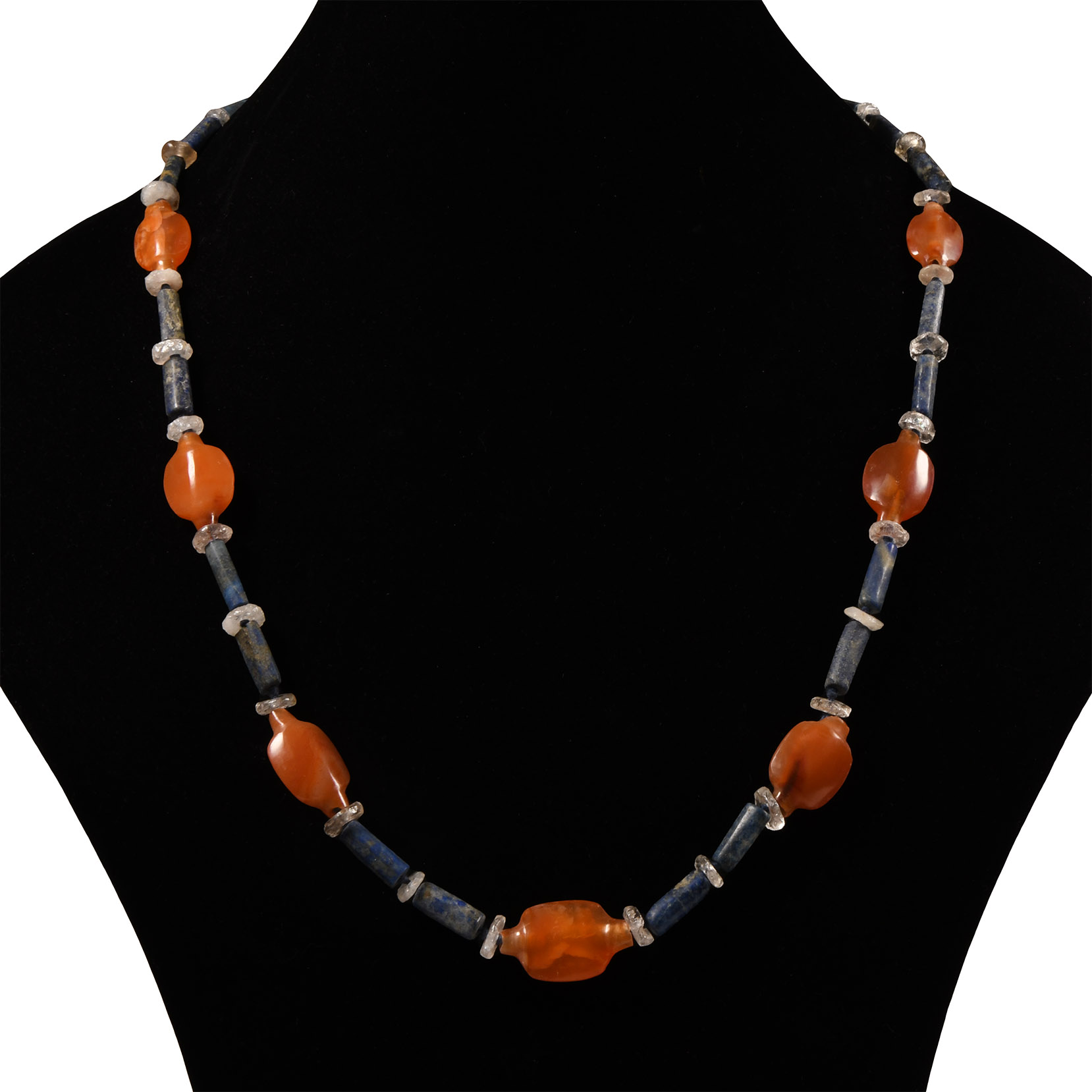
Western Asiatic Lapis Lazuli and Carnelian Bead Necklace
1ST MILLENNIUM B.C. AND LATER
26 3/4 in. (52.2 grams, 68 cm).
A restrung designer necklace composed of cylindrical lapis lazuli beads and seven large orange carnelian beads with extended collars, rock crystal spacer beads in between.
ProvenanceEx French gallery, 1970-1990.
Paris collection, France.
TimeLine Auctions follows a vetting process to ensure the authenticity and legality of all items, reinforcing our commitment to integrity and responsible trading. Each antiquity, antique, and coin lot undergoes thorough examination by a vetting committee of at least ten external specialists, professional trade association members, scientists, and archaeologists: Our Vetting Process
AUCTIONS:
TimeLine is a leading auction house specialising in antiquities, ancient art, collectables, natural history, coins, medals, and books. Our auctions offer museums, collectors, historians, and enthusiasts the opportunity to acquire unique and historically significant pieces.
LOT 1201
Western Asiatic Lapis Lazuli and Carnelian Bead Necklace
Sold for (Inc. bp): £468
-
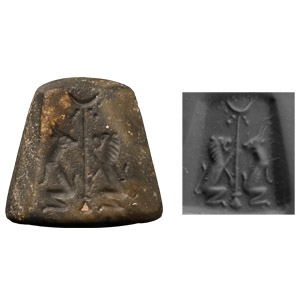
Neo-Babylonian Bifacial Stone Stamp Seal with Animals
Circa 600-500 B.C. or laterEstimate: £300 - 400 (+bp*)
Opening Bid: £150
Trapezoidal in profile with transverse piercing, one lateral face with intaglio scene of a rampant lion and an ibex looking backwards, staff between with crescent finial; underside with scene of a triumphant hero in a pleated gown with one arm raised, grasping the horn of a bull and with one foot placed on its rump, crescent moon above; supplied with a museum-quality impression. 16.4 grams, 25 mm
From the property of late Mr SM, London, UK, 1969-1999, thence by descent. -
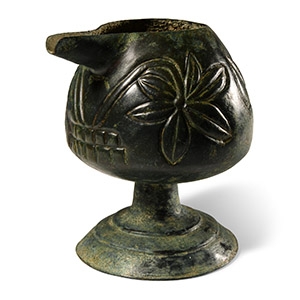
Elamite Spouted Vessel with Flowers
Late 2nd-early 1st millennium B.C.Sold for (Inc. bp): £3,380
The body of squat profile with narrow mouth and short lateral U-section spout, short stem and stepped domed base; repoussé ornament comprising flowers and vines with leaves. 340 grams, 14.5 cm
Acquired before 1983. Ex London gallery, 1990s. This lot has been checked against the Interpol Database of stolen works of art and is accompanied by a search certificate number no.12124-216336. -
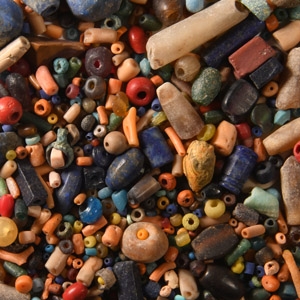
Western Asiatic and Other Bead Group
1st millennium B.C. and laterSold for (Inc. bp): £111
Comprising a large quantity of beads in various shapes and sizes in glass, stone, coral and lapis lazuli. 178 grams total, 2-34 mm
Ex property of a late Japanese collector, 1970-2000s.
