
Loading, please wait...
LOT 1145
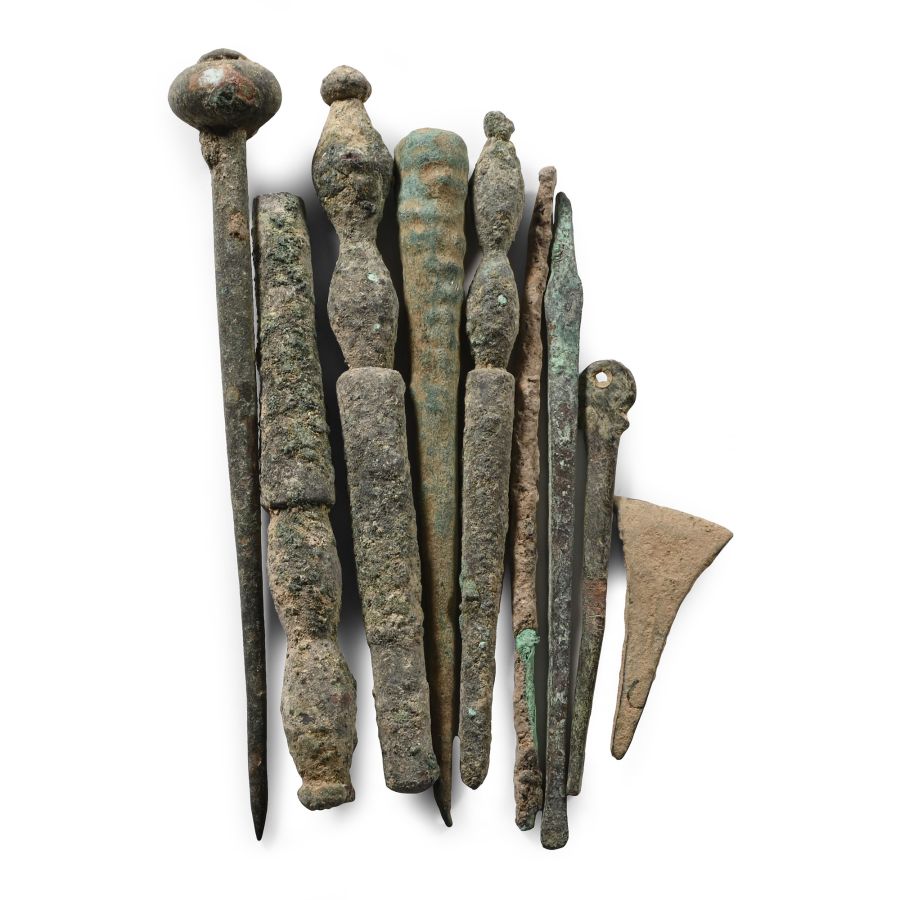
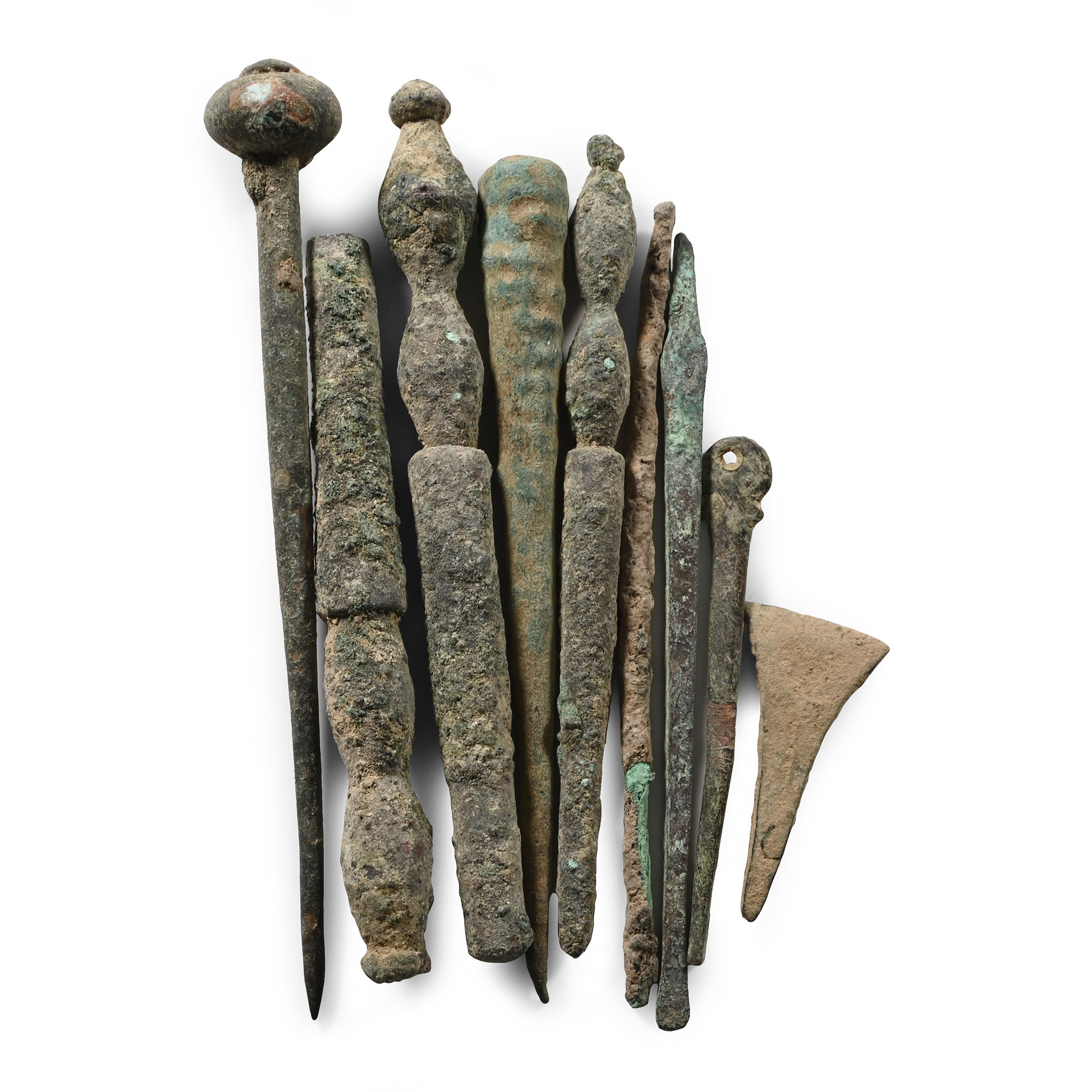
Western Asiatic Jeweller's Chisel and Pin Collection
3RD-1ST MILLENNIUM B.C.
1 1/4 - 3 5/8 in. (102 grams total, 31-93 mm).
Comprising: an awl, a chisel, various pins and pin finials. [9, No Reserve]
ProvenanceEx London art market, 1980-1990s.
This lot has been cleared against the Art Loss Register database, and is accompanied by an illustrated lot declaration signed by the Head of the Antiquities Department, Dr Raffaele D'Amato.
Cf. Iamoni, M., ‘Toggle Pins of the Bronze Age: A Matter of Style, Function or Fashion?’ in Lanfranchi, G.B., Morandi Bonacossi, D., Pappi C., Ponchia, S., Leggo! Wiesbaden, 2012, pp. 349-363, figs.2, 7, for similar toggle pins.
FootnotesSimilar complete pins excavated by the Italian Archaeological Mission in Homs have been subdivided into two well-known categories, the melon headed pins and the simple pins, both here represented. This distinction in shape corresponds to a distinction in size: although the diameters are more or less the same.
CONDITIONTimeLine Auctions follows a vetting process to ensure the authenticity and legality of all items, reinforcing our commitment to integrity and responsible trading. Each antiquity, antique, and coin lot undergoes thorough examination by a vetting committee of at least ten external specialists, professional trade association members, scientists, and archaeologists: Our Vetting Process
AUCTIONS:
TimeLine is a leading auction house specialising in antiquities, ancient art, collectables, natural history, coins, medals, and books. Our auctions offer museums, collectors, historians, and enthusiasts the opportunity to acquire unique and historically significant pieces.
-
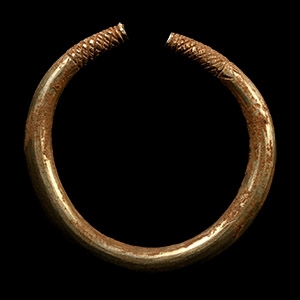
Achaemenid Solid Electrum Bracelet
6th-4th century B.C.Sold for (Inc. bp): £1,820
Penannular in form and tapering to each end with incised hatching. 20.8 grams, 41 mm
Acquired in 1993. Private collection, Switzerland, thence by descent. Private collection, since the late 1990s. This lot has been cleared against the Art Loss Register database, and is accompanied by an illustrated lot declaration signed by the Head of the Antiquities Department, Dr Raffaele D'Amato. -
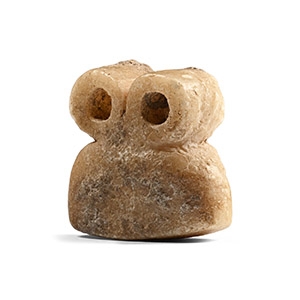
Anatolian Alabaster Eye Idol
4th-3rd millennium B.C.Sold for (Inc. bp): £1,820
With a squat body and two looped eyes, slightly convex base. 34 grams, 38 mm wide
Acquired in the 1980s. Private collection, Switzerland, thence by descent. Private collection, since the late 1990s. This lot has been cleared against the Art Loss Register database, and is accompanied by an illustrated lot declaration signed by the Head of the Antiquities Department, Dr Raffaele D'Amato.
This type of figurine belongs to the type known as an ‘eye idol’ or ‘spectacle idol’, made of stone, marble or alabaster. Usually models having incised eyes (but also examples of open eyes are found) have been excavated mainly at Tell Brak, where thousands were found in a building now called the Eye Temple. There, in the precincts of the temple, excavators have found thousands of little 'eye-idols', schematised humanoid figures fashioned from alabaster, limestone, soapstone and black burnished clay. -
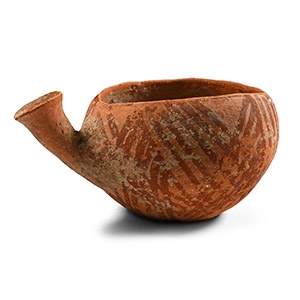
Amlash Terracotta Painted Vessel with Spout
1st millennium B.C.Estimate: £200 - 300 (‡+bp*)
Opening Bid: £100
With rounded body and narrow base, tubular spout with everted rim; the body with intersecting linear decoration. 252 grams, 14.6 cm
with Galerie Rhéa, Zurich, Switzerland. This lot has been cleared against the Art Loss Register database, and is accompanied by an illustrated lot declaration signed by the Head of the Antiquities Department, Dr Raffaele D'Amato.
