
Loading, please wait...
LOT 1350
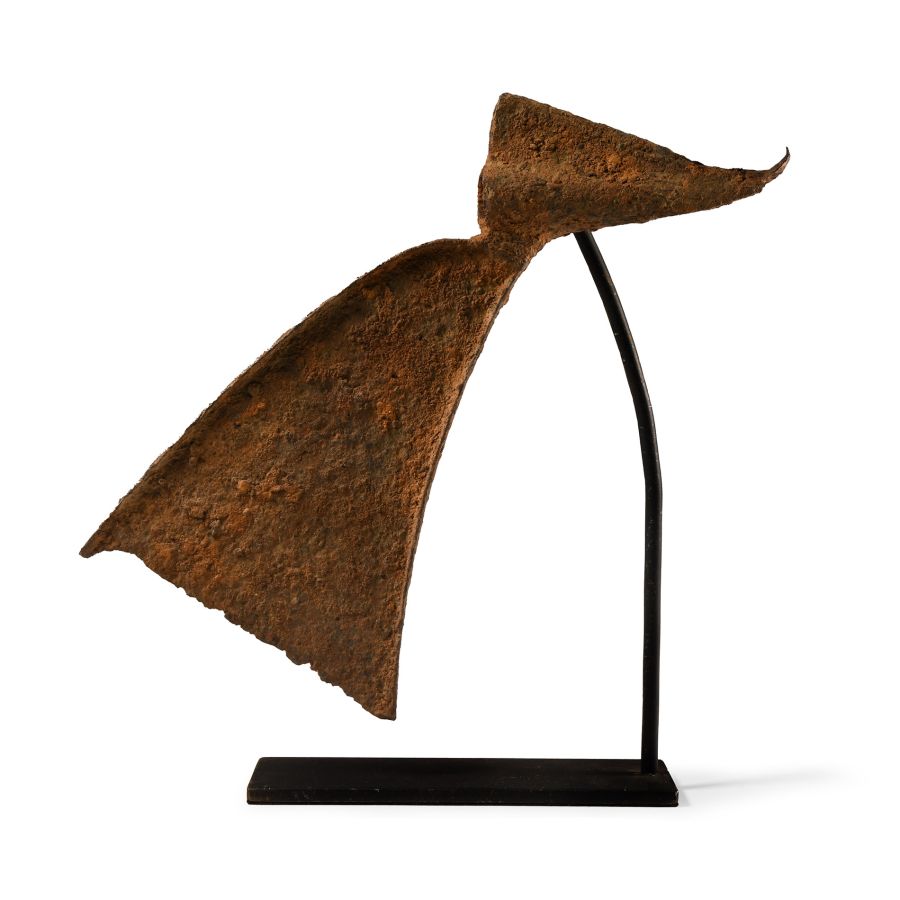
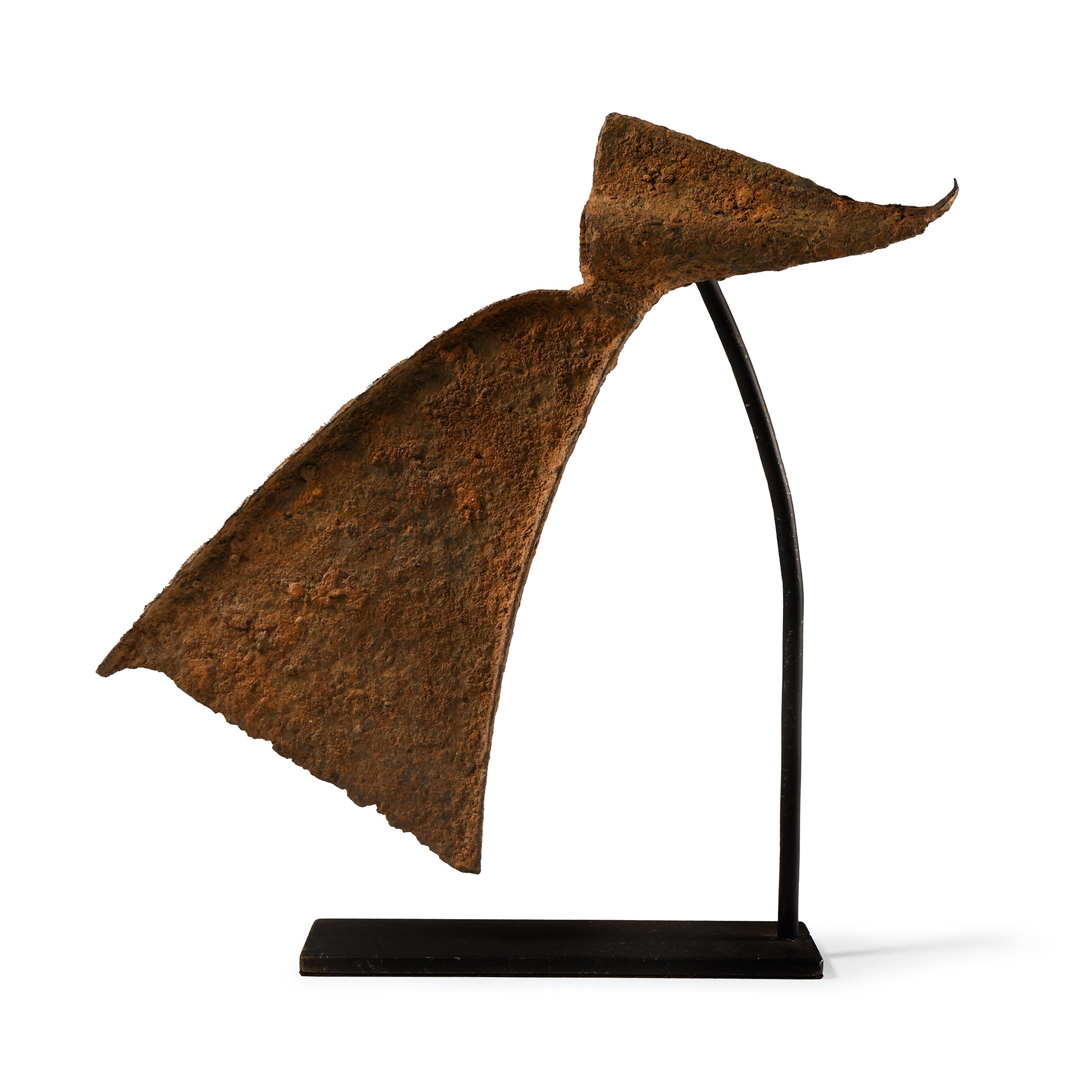
Western Asiatic Iron Axehead
CIRCA 14TH-16TH CENTURY A.D.
9 5/8 in. (659 grams total including stand, axehead: 24.5 cm).
With swept blade and triangular socket with extension to the rear; accompanied by a custom-made display stand. [No Reserve]
ProvenanceAcquired 1980-2015.
Ex Abelita family collection.
TimeLine Auctions follows a vetting process to ensure the authenticity and legality of all items, reinforcing our commitment to integrity and responsible trading. Each antiquity, antique, and coin lot undergoes thorough examination by a vetting committee of at least ten external specialists, professional trade association members, scientists, and archaeologists: Our Vetting Process
AUCTIONS:
TimeLine is a leading auction house specialising in antiquities, ancient art, collectables, natural history, coins, medals, and books. Our auctions offer museums, collectors, historians, and enthusiasts the opportunity to acquire unique and historically significant pieces.
-
North-West Persian Bronze Short Sword with Blood Channels
2nd-1st millennium B.C.Estimate: £250 - 350 (+bp*)
Opening Bid: £125
Shaped as a two-edged bronze blade, leaf-shape with short rectangular tang with fastening hole, corrugated midrib extending almost to the tip and flared at the shoulder. 439 grams, 44.2 cm
Acquired 1980-2015. Ex Abelita family collection.
The metalworking techniques used in making bronze weapons in Luristan were very complex. Surfaces were often finished in repoussé work, and some of the weapons were chased and others engraved. Many of the graves dating from the era of Kassite hegemony contain bronze and iron artefacts, including various type of weapons. These swords with shallow fullers tapering to a sharp tip have been dated by P.R.S. Moorey to the end of the 2nd millennium B.C. -
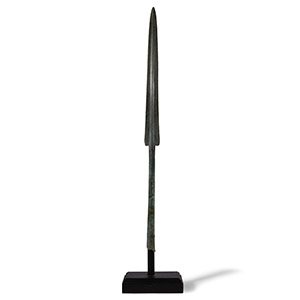
Marlik Bronze Spearhead with Linear Decoration
14th-10th century B.C.Estimate: £600 - 800 (+bp*)
Opening Bid: £300
Of triangular shape with projecting midribs with vertical grooves alongside, long folded socketted shaft with eighteen horizontal grooves at the base, hole for attachment to a wooden shaft. 436 grams total, 61 cm high including stand
Ex German collection, 1980s. From a Surrey, UK, private collection, 1990s.
This specimen belongs to the type VIII, subtype B of the Khorasani classification. Similar specimens were excavated in the Marlik Royal cemetery by Dr Negahban. The spearheads of this type are characterised by well projecting mid-ribs and long, folded sockets. -
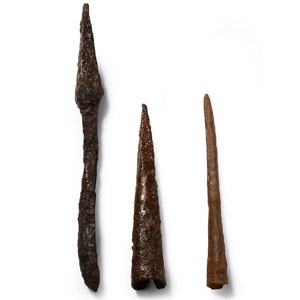
Roman Iron Ferrules and Javelin Head Group
3rd century A.D.Sold for (Inc. bp): £78
Comprising: square-section missile head with short neck; conical ferrule with square-section finial; conical ferrule socket with long square-section finial. 64 grams total, 8.2-12.8 cm
Found S.E. England, UK. Acquired from Allan Cherry, Bournemouth, UK, circa 2004. Ian Wilkinson collection, Nottinghamshire, UK.
The usual form of the butt of the spears in this period was a cone shape, sometimes split down one side, but more often forged into a complete circle. The butt was fastened to the wooden shaft by one or more rivets. The butt or ferrule of the Roman spears essentially had two functions. Firstly it acted as a counterweight to the blade of the spear/javelin, ensuring that the weapon was balanced and therefore effective. Secondly, it kept the wooden shaft out of contact with the ground if the spear was grounded and thus avoiding damage to it.
