
Loading, please wait...
_900x900.jpg "Western Asiatic Inscribed Seal Matrix")
_200x200.jpg "Western Asiatic Inscribed Seal Matrix")


.jpg "Western Asiatic Inscribed Seal Matrix")
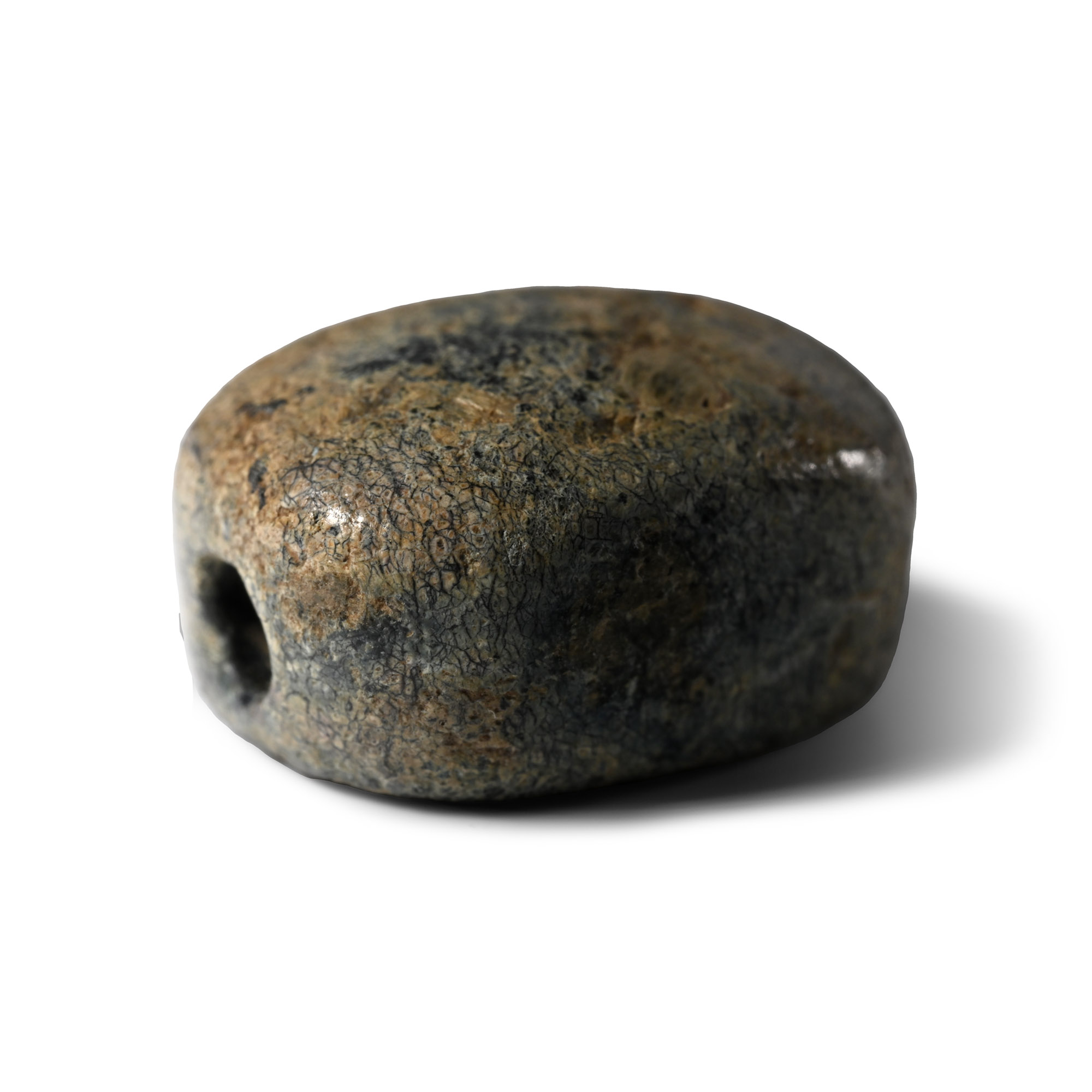
LOT 0220
Western Asiatic Inscribed Seal Matrix
1ST MILLENNIUM B.C.
5/8 in. (3.53 grams, 17 mm).
Scaraboid in black glass with gryphon to the underside beneath transverse band with 'ΡΙIΛΚΧ' inscription.
ProvenanceFrom an important collection formed before 1988, London and Geneva.
CONDITIONTimeLine Auctions follows a vetting process to ensure the authenticity and legality of all items, reinforcing our commitment to integrity and responsible trading. Each antiquity, antique, and coin lot undergoes thorough examination by a vetting committee of at least ten external specialists, professional trade association members, scientists, and archaeologists: Our Vetting Process
AUCTIONS:
TimeLine is a leading auction house specialising in antiquities, ancient art, collectables, natural history, coins, medals, and books. Our auctions offer museums, collectors, historians, and enthusiasts the opportunity to acquire unique and historically significant pieces.
LOT 0220
Western Asiatic Inscribed Seal Matrix
Estimate £500 - 700€580 - 810 (for guidance only)$680 - 950 (for guidance only)
-
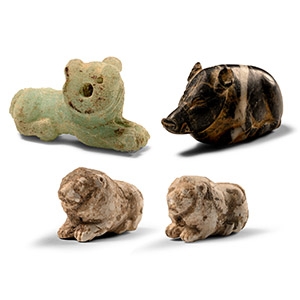
Western Asiatic Animal Collection
3rd-1st millennium B.C.Estimate: £800 - 1,000 (‡+bp*)
Opening Bid: £444
Group of four carved stone animals comprising: two limestone reclining lions; a green glass lion with head turned, loop to the reverse, socket for attachment of a separate face panel; boar crouching with legs folded beneath the body. 23 grams total, 21-30 mm
Acquired in Europe in 2002. European private collection. -
.jpg)
Large Luristan Bronze Ring with Animals
1st millennium B.C.Estimate: £3,000 - 4,000 (+bp*)
Opening Bid: £600
With thick hoop and opposed animal-heads to the reverse, large ellipsoid bezel with incuse winged bull motif. 34 grams, 30.15 mm overall, 22 x 20.4 mm internal diameter (approximate size British T 1/2, USA 9 3/4, Europe 21.89, Japan 21)
with Pierre Bergé & Associés, Paris, 23 April 2001, no.297 (part). Acquired by an important European family collection. Accompanied by copies of the relevant Pierre Bergé & Associés catalogue pages. This lot has been checked against the Interpol Database of stolen works of art and is accompanied by search certificate no.12055-213660. -
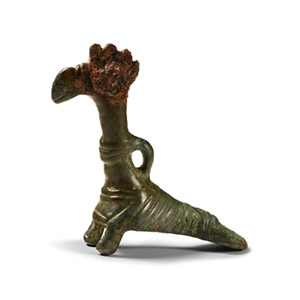
Luristan Bronze Peacock Pendant
13th-7th century B.C.Sold for (Inc. bp): £46
Modelled in the round with hollow to the underside, long neck with collar and loop to the rear. 25.5 grams, 59 mm
From a North Yorkshire, UK, private collection. Acquired from Adam Partridge Auctioneers, Macclesfield, UK. Property of Mr A.B., an American collector.
