
Loading, please wait...


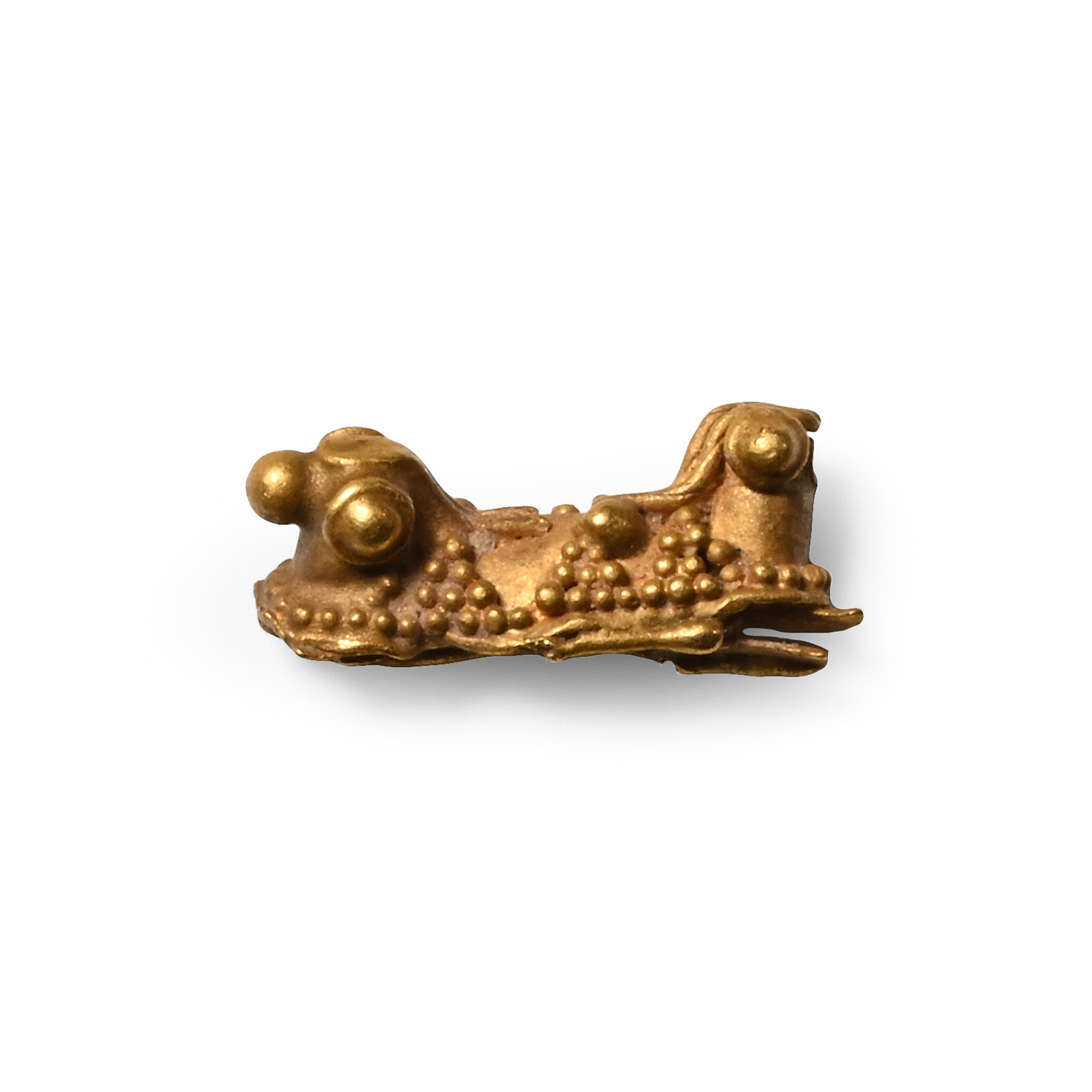
LOT 1248
Western Asiatic Gold Recumbent Beast Bead
1ST MILLENNIUM B.C.
3/8 in (0.42 grams, 9 mm.).
Rectangular plaque with recumbent lion(?) with clusters of granulation to the flanks.
ProvenanceEx property of a late Japanese collector, 1970-2000s.
CONDITIONTimeLine Auctions follows a vetting process to ensure the authenticity and legality of all items, reinforcing our commitment to integrity and responsible trading. Each antiquity, antique, and coin lot undergoes thorough examination by a vetting committee of at least ten external specialists, professional trade association members, scientists, and archaeologists: Our Vetting Process
AUCTIONS:
TimeLine is a leading auction house specialising in antiquities, ancient art, collectables, natural history, coins, medals, and books. Our auctions offer museums, collectors, historians, and enthusiasts the opportunity to acquire unique and historically significant pieces.
-
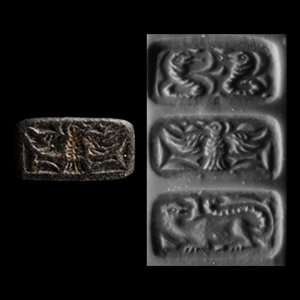
Anatolian Stone Stamp Seal
8th-7th century B.C.Estimate: £400 - 600 (+bp*)
Opening Bid: £200
Triangular in section with three figural scenes: (A) two serpents, opposed; (B) bird with wings spread; (C) regardant quadruped with tail raised; pierced longitudinally; supplied with a museum-quality impression. 5.3 grams, 24 mm.
Ex S. collection, London, UK, 1980s-2000s. Accompanied by a previous illustrated catalogue slip. -
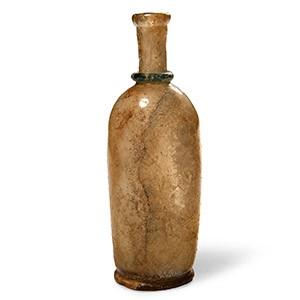
Western Asiatic Glass Bottle with Blue Trail
9th-10th century A.D.Estimate: £200 - 300 (+bp*)
Opening Bid: £90
Aqua glass with applied dark blue glass trail to foot and neck, everted rim. 27.2 grams, 93 mm
with a London, UK gallery, 1971-early 2000s. -
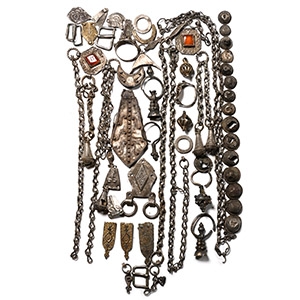
Medieval Period Silver Belt Buckle and Fitting Group
13th-14th century A.D.Sold for (Inc. bp): £572
Including buckles, domed bosses, pendants, finger rings, jingles, lace tags and other items. 175 grams total, 0.6-60 cm
Mr M.B., Mainz, Germany, since the 1980s. Private collection, London.
