
Loading, please wait...
LOT 1044
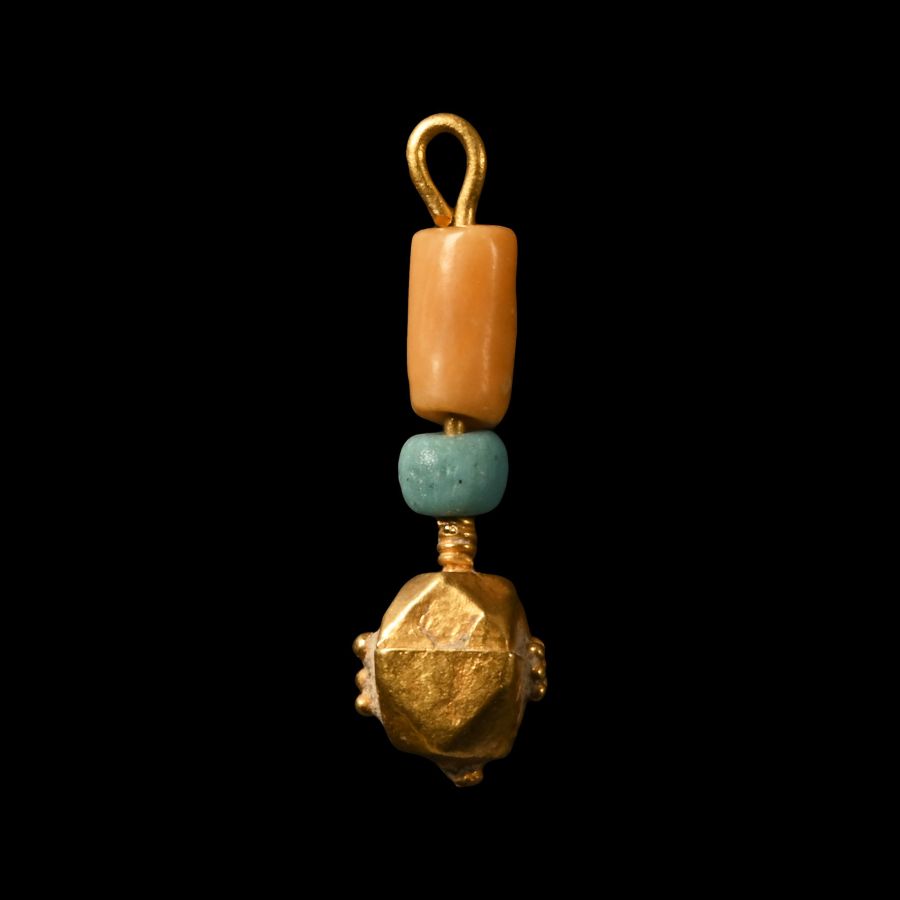
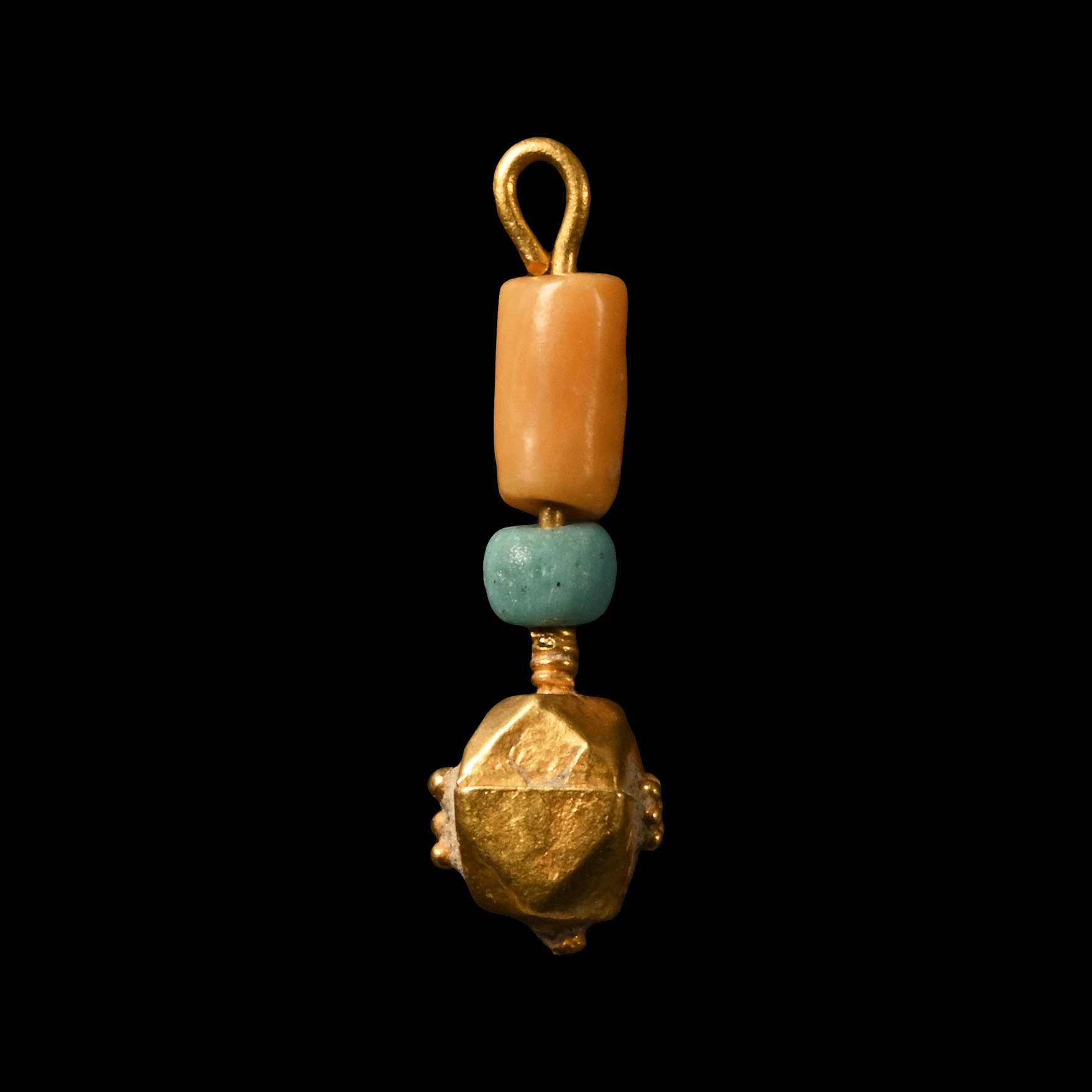
Western Asiatic Gold Pendant with Beads
1ST MILLENNIUM B.C.
3/4 in. (0.61 grams, 20 mm).
Polyhedral gold bead mounted on a wire shank with carnelin and blue glass beads.
ProvenanceEx property of a late Japanese collector, 1970s.
CONDITIONTimeLine Auctions follows a vetting process to ensure the authenticity and legality of all items, reinforcing our commitment to integrity and responsible trading. Each antiquity, antique, and coin lot undergoes thorough examination by a vetting committee of at least ten external specialists, professional trade association members, scientists, and archaeologists: Our Vetting Process
AUCTIONS:
TimeLine is a leading auction house specialising in antiquities, ancient art, collectables, natural history, coins, medals, and books. Our auctions offer museums, collectors, historians, and enthusiasts the opportunity to acquire unique and historically significant pieces.
-
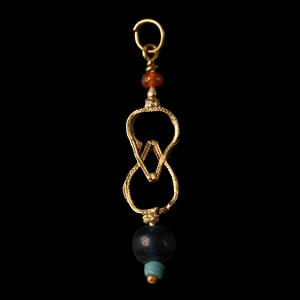
Western Asiatic Gold Openwork Bead Pendant
Circa 1st millennium B.C. and laterSold for (Inc. bp): £140
Composed of two intersecting teardrop-shaped rings with plaited borders; two blue glass bead suspended from below with a granulated collar above; the decorative suspension loop with a granulated collar and an oblate carnelian bead. 1.78 grams, 45 mm
Ex property of a late Japanese collector, 1970-2000s. Accompanied by an old collection ticket. -
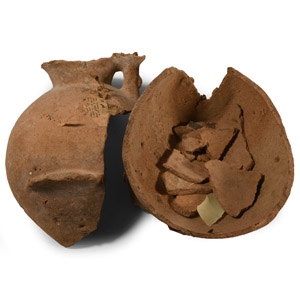
Western Asiatic and other Broken Pottery Vessel Group
2nd-1st millennium B.C.Sold for (Inc. bp): £13
Including a large amphora with integral loop handle, and other items. 3.1 kg total, 4-32 cm
Ex London, UK, gallery. Property of a North London, UK, gentleman. -
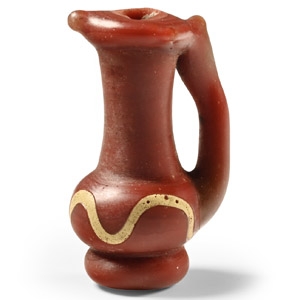
Phoenician Core-Formed Glass Juglet Bead
6th-4th century B.C.Sold for (Inc. bp): £124
Formed of maroon glass with a yellow trail decoration to the body, applied handle to the rear. 4.24 grams, 27 mm
From the property of late Mr SM, London, UK, 1969-1999, thence by descent.
