
Loading, please wait...
LOT 1118
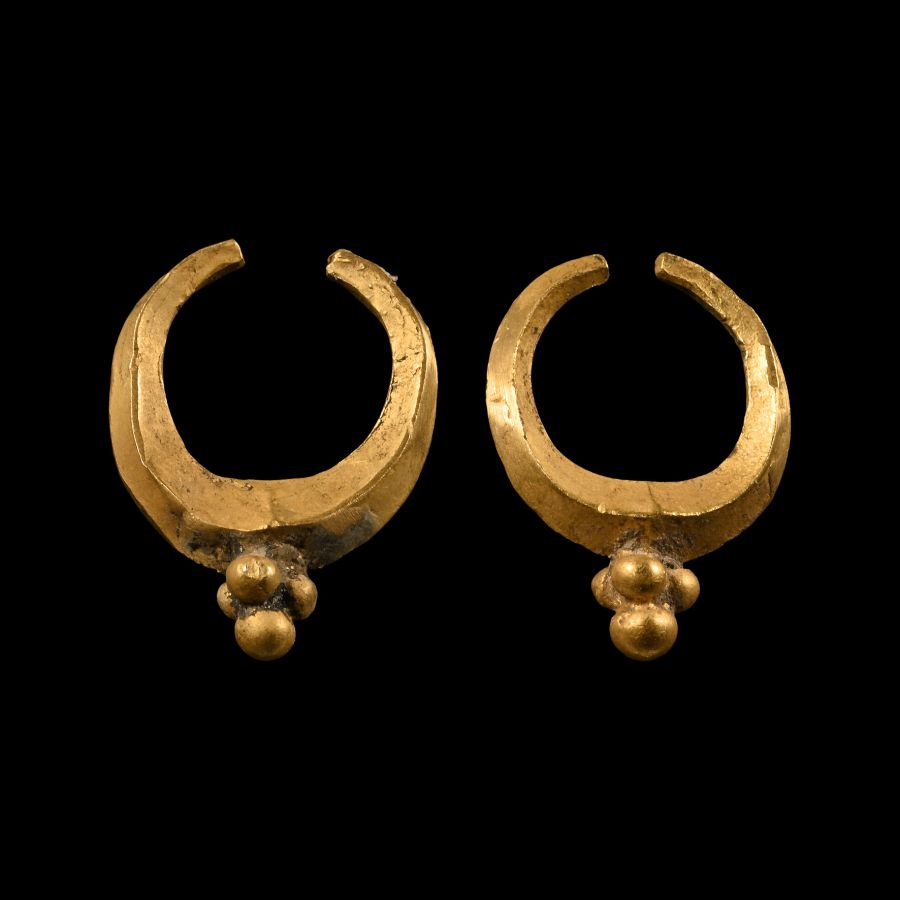
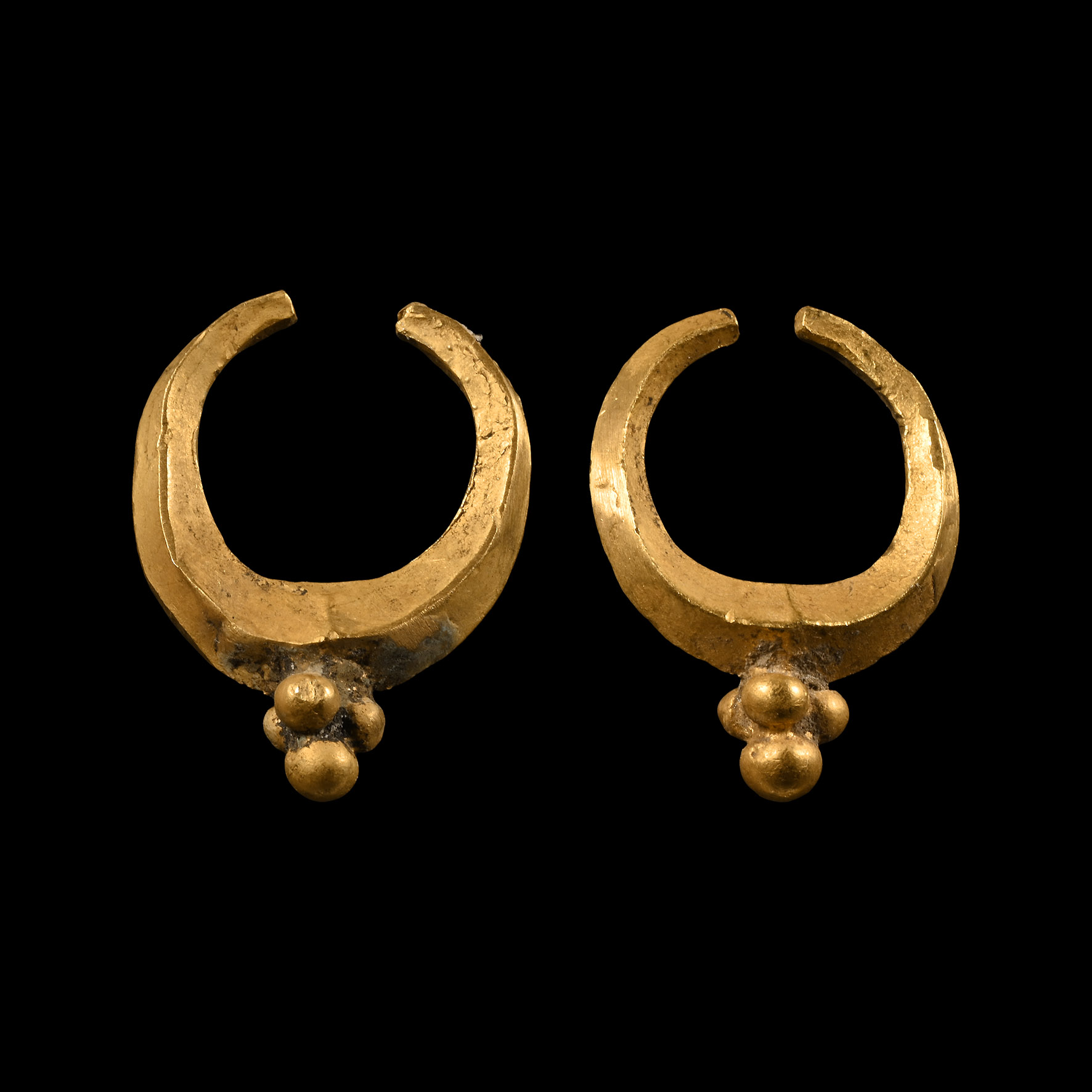
Western Asiatic Gold Earrings
6TH-4TH CENTURY B.C.
3/4 in. (5.48 grams total, 18-19 mm).
Matched pair, crescentic with chamfered profile, granule cluster to the apex. [2]
ProvenanceFrom a late Japanese specialist collector, 1970-2000s.
CONDITIONTimeLine Auctions follows a vetting process to ensure the authenticity and legality of all items, reinforcing our commitment to integrity and responsible trading. Each antiquity, antique, and coin lot undergoes thorough examination by a vetting committee of at least ten external specialists, professional trade association members, scientists, and archaeologists: Our Vetting Process
AUCTIONS:
TimeLine is a leading auction house specialising in antiquities, ancient art, collectables, natural history, coins, medals, and books. Our auctions offer museums, collectors, historians, and enthusiasts the opportunity to acquire unique and historically significant pieces.
LOT 1118
Western Asiatic Gold Earrings
Estimate £400 - 600€460 - 700 (for guidance only)$540 - 810 (for guidance only)
-
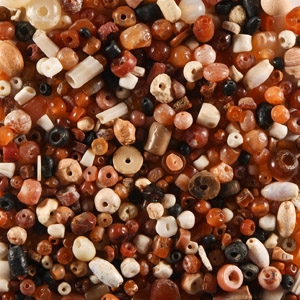
Western Asiatic Carnelian and Other Bead Collection
1st millennium B.C. and laterSold for (Inc. bp): £156
Comprising a quantity of mixed carnelian, agate, and other beads. 105 grams total, 3-12 mm
UK gallery, early 2000s.
Carnelian beads were diffused in west from the Iranian and other Western Asiatic countries. During Antiquity, the beads were transported from their places of manufacture in India and Persian Empires, and archaeological and literary sources provide evidence of the high prosperity of the Red Sea ports as well as of their trade contact with the Indo-Pacific regions. -
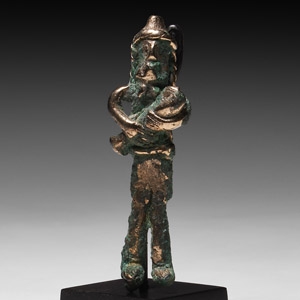
Amlash Bronze Mother and Child Figure
Mid 2nd millennium B.C.Sold for (Inc. bp): £390
Formed as a standing figure cradling an infant, stylised facial and anatomical detailing; suspension loop to reverse; accompanied by a custom-made display stand. 28 grams, 66 mm (39 grams total, 73 mm including stand)
Fine condition.
Acquired before 1983. Ex London gallery, 1990s. -
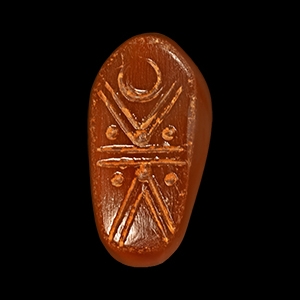
Neo Babylonian Agate Duck Weight with Engraving
Mid 1st millennium B.C.Sold for (Inc. bp): £585
Modelled as a duck with its head resting along its voluminous back, base engraved with a crescent, dots, lines and triangles. 11.8 grams, 28 mm
Collected from 1969-1999. From the collection of the late Mr S.M., London, UK.
There are references to keeping ducks in ancient Egypt and Mesopotamia from the third millennium B.C. onwards. One of the most common shapes for Near Eastern weights was 'the sleeping duck'. Representation demonstrates that the duck served chiefly as a meat source, even though a certain cultic significance must also be presumed: the crescent here engraved could be connected with the cult of Ishtar.
