
Loading, please wait...
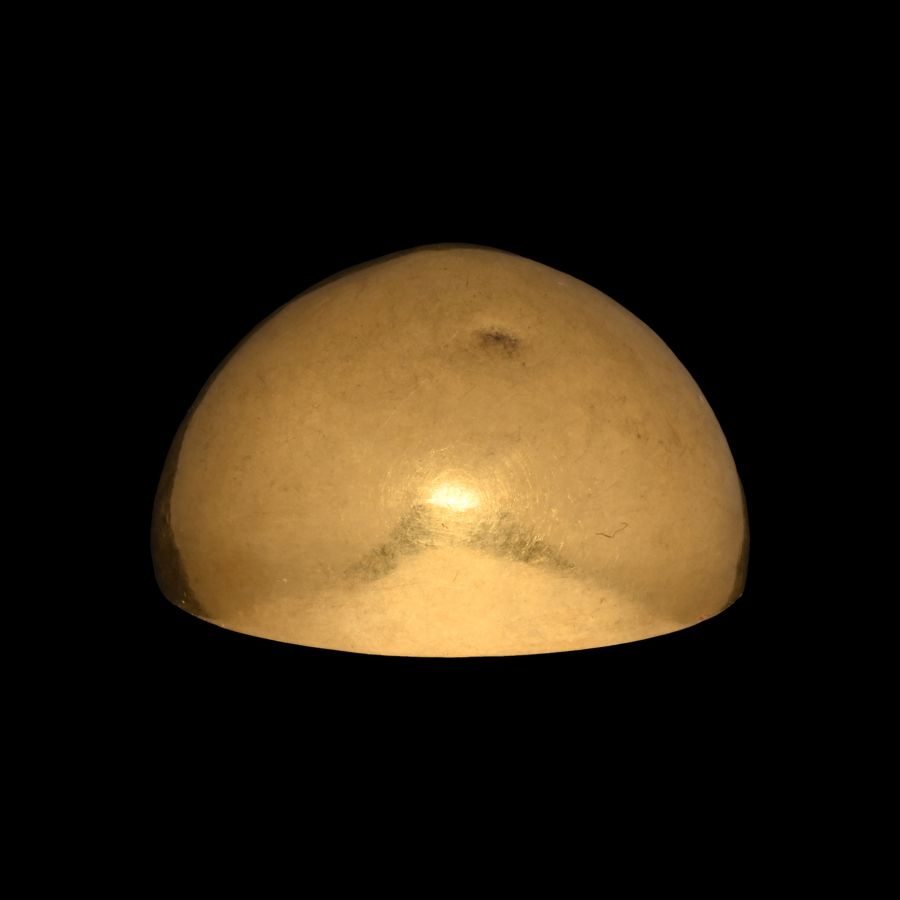
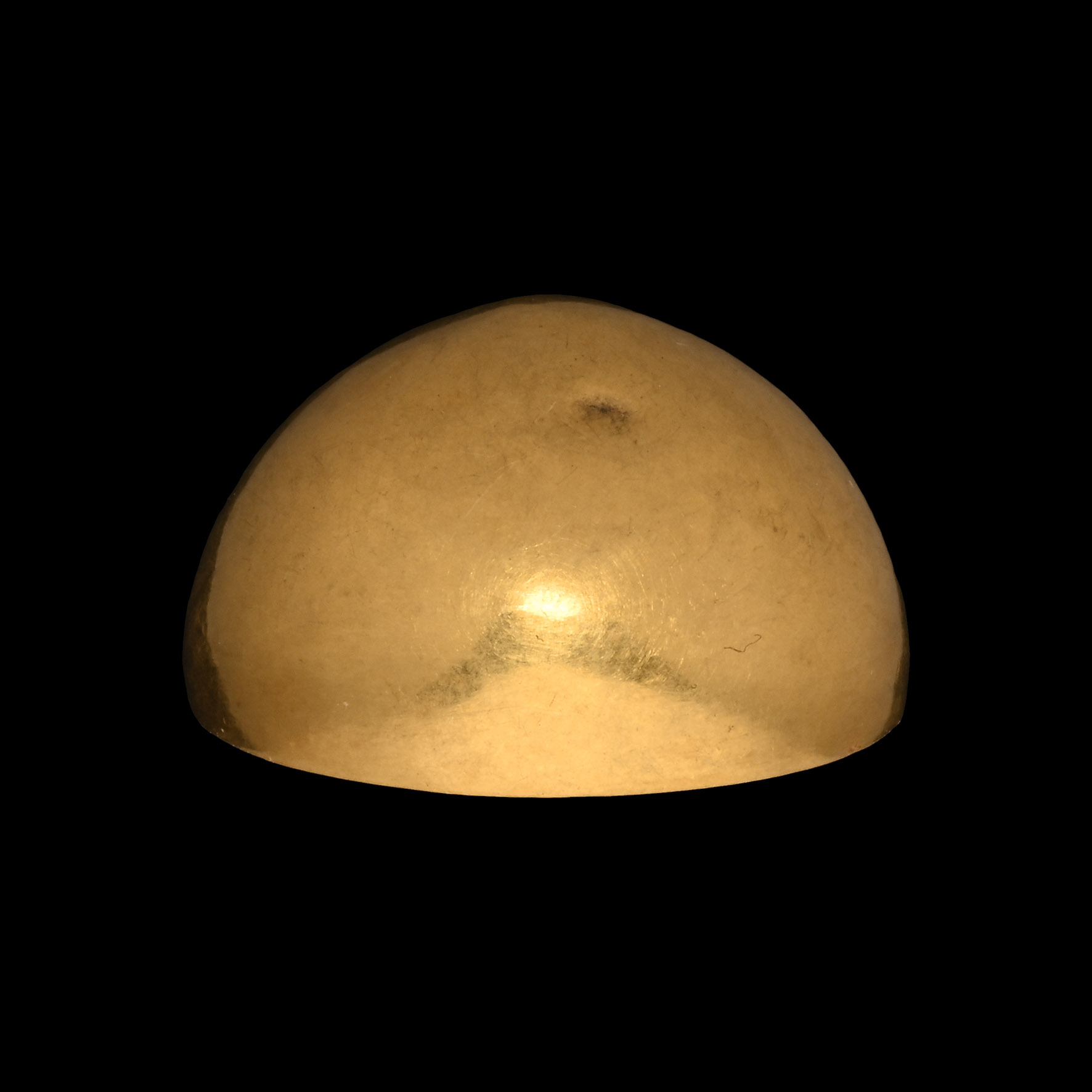
LOT 1100
Western Asiatic Gold Bell-Shaped Pendant
CIRCA 1ST MILLENNIUM B.C.
1 in. (3.85 grams, 23 mm).
Hemispherical with loop to the inner face to accept a clapper.
ProvenanceFrom a late Japanese specialist collector, 1970-2000s.
CONDITIONTimeLine Auctions follows a vetting process to ensure the authenticity and legality of all items, reinforcing our commitment to integrity and responsible trading. Each antiquity, antique, and coin lot undergoes thorough examination by a vetting committee of at least ten external specialists, professional trade association members, scientists, and archaeologists: Our Vetting Process
AUCTIONS:
TimeLine is a leading auction house specialising in antiquities, ancient art, collectables, natural history, coins, medals, and books. Our auctions offer museums, collectors, historians, and enthusiasts the opportunity to acquire unique and historically significant pieces.
-
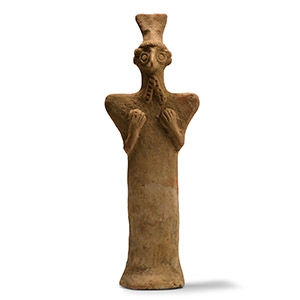
Syro-Hittite Terracotta Figure
1500-1200 B.C.Sold for (Inc. bp): £390
With lentoid-section body and flared base (restored); the face with pinched profile, tall headdress with transverse segmented peak, applied disc eyes, applied chevron beard, hands raised to the chest. 150 grams, 20 cm
Previously with Alex Szolin, Nottingham, UK. Ex Gerrard collection, 1990s. -
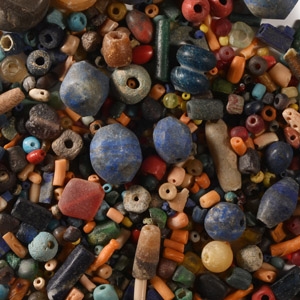
Western Asiatic and Other Bead Group
1st millennium B.C. and laterSold for (Inc. bp): £72
Comprising a large quantity of beads in various shapes and sizes in glass, stone, coral and lapis lazuli, including some large feature beads. 185 grams total, 2-26 mm
Ex property of a late Japanese collector, 1970-2000s. -
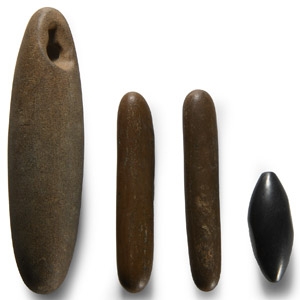
Western Asiatic Stone Weight Collection
Circa 1st millennium B.C.Sold for (Inc. bp): £33
Comprising: two baguette-shaped stone bars, a D-section scaphoid haematite bar, a columnar stone bar with rounded ends, one pierced for suspension. 184 grams total, 4-10.3 cm
From a collection acquired on the UK art market from various auction houses and collections mostly before 2000. From an important Cambridgeshire estate; thence by descent.
