
Loading, please wait...
LOT 1091
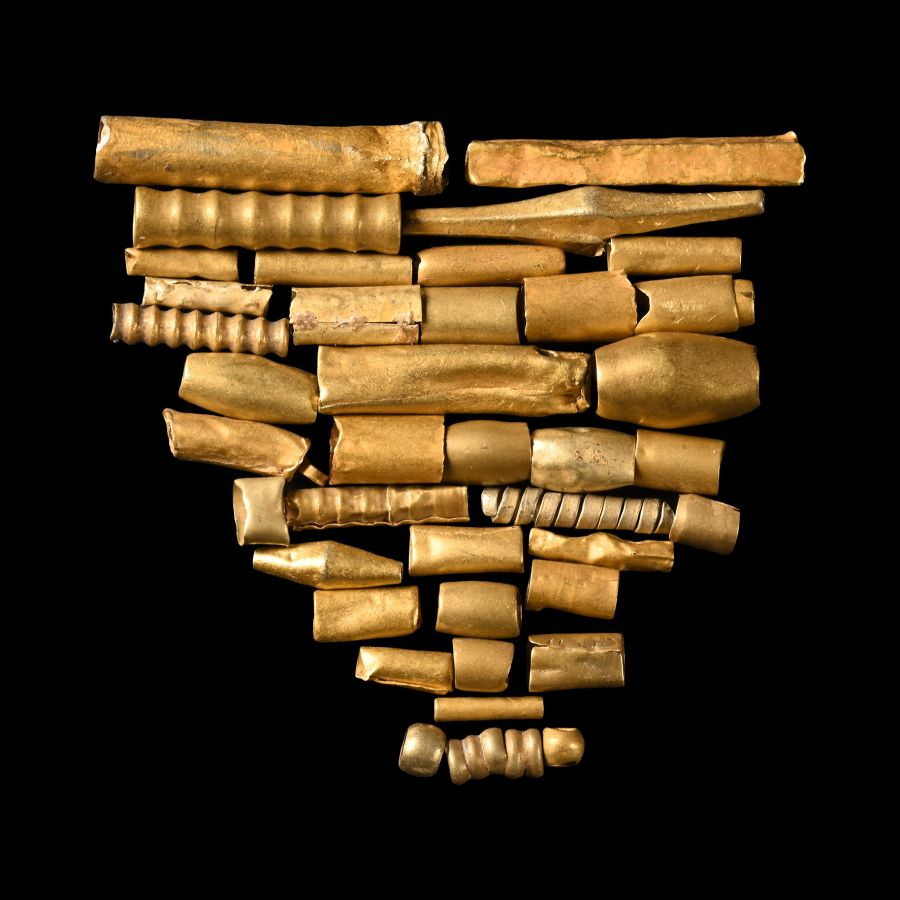
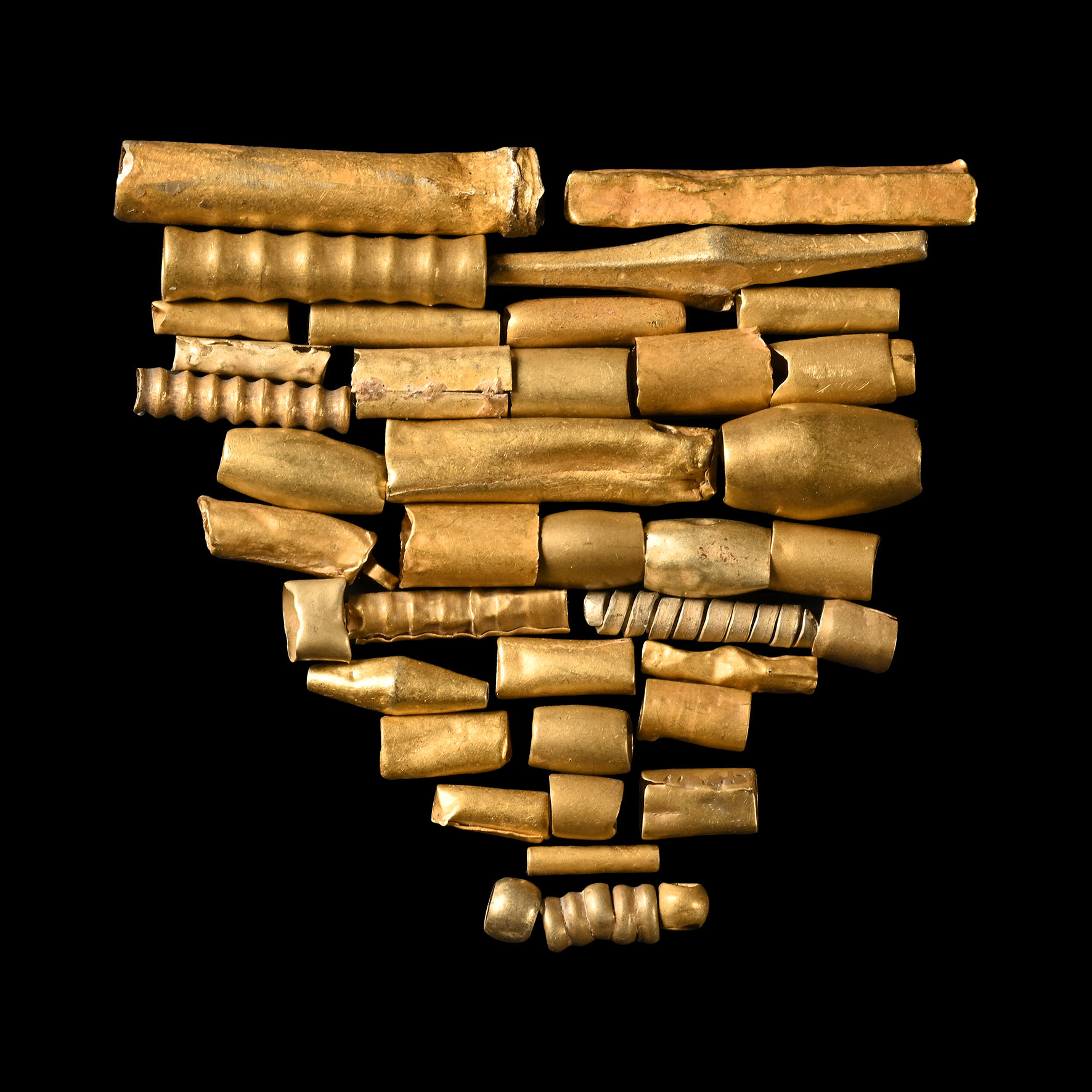
Western Asiatic Gold Bead Collection
1ST MILLENNIUM B.C.
1/8 - 7/8 in. (10.51 grams total, 3-23 mm).
Including fusiform, tubular, biconvex and other types. [38]
ProvenanceEx property of a late Japanese collector, 1970s.
CONDITIONTimeLine Auctions follows a vetting process to ensure the authenticity and legality of all items, reinforcing our commitment to integrity and responsible trading. Each antiquity, antique, and coin lot undergoes thorough examination by a vetting committee of at least ten external specialists, professional trade association members, scientists, and archaeologists: Our Vetting Process
AUCTIONS:
TimeLine is a leading auction house specialising in antiquities, ancient art, collectables, natural history, coins, medals, and books. Our auctions offer museums, collectors, historians, and enthusiasts the opportunity to acquire unique and historically significant pieces.
-
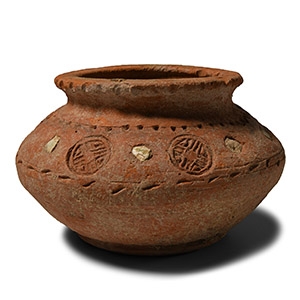
Bactrian Ceramic Jar with Stamped Decoration
1st millennium B.C.Sold for (Inc. bp): £468
Squat in profile with broad foot, carinated rim with notched edge, band of impressed rosettes and inset shell studs to the shoulder, notched borders. 540 grams, 13.8 cm wide
with a London, UK gallery 1971-early 2000s. -
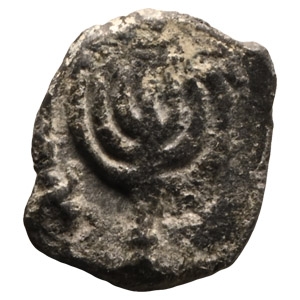
Jewish Lead Sealing with Menorah
Circa 4th century A.D. or earlierSold for (Inc. bp): £260
Discoid with an impressed menorah to one side, the reverse with an eagle(?). 1.27 grams, 13 mm
From the property of late Mr SM, London, UK, 1969-1999. -
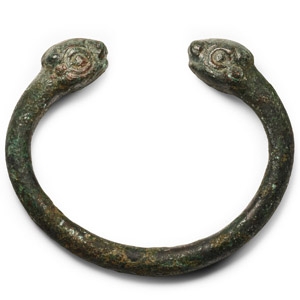
Urartu Bronze Bracelet with Beast Heads
10th-7th century B.C.Sold for (Inc. bp): £234
With a thick penannular body and large dragon-head terminals. 81 grams, 72 mm
UK private collection before 2000. On the UK art market. Property of a London gentleman.
