
Loading, please wait...


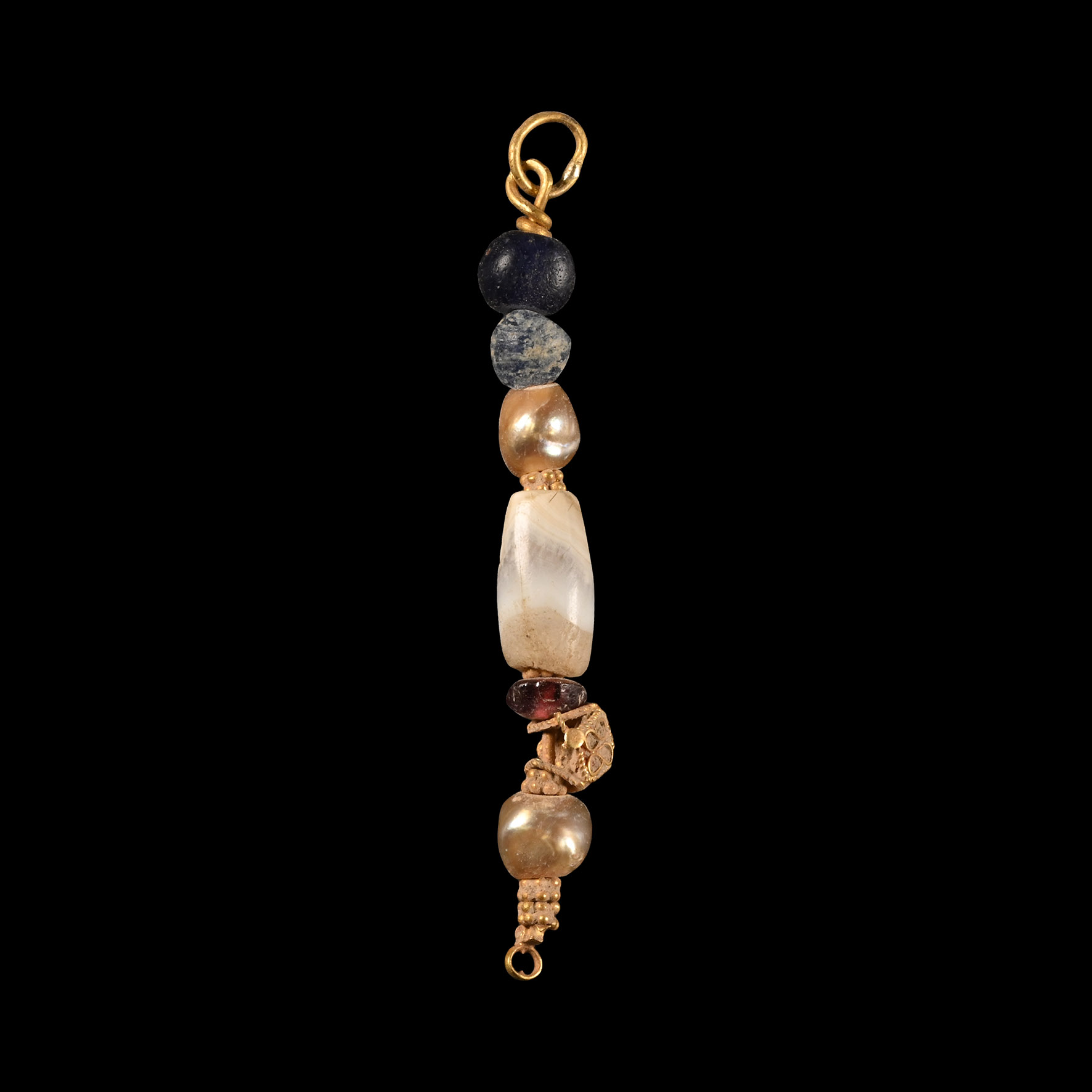
LOT 1218
Western Asiatic Gold and Bead Pendant
1ST MILLENNIUM B.C.
2 1/8 in. (2.44 grams, 53 mm).
Gold wire dangle with agate, pearl, glass and other beads.
ProvenanceEx property of a late Japanese collector, 1970s-2000s.
CONDITIONTimeLine Auctions follows a vetting process to ensure the authenticity and legality of all items, reinforcing our commitment to integrity and responsible trading. Each antiquity, antique, and coin lot undergoes thorough examination by a vetting committee of at least ten external specialists, professional trade association members, scientists, and archaeologists: Our Vetting Process
AUCTIONS:
TimeLine is a leading auction house specialising in antiquities, ancient art, collectables, natural history, coins, medals, and books. Our auctions offer museums, collectors, historians, and enthusiasts the opportunity to acquire unique and historically significant pieces.
-
Western Asiatic Bronze Double Bull-Headed God Statuette
1st millennium B.C.Sold for (Inc. bp): £468
Flat in section standing figure with legs spread and arms held at the sides, two addorsed bull-heads above with curved horns; mounteed on a custom-made display stand. 110 grams total, 13.3 cm including stand
From a collection acquired on the UK art market from various auction houses and collections mostly before 2000. From an important Cambridgeshire estate; thence by descent. -
.jpg)
Mesopotamian Round School Cuneiform Tablet
3rd-2nd millennium B.C.Sold for (Inc. bp): £182
Domed underside with cuneiform text to the upper face; chipped. 114 grams, 70 mm
Specialised collection of cuneiform texts, the property of a London gentleman and housed in London before 1992. Thence by descent to family members. Examined by Professor Wilfrid George Lambert FBA (1926-2011), historian, archaeologist, and specialist in Assyriology and Near Eastern archaeology, in the late 1980s and early 1990s. This small collection is exceptional for the variety of types, including some very rare and well preserved examples. -
Syro-Phoenician Two Shekel Deer Weight
1st millennium B.C.Sold for (Inc. bp): £572
Modelled in the round as a figure pierced at the neck to accept a mounting ring. 14.6 grams, 30 mm
Collected from 1970-1999. From the collection of the late Mr S.M., London, UK.
