
Loading, please wait...
LOT 1329
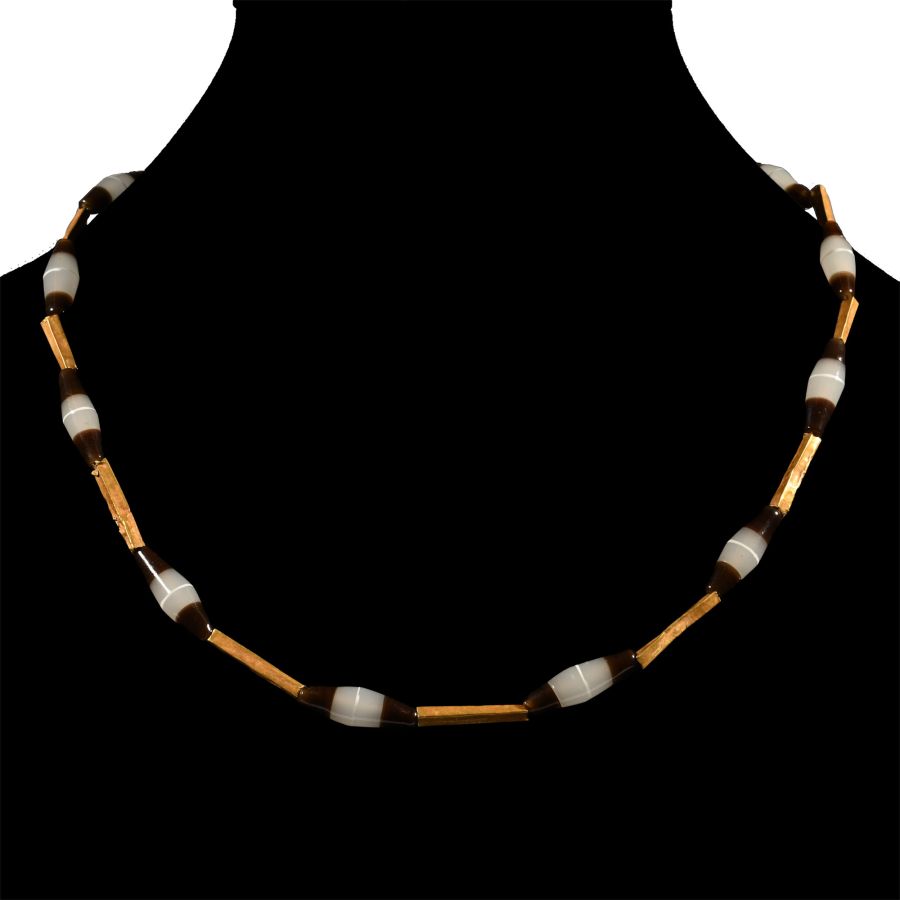
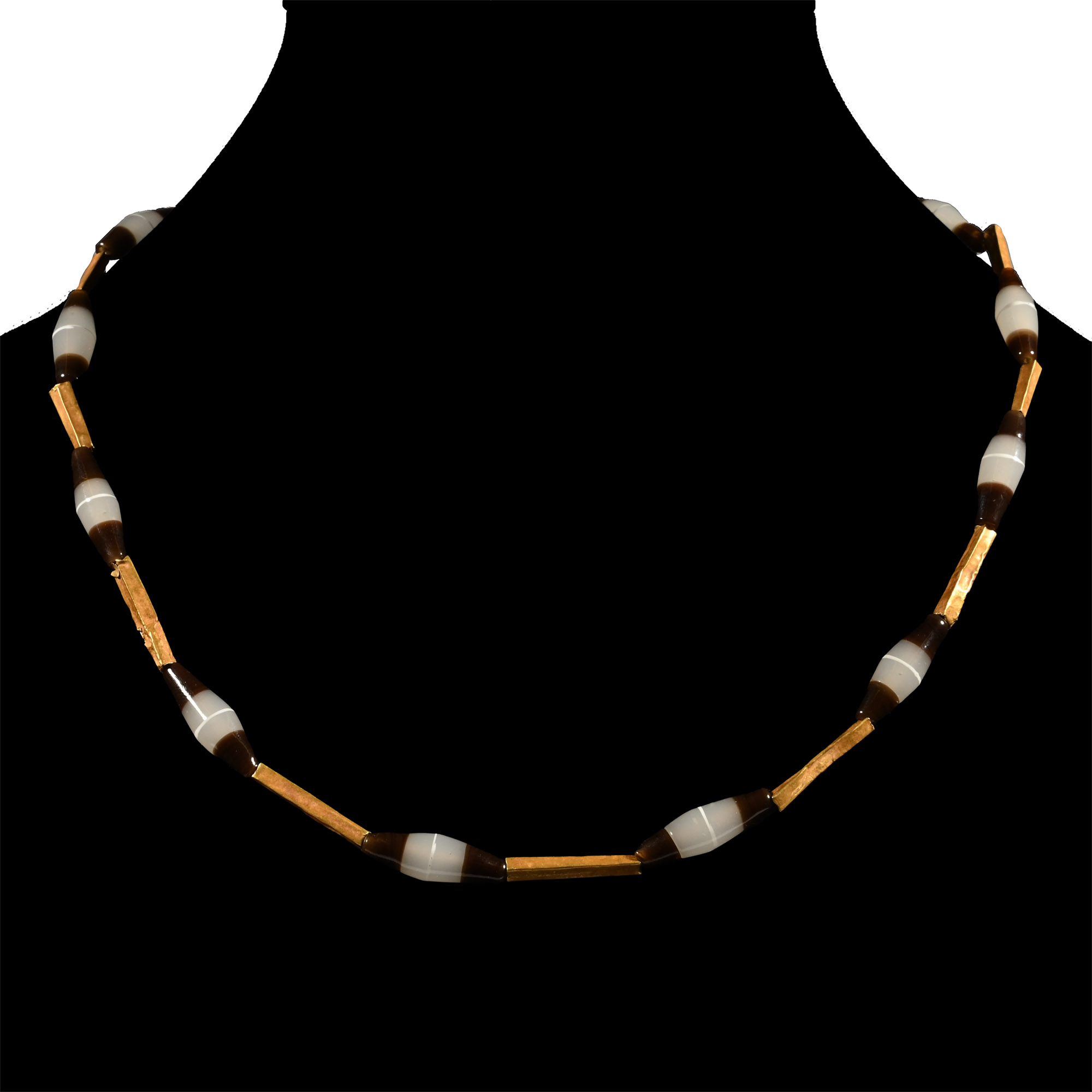
Western Asiatic Gold and Banded Glass Bead Necklace
2ND MILLENNIUM B.C. OR LATER
17 7/8 in. (20 grams, 45.5 cm).
Composed of gold rectangular tubes, interspersed with later brown and white biconical glass beads; modern clasp, restrung.
ProvenanceFormerly in the collection of Mr S.M., London, formed 1948-2000.
Ex property of a North London gentleman.
Property of a Californian, USA, collector.
This lot has been cleared against the Art Loss Register database, and is accompanied by an illustrated lot declaration signed by the Head of the Antiquities Department, Dr Raffaele D'Amato.
TimeLine Auctions follows a vetting process to ensure the authenticity and legality of all items, reinforcing our commitment to integrity and responsible trading. Each antiquity, antique, and coin lot undergoes thorough examination by a vetting committee of at least ten external specialists, professional trade association members, scientists, and archaeologists: Our Vetting Process
AUCTIONS:
TimeLine is a leading auction house specialising in antiquities, ancient art, collectables, natural history, coins, medals, and books. Our auctions offer museums, collectors, historians, and enthusiasts the opportunity to acquire unique and historically significant pieces.
LOT 1329
Western Asiatic Gold and Banded Glass Bead Necklace
Estimate £500 - 700€580 - 810 (for guidance only)$680 - 950 (for guidance only)
-
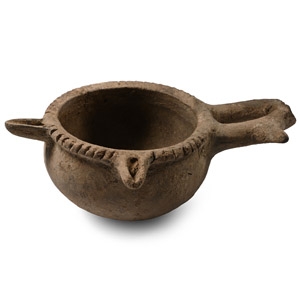
Luristan Bronze Cup with Star Handle
2nd-1st millennium B.C.Sold for (Inc. bp): £78
Barrel-shaped in profile with thick rim and loop handle; ropework detailing to rim, three radiating spouts below the rim, handle with lateral spurs. 370 grams, 20 cm wide
From a West London, UK, collection, 1990s. This lot has been cleared against the Art Loss Register database, and is accompanied by an illustrated lot declaration signed by the Head of the Antiquities Department, Dr Raffaele D'Amato. -
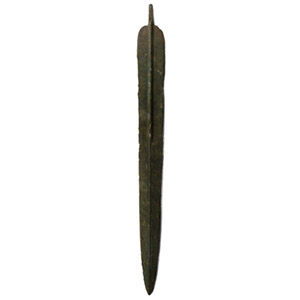
Very Large Luristan Bronze Dagger Blade
Early 1st millennium B.C.Sold for (Inc. bp): £169
Tapering leaf-shaped blade with a raised midrib developing to a short tang, pierced at the lower end. 374 grams, 49.5 cm
Ex London art market, 1980-1990s. This lot has been cleared against the Art Loss Register database, and is accompanied by an illustrated lot declaration signed by the Head of the Antiquities Department, Dr Raffaele D'Amato.
The Luri people produced a quantity of fine metalwork, which according to Dr. Khorasani, could be due to a settled period which arose as a result of the defeat of the Elamites by the Babylonians, leaving the Luristani people in relative peace for a period of time after 1200 BC. According to Khorasani 'A culture of innovation and experimentation flourished, and the repertoire of the Luristan smiths expanded in the period between 1150–1050 B.C.' -
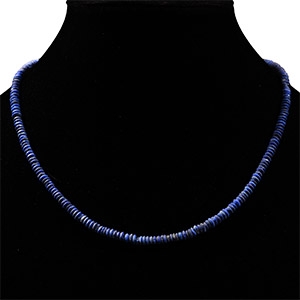
Bactrian Style Lapis Lazuli Bead Necklace String
20th century A.D.Sold for (Inc. bp): £39
Group of small biconvex beads. 17 grams, 46 cm
Ex London, UK, collection, 1990s. This lot has been cleared against the Art Loss Register database, and is accompanied by an illustrated lot declaration signed by the Head of the Antiquities Department, Dr Raffaele D'Amato.
