
Loading, please wait...
LOT 1386
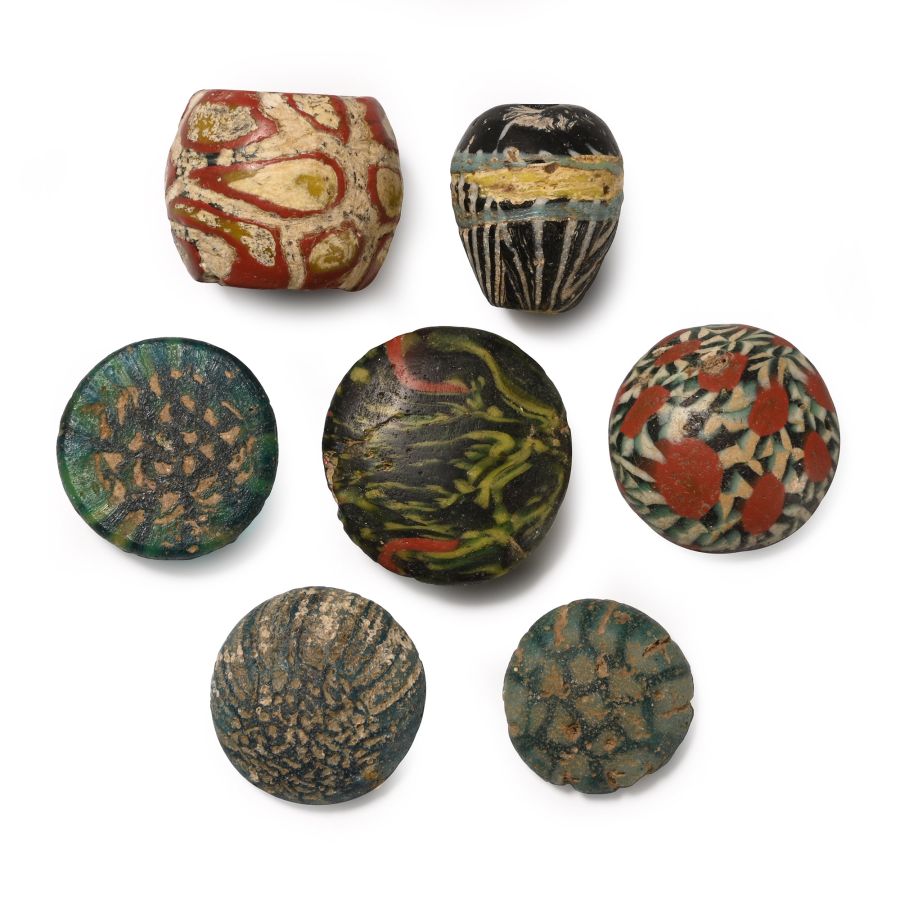
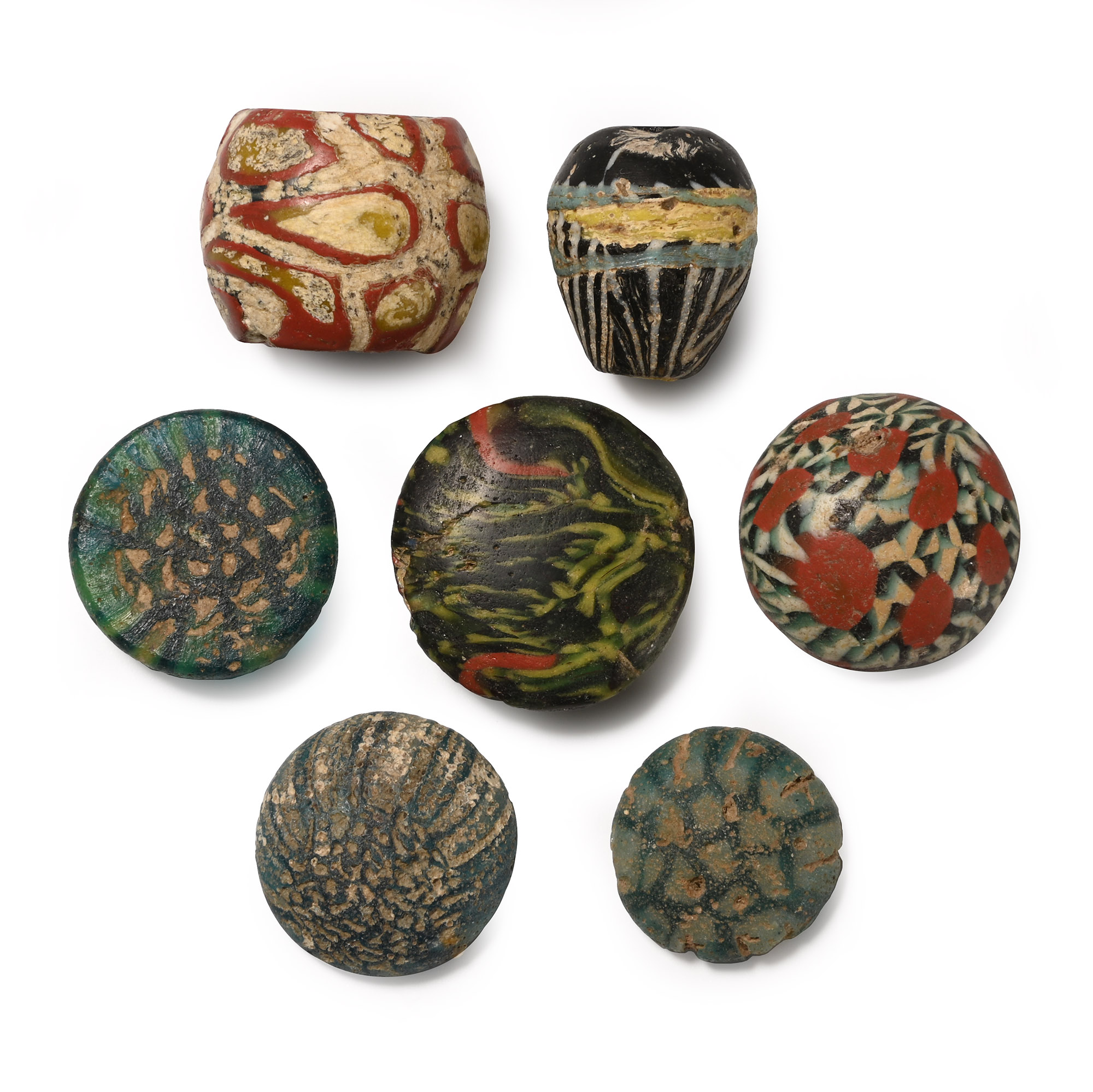
Western Asiatic Glass Gaming Piece and Bead Collection
11TH-15TH CENTURY A.D. AND EARLIER
5/8 - 7/8 in. (31.8 grams total, 16-22 mm).
Comprising: four plano-convex fused millefiori glass slices and three trailed lampwork beads. [7, No Reserve]
ProvenanceAcquired on the UK art market 1979-1983.
This lot has been cleared against the Art Loss Register database, and is accompanied by an illustrated lot declaration signed by the Head of the Antiquities Department, Dr Raffaele D'Amato.
TimeLine Auctions follows a vetting process to ensure the authenticity and legality of all items, reinforcing our commitment to integrity and responsible trading. Each antiquity, antique, and coin lot undergoes thorough examination by a vetting committee of at least ten external specialists, professional trade association members, scientists, and archaeologists: Our Vetting Process
AUCTIONS:
TimeLine is a leading auction house specialising in antiquities, ancient art, collectables, natural history, coins, medals, and books. Our auctions offer museums, collectors, historians, and enthusiasts the opportunity to acquire unique and historically significant pieces.
-
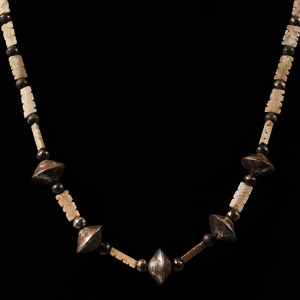
Elamite Silver and Stone Bead Necklace
2nd-1st millennium B.C.Estimate: £500 - 700 (+bp*)
Opening Bid: £250
Restrung group of rectangular calcite beads with notched edges, spherical silver spacers, five hollow biconvex beads as the centrepiece. 37.9 grams, 56.5 cm
Acquired before 1983. Ex London gallery, 1990s. This lot has been cleared against the Art Loss Register database, and is accompanied by an illustrated lot declaration signed by the Head of the Antiquities Department, Dr Raffaele D'Amato. -
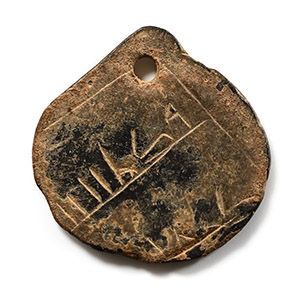
Western Asiatic Bronze Pendant with Inscription
Circa 7th-8th century A.D.Sold for (Inc. bp): £26
Discoid and pierced through the upper edge, schematic inscription within a partial rectangle to one side. 3.37 grams, 23 mm
From the collection of a gentleman, acquired on the London art market in the 1990s. This lot has been cleared against the Art Loss Register database, and is accompanied by an illustrated lot declaration signed by the Head of the Antiquities Department, Dr Raffaele D'Amato. -
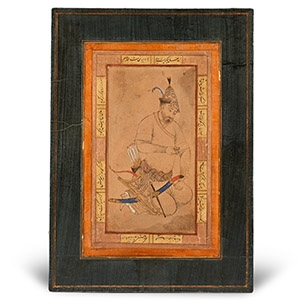
Persian Painting of a Kneeling Warrior
Early 20th century A.D.Sold for (Inc. bp): £520
Showing a Turkoman archer holding a small cup in his right hand, bow-case and quiver with arrows suspended from his belt, kilij and a dagger resting against his legs; Nastaliq script border with leaves and floral motifs. 47 grams, 29.5 x 21 cm
From the family collection of a Hampstead gentleman; formerly acquired in the 1980s. This lot has been cleared against the Art Loss Register database, and is accompanied by an illustrated lot declaration signed by the Head of the Antiquities Department, Dr Raffaele D'Amato.
