
Loading, please wait...
LOT 1119
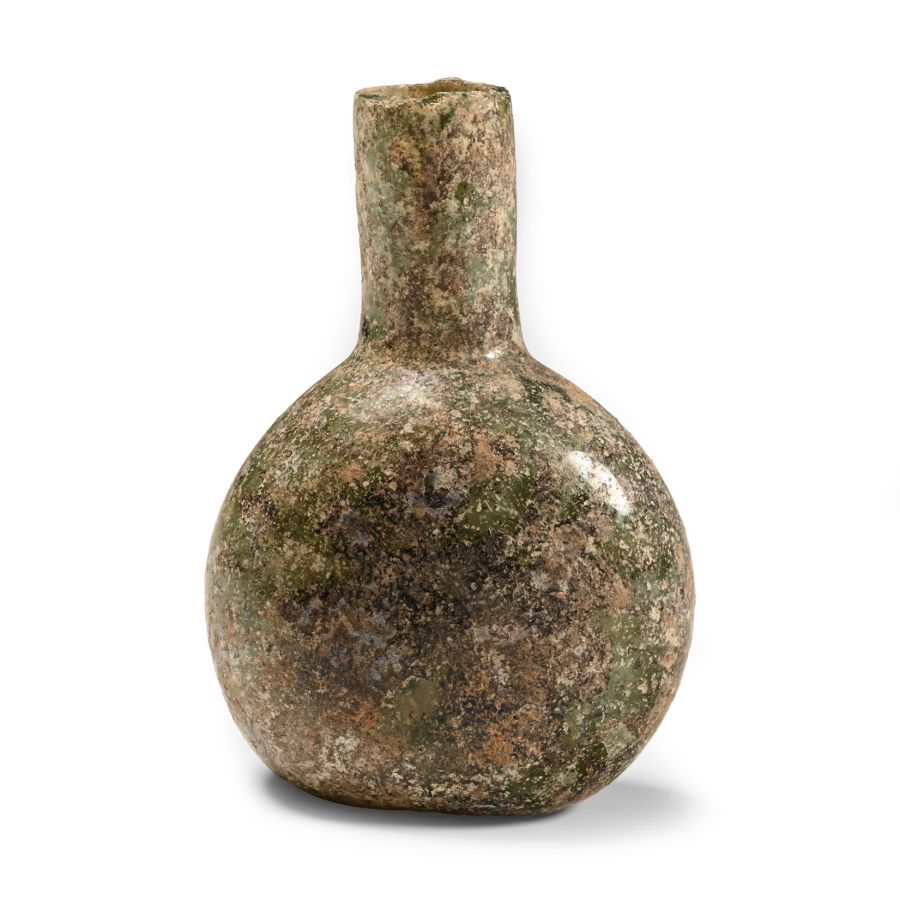
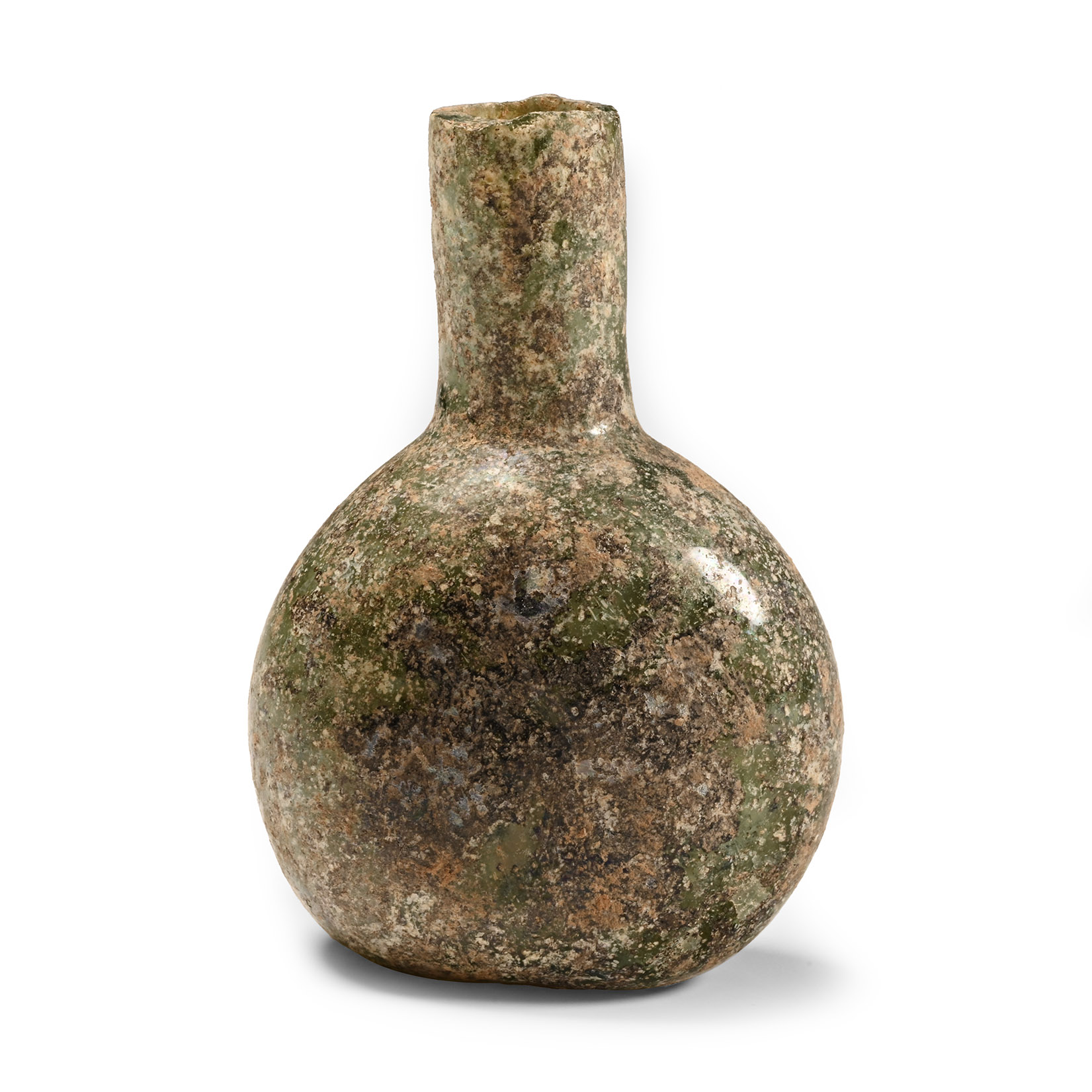
Western Asiatic Glass Bottle
CIRCA 10TH-12TH CENTURY A.D.
2 1/8 in. (18 grams, 55 mm).
Elliptical in section with dimple base, columnar neck. [No Reserve]
ProvenanceAcquired 1980-2015.
Ex Abelita family collection.
TimeLine Auctions follows a vetting process to ensure the authenticity and legality of all items, reinforcing our commitment to integrity and responsible trading. Each antiquity, antique, and coin lot undergoes thorough examination by a vetting committee of at least ten external specialists, professional trade association members, scientists, and archaeologists: Our Vetting Process
AUCTIONS:
TimeLine is a leading auction house specialising in antiquities, ancient art, collectables, natural history, coins, medals, and books. Our auctions offer museums, collectors, historians, and enthusiasts the opportunity to acquire unique and historically significant pieces.
-

Bactrian Alabaster Vessel
1st millennium B.C.Estimate: £500 - 700 (+bp*)
Opening Bid: £150
Of conical form with narrow flat base, carved from banded alabaster. 850 grams, 15 cm
Ex London, UK, gallery, 1971-early 2000s. -
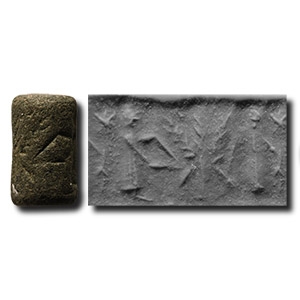
Western Asiatic Stone Cylinder Seal
1st millennium B.C.Sold for (Inc. bp): £65
Tubular in form with lightly-incised rectilinear images and text. 4.78 grams, 20 mm
From the 'S' collection, acquired 1970-1990s. The collection was seen and studied by W.G. Lambert, late Professor of Assyriology at the University of Birmingham, 1970-1993. -
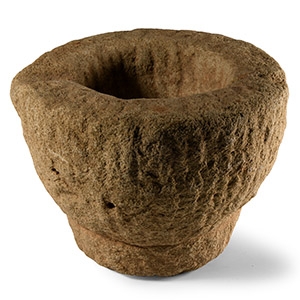
Western Asiatic Limestone Mortar
1st millennium B.C.Sold for (Inc. bp): £72
With short columnar base and bulbous upper body, broad rim with pouring lip. 4.85 kg, 13 cm
From a collection acquired on the UK art market from various auction houses and collections mostly before 2000. From an important Cambridgeshire estate; thence by descent.
The later (2nd -3rd century A.D.) Rabbinic tradition emphasised the difference between the permanent mortar (makhtesh kevua) and the movable one (makhtesh metaltelet), with the first being automatically sold with the house, but the second sold only if expressly stated by the vendor. This form of movable mortar was common in the Levant throughout the second half of the 1st millennium B.C.
