
Loading, please wait...
_900x900.jpg "Western Asiatic Glass and Silver Bead Necklace")
_200x200.jpg "Western Asiatic Glass and Silver Bead Necklace")
.jpg "Western Asiatic Glass and Silver Bead Necklace")
LOT 1365
Western Asiatic Glass and Silver Bead Necklace
1ST MILLENNIUM A.D. AND LATER
22 5/8 in. (94 grams, 57.5 cm).
Restrung, composed of brown oblate Indian glass beads with silver melon beads between; garnet and blue glass spool-shaped bead finials. [No Reserve]
ProvenancePreviously acquired on the UK art market in the 1990s.
Ex property of a London, UK, gentleman.
Ex property of a Californian, USA, collector.
TimeLine Auctions follows a vetting process to ensure the authenticity and legality of all items, reinforcing our commitment to integrity and responsible trading. Each antiquity, antique, and coin lot undergoes thorough examination by a vetting committee of at least ten external specialists, professional trade association members, scientists, and archaeologists: Our Vetting Process
AUCTIONS:
TimeLine is a leading auction house specialising in antiquities, ancient art, collectables, natural history, coins, medals, and books. Our auctions offer museums, collectors, historians, and enthusiasts the opportunity to acquire unique and historically significant pieces.
-
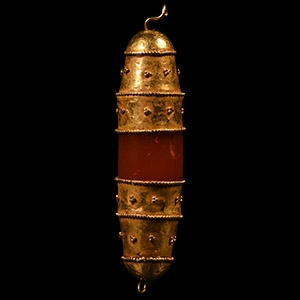
Early Parthian Carnelian Bead with Gold End Caps
1st century B.C.-1st century A.D.Estimate: £800 - 1,000 (‡+bp*)
Opening Bid: £400
Columnar bead with sheet-gold cap to each end, each with beaded circlets and applied granule clusters, domed end with loop; possibly assembled. 17.44 grams, 60 mm
Acquired in the mid 1980s-1990s. Private collection, Switzerland, thence by descent. Private collection, since the late 1990s. -
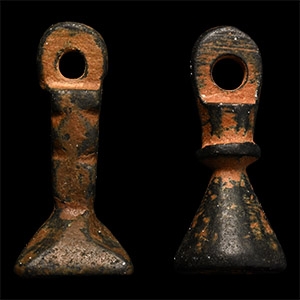
Judean Stamp Seal Group
1st century B.C.-3rd century A.D.Sold for (Inc. bp): £117
Each a square-section pyramidal base and balustered shank with pierced lug finial; avian motifs. 22.7 grams total, 29-30 mm
From the collection of a gentleman, acquired on the London art market in the 1990s. -
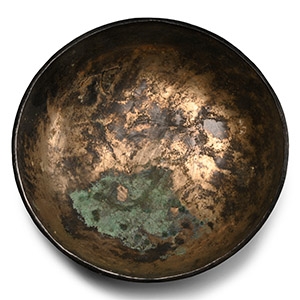
Western Asiatic Bronze Bowl
Mid 1st millennium B.C.Estimate: £100 - 140 (+bp*)
Opening Bid: £50
Broad and shallow with incised concentric rings to the inner face. 231 grams, 19.4 cm
Ex 1990s collection and with a central London gallery.
