
Loading, please wait...
LOT 1260
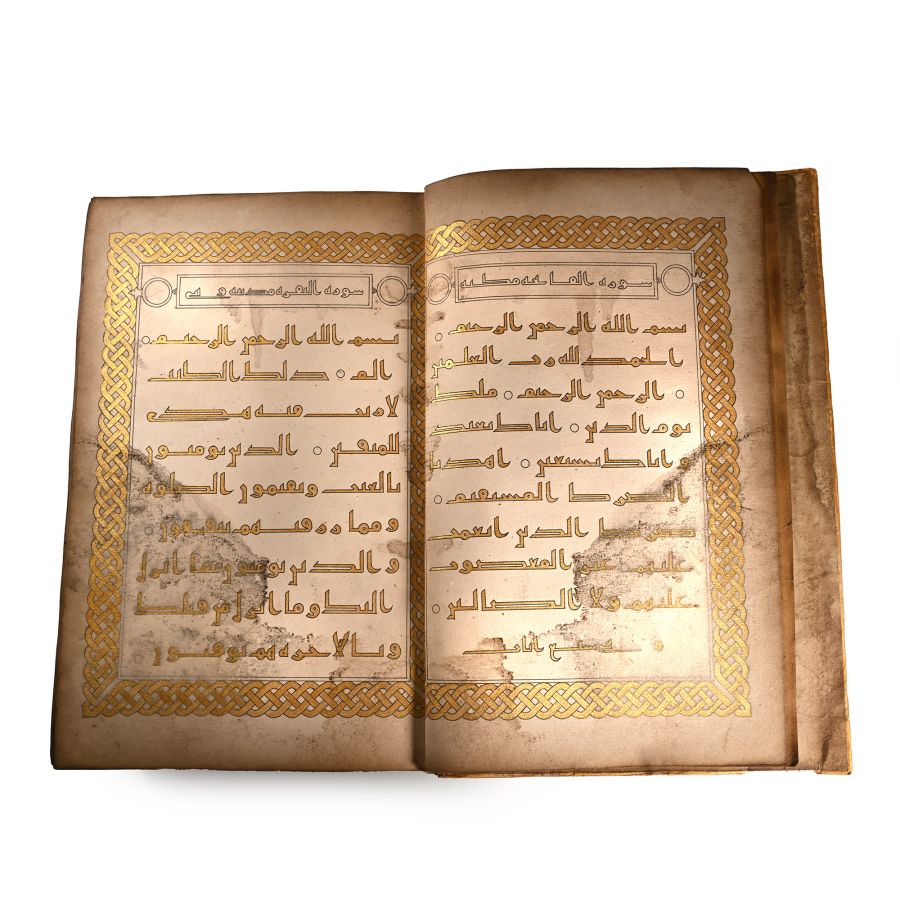
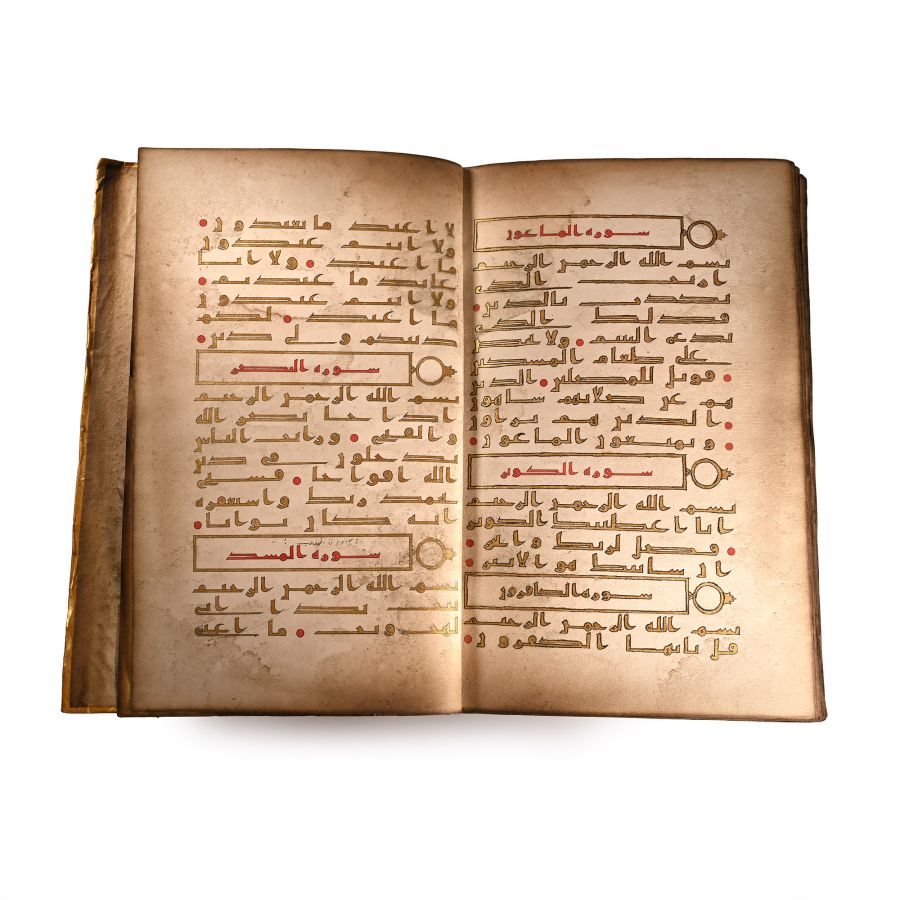
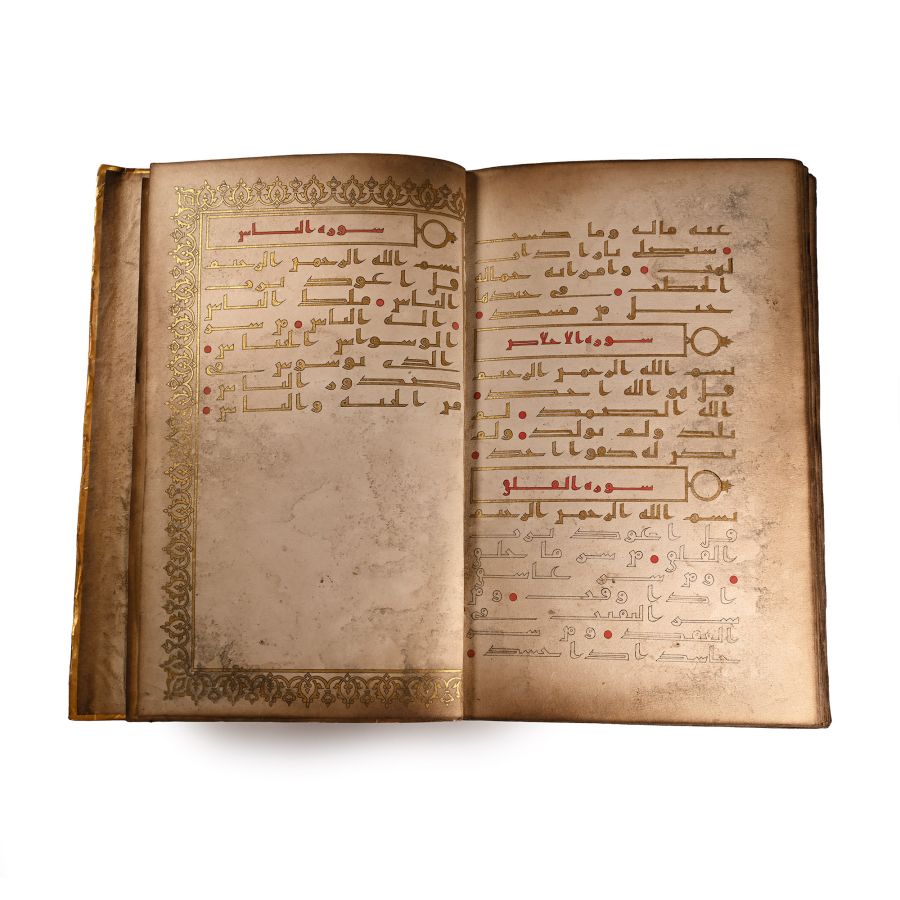
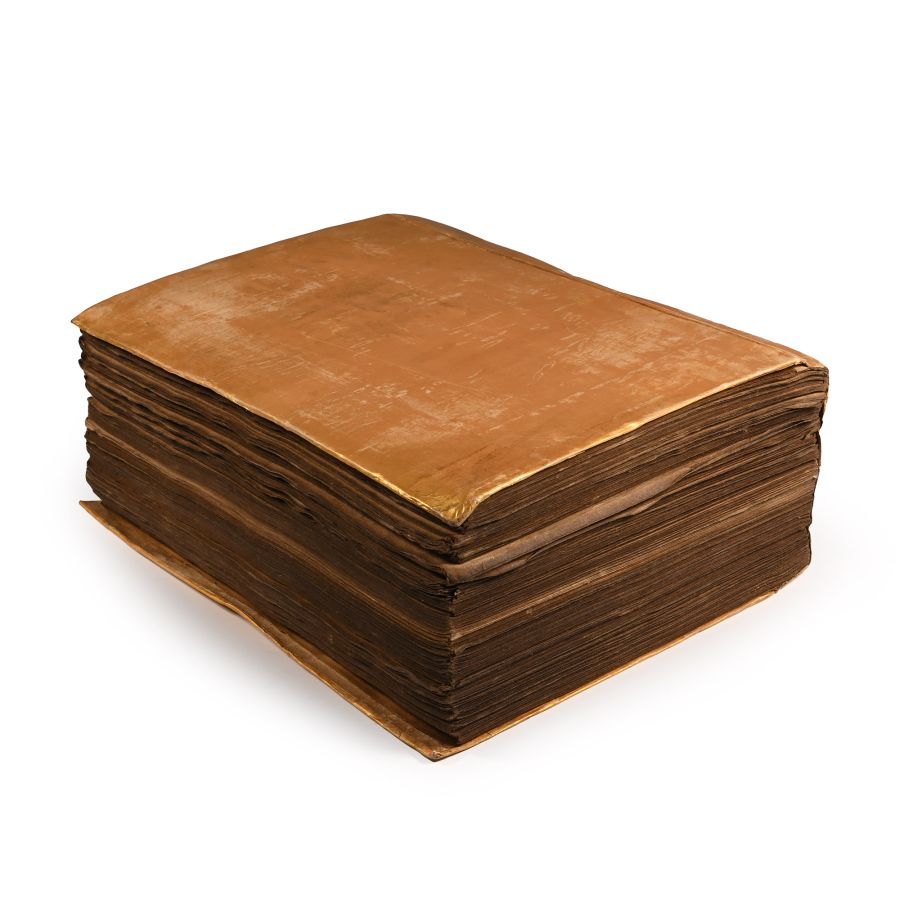
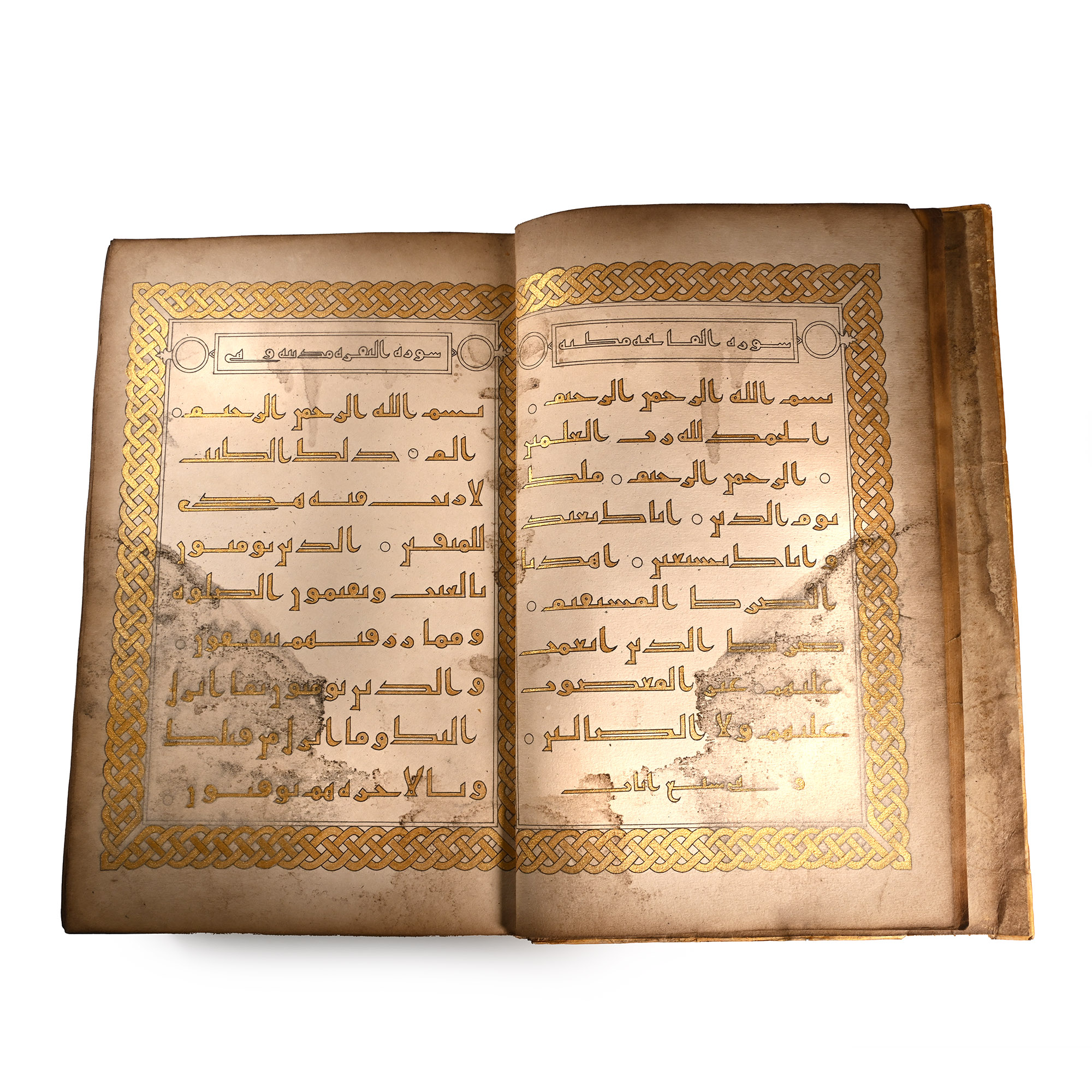
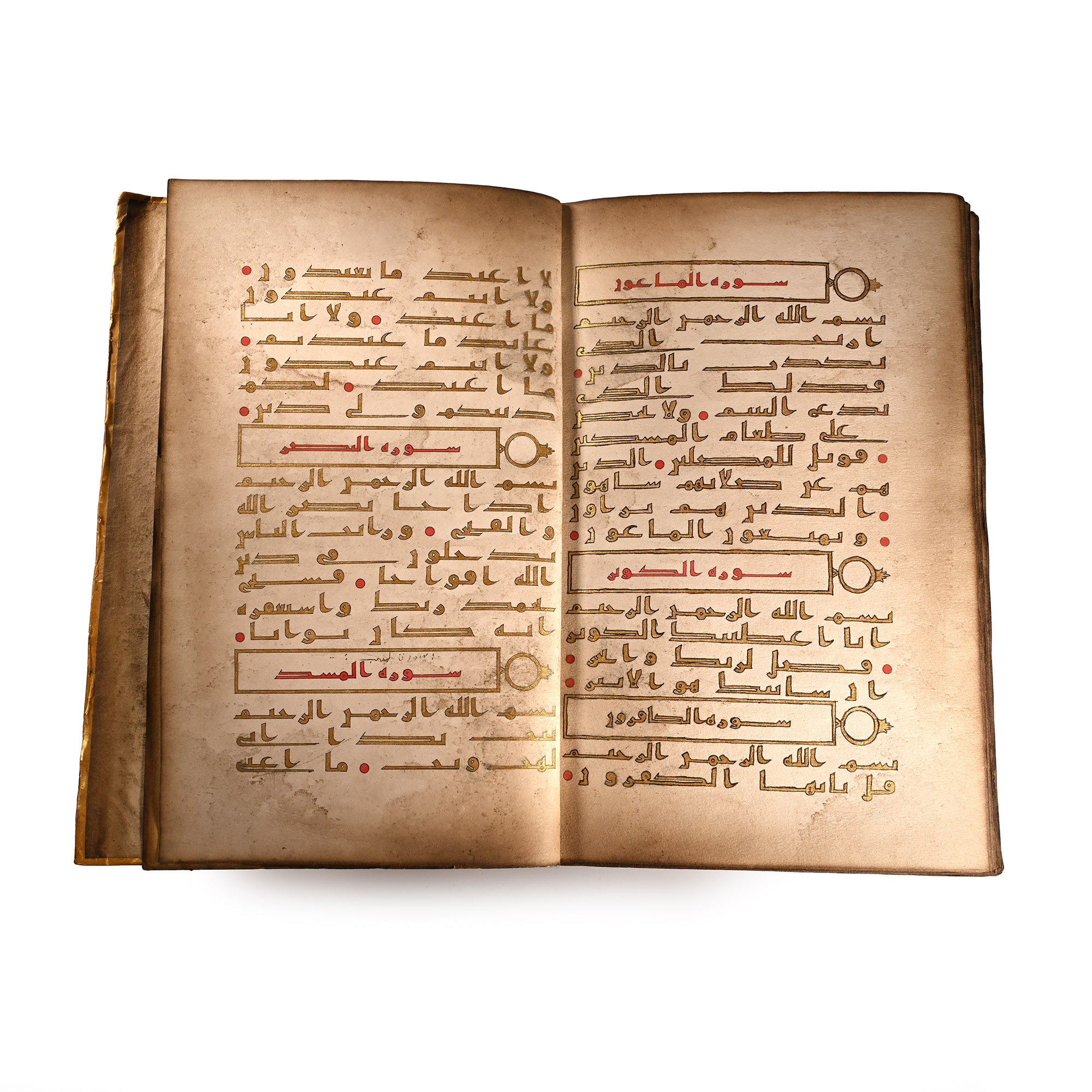
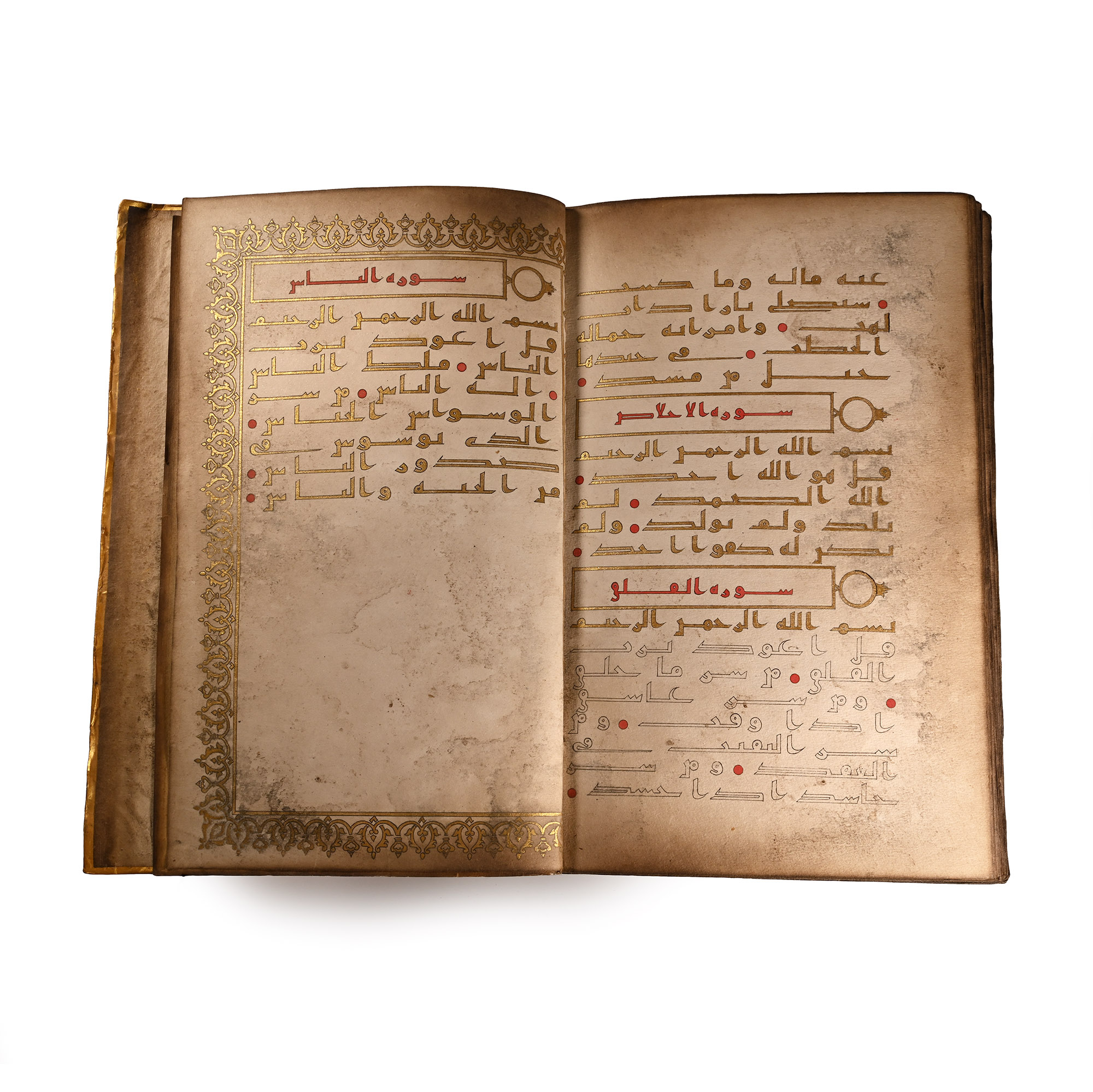
Western Asiatic Gilt Manuscript
20TH CENTURY A.D.
12 x 8 7/8 in. (3.8 kg, 30.5 x 22.5 cm).
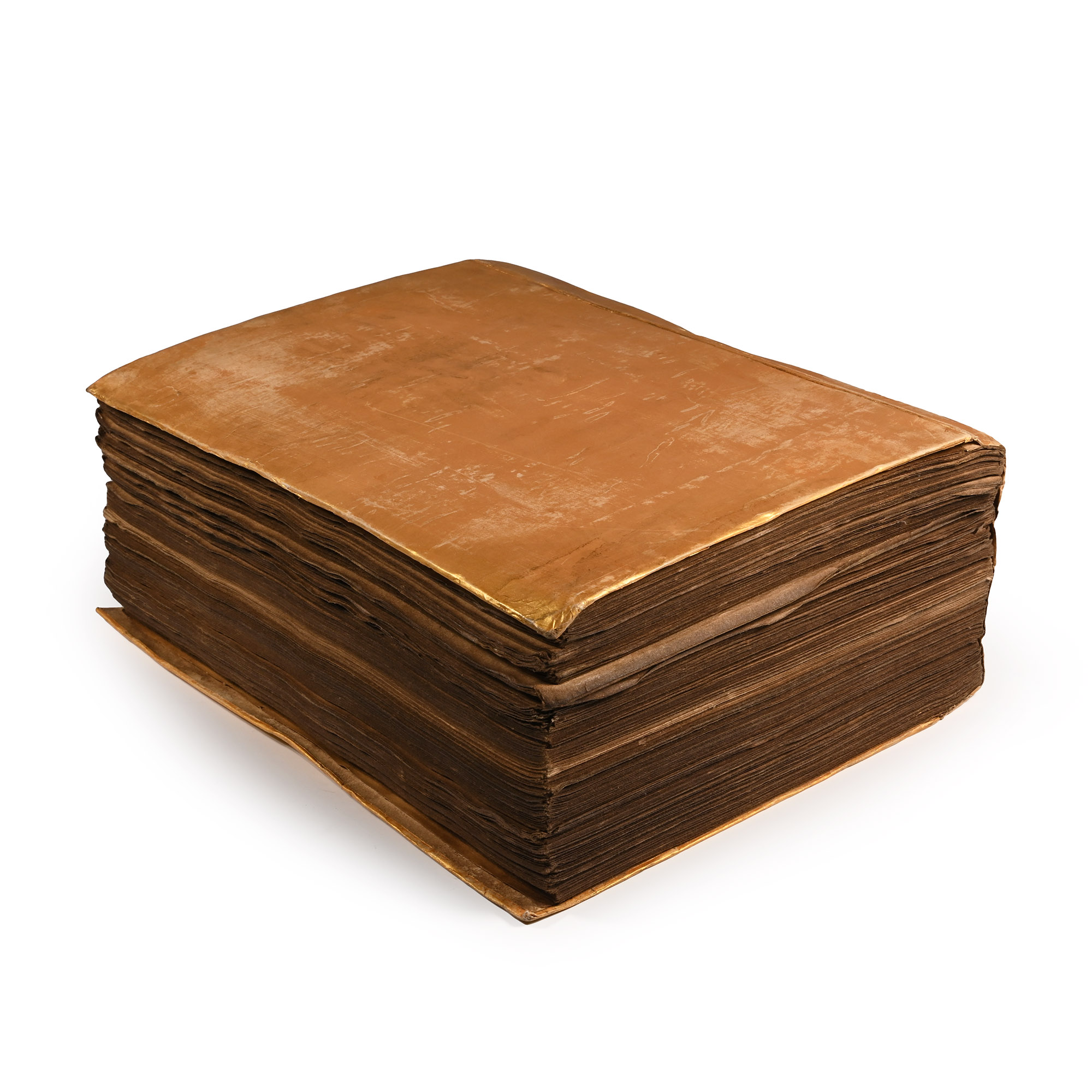
An extensive Arabic text, bound in cardboard covers, some pages with decorative borders; pages stained. [No Reserve]
ProvenanceFrom the family collection of a Hampstead gentleman; formerly acquired in the 1980s.
This lot has been cleared against the Art Loss Register database, and is accompanied by an illustrated lot declaration signed by the Head of the Antiquities Department, Dr Raffaele D'Amato.
TimeLine Auctions follows a vetting process to ensure the authenticity and legality of all items, reinforcing our commitment to integrity and responsible trading. Each antiquity, antique, and coin lot undergoes thorough examination by a vetting committee of at least ten external specialists, professional trade association members, scientists, and archaeologists: Our Vetting Process
AUCTIONS:
TimeLine is a leading auction house specialising in antiquities, ancient art, collectables, natural history, coins, medals, and books. Our auctions offer museums, collectors, historians, and enthusiasts the opportunity to acquire unique and historically significant pieces.
-
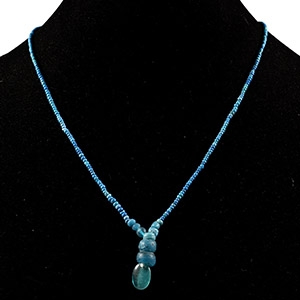
Achaemenid Pale Blue Glass Bead Necklace String
6th-4th century B.C. and laterSold for (Inc. bp): £65
Composed of small oblate beads, central feature composed of larger oblate beads with a translucent oval pendant; restrung. 7.81 grams, 36.5 cm
Ex London, UK, collection, 1990s. This lot has been cleared against the Art Loss Register database, and is accompanied by an illustrated lot declaration signed by the Head of the Antiquities Department, Dr Raffaele D'Amato. -
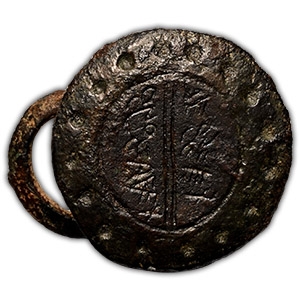
Western Asiatic Aramaic Pendant Seal Matrix
Early 1st millennium A.D.Estimate: £2,000 - 3,000 (+bp*)
Opening Bid: £1,000
Discoid in plan with lug to upper face and suspension loop; underside with incuse pellets to the rim surrounding a tondo with two lines of incised text. 10.77 grams, 24 mm
From the collection of a gentleman, acquired on the London art market in the 1990s. This lot has been checked against the Interpol Database of stolen works of art and is accompanied by a search certificate number no.12717-233043. This lot has been cleared against the Art Loss Register database, and is accompanied by an illustrated lot declaration signed by the Head of the Antiquities Department, Dr Raffaele D'Amato. -
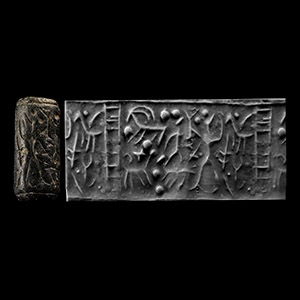
Levantine Black Stone Cylinder Seal
Circa 1200-1000 B.C.Sold for (Inc. bp): £286
Cylinder with cord and bead handles; accompanied by a copy of an old scholarly note, typed and signed by W.G. Lambert, late Professor of Assyriology, University of Birmingham, 1970-1993, which states: 'Description of Cylinder Seal of soft, black stone, 29 x 18 mm. A scene is contained within upper and lower rules and a ladder pattern repeated at left and right. The main figure is a standing deity holding up items in each raised hand. he wears a pointed cap and might be meant as Hadad/Teshub/Baal, the storm god, but the symbols held are not sufficiently clear to be certain. In front of him is a small figure of human form, and three horned quadrupeds; behind him is a bird, a fish(?) and a scorpion. Vacant spaces are filled with dots, and linear devices. The seal is a typical "Levantine" cylinder c. 1200-1000 B.C. from Syria or Anatolia. it is cut with a hand-held pointed graving tool and the drill. Though worn, the design is completely clear.'; supplied with a museum-quality impression. 9.72 grams, 28 mm
UK private collection, acquired 1980-1983. Accompanied by a copy of a scholarly note, typed and signed by Professor Wilfrid George Lambert in October 1987. This lot has been cleared against the Art Loss Register database, and is accompanied by an illustrated lot declaration signed by the Head of the Antiquities Department, Dr Raffaele D'Amato.
