
Loading, please wait...
LOT 1271
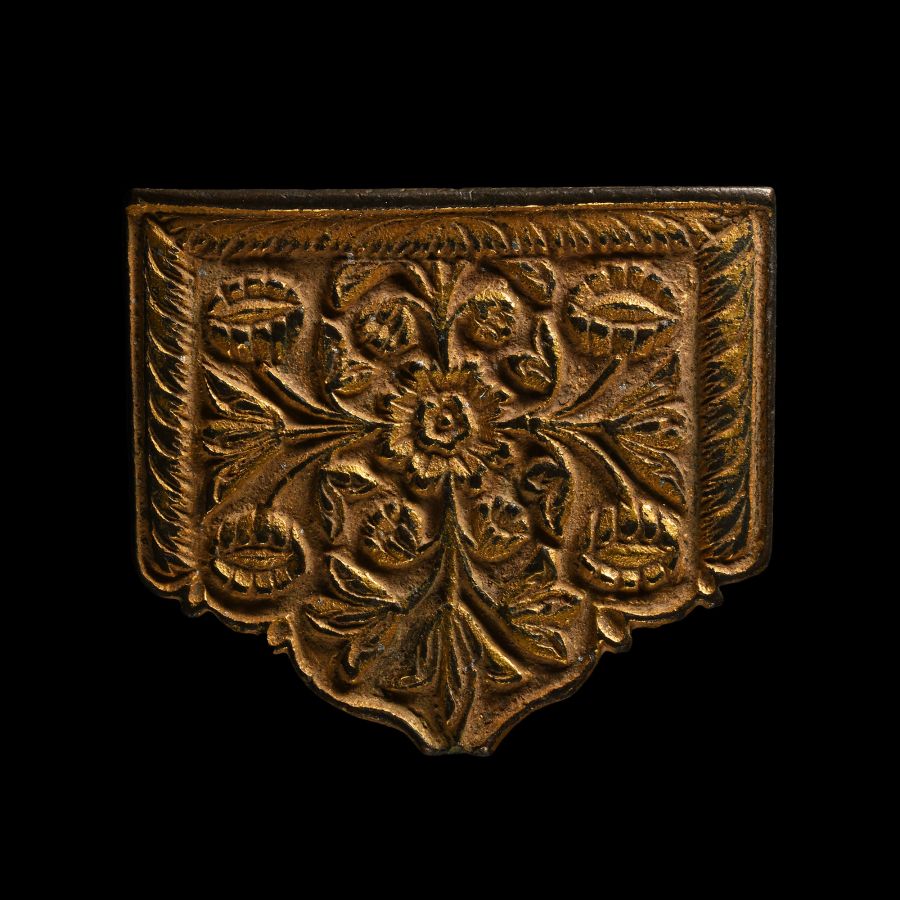
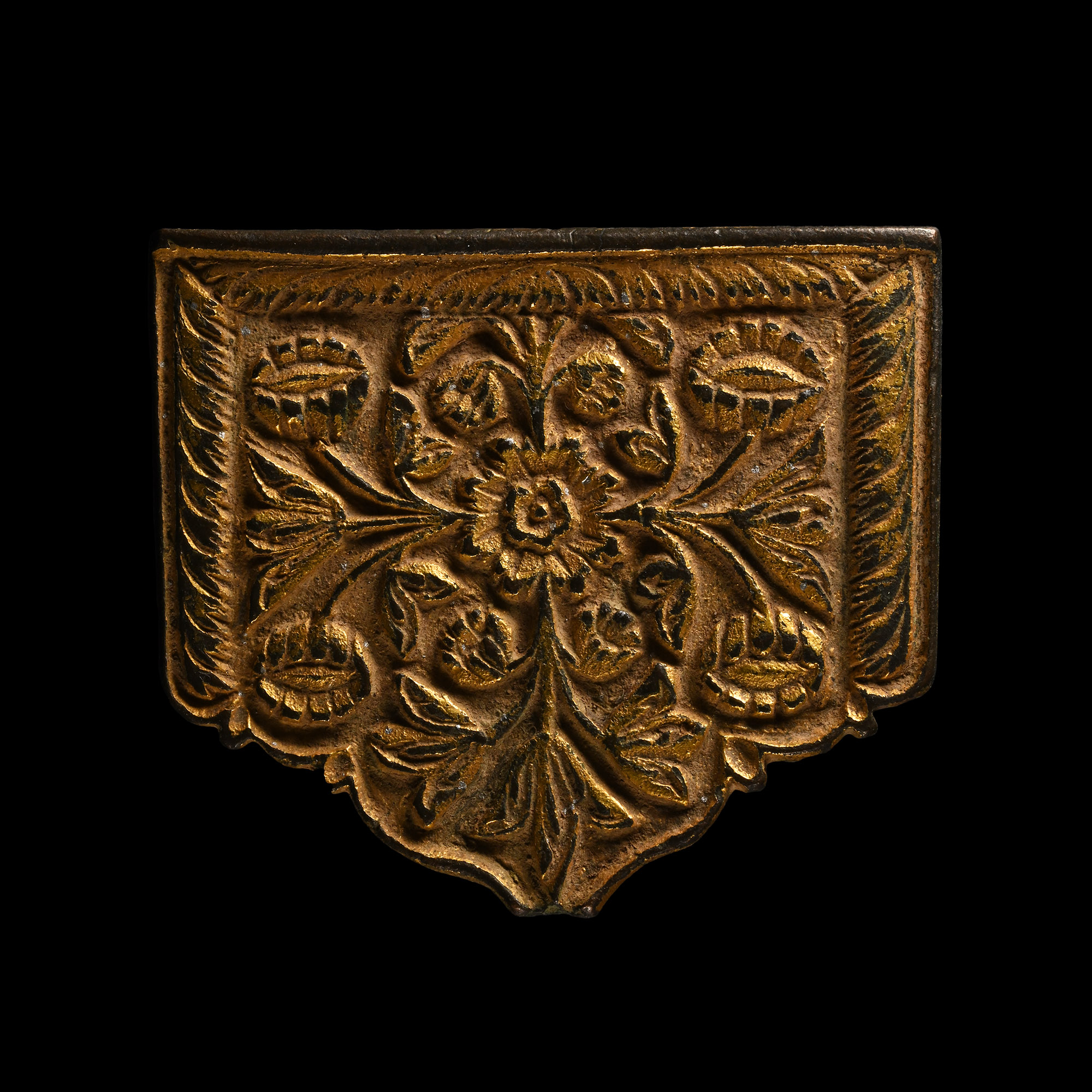
Western Asiatic Gilt Bronze Belt Element
12TH-13TH CENTURY A.D.
1 3/4 in. (18.25 grams, 43 mm).
Pentagonal in plan with scooped ogival upper edge, shallow sides and slider-bar to reverse; high-relief decorative motifs of rosette and radiating stems and leaves.
ProvenanceAcquired in the mid 1980s-1990s.
Private collection, Switzerland, thence by descent.
Private collection, since the late 1990s.
This lot has been cleared against the Art Loss Register database, and is accompanied by an illustrated lot declaration signed by the Head of the Antiquities Department, Dr Raffaele D'Amato.
TimeLine Auctions follows a vetting process to ensure the authenticity and legality of all items, reinforcing our commitment to integrity and responsible trading. Each antiquity, antique, and coin lot undergoes thorough examination by a vetting committee of at least ten external specialists, professional trade association members, scientists, and archaeologists: Our Vetting Process
AUCTIONS:
TimeLine is a leading auction house specialising in antiquities, ancient art, collectables, natural history, coins, medals, and books. Our auctions offer museums, collectors, historians, and enthusiasts the opportunity to acquire unique and historically significant pieces.
LOT 1271
Western Asiatic Gilt Bronze Belt Element
Estimate £300 - 400€350 - 460 (for guidance only)$410 - 540 (for guidance only)
-
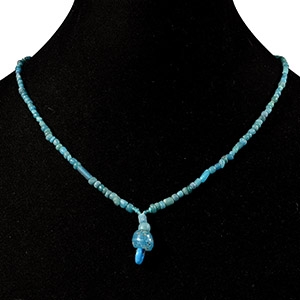
Achaemenid Pale Blue Glass Bead Necklace String
6th-4th century B.C. and laterSold for (Inc. bp): £65
Composed of mainly oblate and tubular beads; central feature with a large oblate bead and an annular disc below; restrung. 9.74 grams, 37 cm
Ex London, UK, collection, 1990s. This lot has been cleared against the Art Loss Register database, and is accompanied by an illustrated lot declaration signed by the Head of the Antiquities Department, Dr Raffaele D'Amato. -
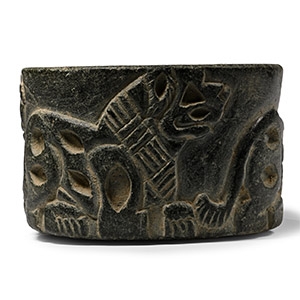
Bactrian Chlorite Vessel with Lions
3rd millennium B.C.Sold for (Inc. bp): £1,820
With frieze of crouching lions in profile, each with sockets to the flanks to accept coloured inserts (absent); chipped rim repaired. 273 grams, 85 mm
with Surena Gallery, 1999. Private collection, Europe. Accompanied by a copy of an Art Loss Register certificate dated 20th April 2004. This lot has been checked against the Interpol Database of stolen works of art and is accompanied by a search certificate number no.12405-226712. This lot has been cleared against the Art Loss Register database, and is accompanied by an illustrated lot declaration signed by the Head of the Antiquities Department, Dr Raffaele D'Amato. -
.jpg)
Assyrian Stone Bust of the Demon Pazuzu
8th-7th century B.C.Estimate: £2,000 - 3,000 (‡+bp*)
Opening Bid: £900
Carved in the round bust with heavily hatched brow and cheeks, D-shaped eyes, snubbed feline nose, ellipsoid mouth gaping with teeth exposed, segmented panel to chest. 47 grams, 37 mm
European art market, 1997. Acquired by the present owner from the above. This lot has been checked against the Interpol Database of stolen works of art and is accompanied by a search certificate no.12596-232196. This lot has been cleared against the Art Loss Register database, and is accompanied by an illustrated lot declaration signed by the Head of the Antiquities Department, Dr Raffaele D'Amato.
Pazuzu, in the old Mesopotamian mythology, is described as ‘the son of Hanbu and king of wind demons’. Amulets with images of his full body or, more often, just his head, were common in the early first millennium B.C. Pazuzu was most popular in the Neo-Assyrian and Neo-Babylonian periods, from about the late 8th century B.C. through the 6th century B.C.
