
Loading, please wait...
_900x900.jpg "Western Asiatic Geometric Iron Age Ceramic Chalice")
_200x200.jpg "Western Asiatic Geometric Iron Age Ceramic Chalice")
.jpg "Western Asiatic Geometric Iron Age Ceramic Chalice")
LOT 0818
Western Asiatic Geometric Iron Age Ceramic Chalice
2ND-1ST MILLENNIUM B.C.
8 in. (780 grams, 20.5 cm wide).
The bowl of hemispherical form with C-section neck and everted rim, ribbed stem and everted foot; the rim, neck and bowl painted with solid lines, dashes and circumferential bands of chevrons, X-motifs and other geometric forms.
ProvenanceEx Rabi Gallery, Mayfair, London, UK.
Ex private collection.
TimeLine Auctions follows a vetting process to ensure the authenticity and legality of all items, reinforcing our commitment to integrity and responsible trading. Each antiquity, antique, and coin lot undergoes thorough examination by a vetting committee of at least ten external specialists, professional trade association members, scientists, and archaeologists: Our Vetting Process
AUCTIONS:
TimeLine is a leading auction house specialising in antiquities, ancient art, collectables, natural history, coins, medals, and books. Our auctions offer museums, collectors, historians, and enthusiasts the opportunity to acquire unique and historically significant pieces.
-
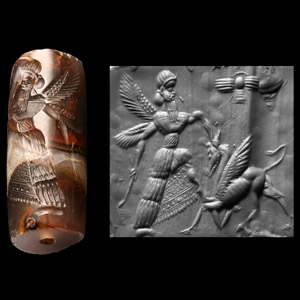
Early Neo-Assyrian Banded Agate Cylinder Seal with Combat Scene
Circa 10th century B.C.Sold for (Inc. bp): £7,150
Displaying a winged god standing left battling a winged quadruped, a large winged insect in the field above; drilled vertically for suspension; chipped; accompanied by a museum-quality impression. 26.6 grams, 45 mm
From the 'S' collection, London, UK, 1970-1990s. Examined by Professor Wilfrid George Lambert FBA (1926-2011), historian, archaeologist, and specialist in Assyriology and Near Eastern archaeology in the 1980s. This lot has been checked against the Interpol Database of stolen works of art and is accompanied by search certificate no.202963. -
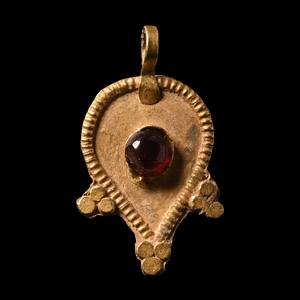
Western Asiatic Gold and Gemstone Pendant
1st millennium B.C.Sold for (Inc. bp): £169
Displaying a central polished garnet cabochon within an applied border; suspension loop above. 0.65 grams, 21 mm
Acquired 1970-2010. Collection of a late Japanese gentleman. -
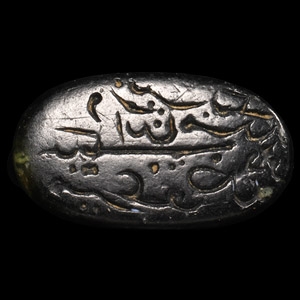
Ottoman Jade Ring with Inscription
14th-15th century A.D.Sold for (Inc. bp): £260
Ellipsoid bezel with incise calligraphic legend 'bhsmir Awaz Bake'. 10.42 grams, 30.90 mm overall, 15.74 mm internal diameter (approximate size British J 1/2, USA 5, Europe 9.32, Japan 9)
Acquired by the vendor's father on the UK art market, before 1990.
