
Loading, please wait...
LOT 1246
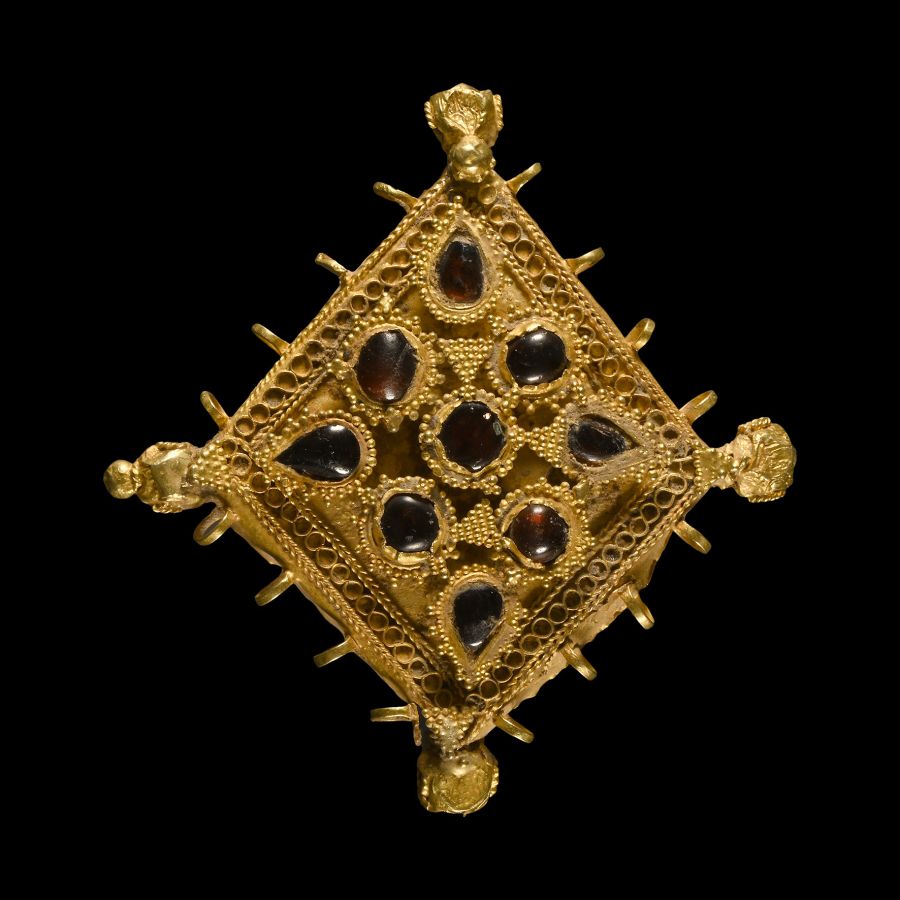
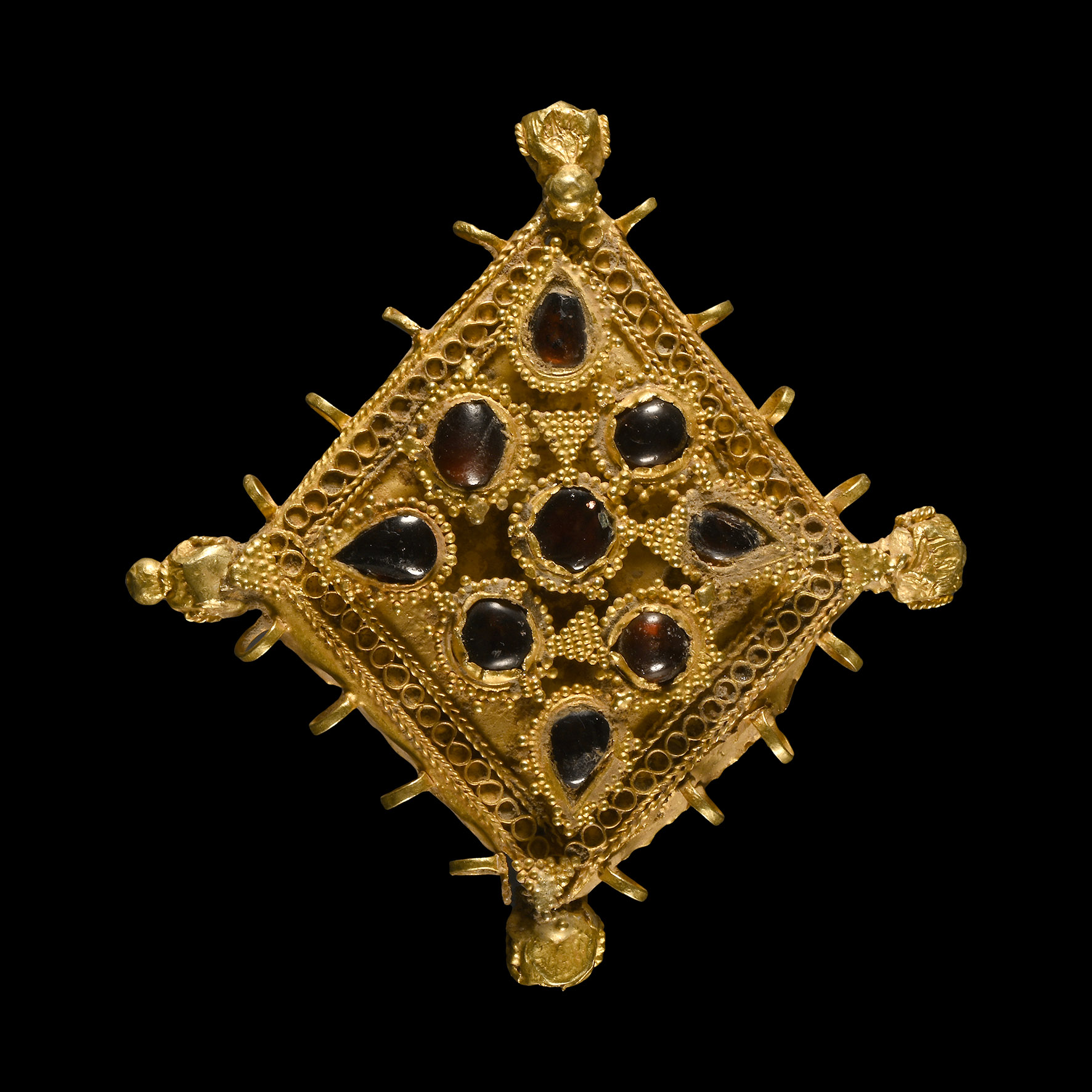
Western Asiatic Garnet-Set Gold Pendant Element
CIRCA 12TH CENTURY A.D.
2 1/4 in. (11.3 grams, 59 mm).
Lozenge-shaped and of box construction, the central field set with nine garnets within raised frames set, the base with wire and chain work, the four corners set with facetted spherical terminals, four suspension loops between each terminal.
ProvenanceFrom a private family collection formed in the 1970s.
CONDITIONTimeLine Auctions follows a vetting process to ensure the authenticity and legality of all items, reinforcing our commitment to integrity and responsible trading. Each antiquity, antique, and coin lot undergoes thorough examination by a vetting committee of at least ten external specialists, professional trade association members, scientists, and archaeologists: Our Vetting Process
AUCTIONS:
TimeLine is a leading auction house specialising in antiquities, ancient art, collectables, natural history, coins, medals, and books. Our auctions offer museums, collectors, historians, and enthusiasts the opportunity to acquire unique and historically significant pieces.
LOT 1246
Western Asiatic Garnet-Set Gold Pendant Element
Estimate £800 - 1,000€930 - 1,160 (for guidance only)$1,080 - 1,350 (for guidance only)
-
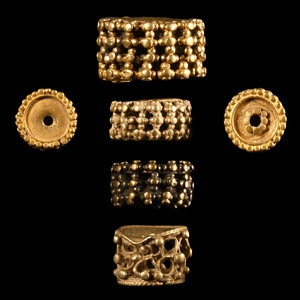
Western Asiatic Graduated Gold Bead Set
2nd-1st millennium B.C.Estimate: £250 - 350 (+bp*)
Opening Bid: £125
Mixed group of granulated beads with different sized holes. 3.25 grams total, 5-10 mm
From a late Japanese specialist collector, 1970-2000s. -
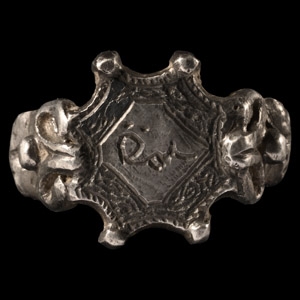
Western Asiatic Silver Ring with Inscription
Circa 15th-16th century A.D.Sold for (Inc. bp): £221
Comprising a D-section hoop with a lozenge plaque to the base, scrolled triangular plaque to each shoulder; octofoil bezel with textured field surrounding the central inscription. 4.05 grams, 21.37 mm overall, 16.86 mm internal diameter (approximate size British N, USA 6 1/2, Europe 13.72, Japan 13)
UK private collection before 2000. On the UK art market. Property of a London gentleman. -
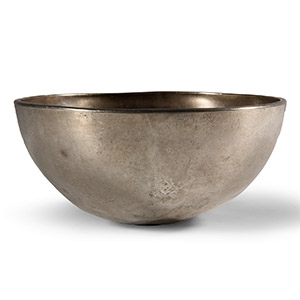
Heavy Sassanian Silver Bowl
5th-7th century A.D.Sold for (Inc. bp): £3,640
A high quality bowl raised from a single sheet with round base and an inverted rim. 370 grams, 15.5 cm
Ex London, UK, gallery, 1971-early 2000s. This lot has been checked against the Interpol Database of stolen works of art and is accompanied by search certificate no.12066-214195.
