
Loading, please wait...
LOT 1142
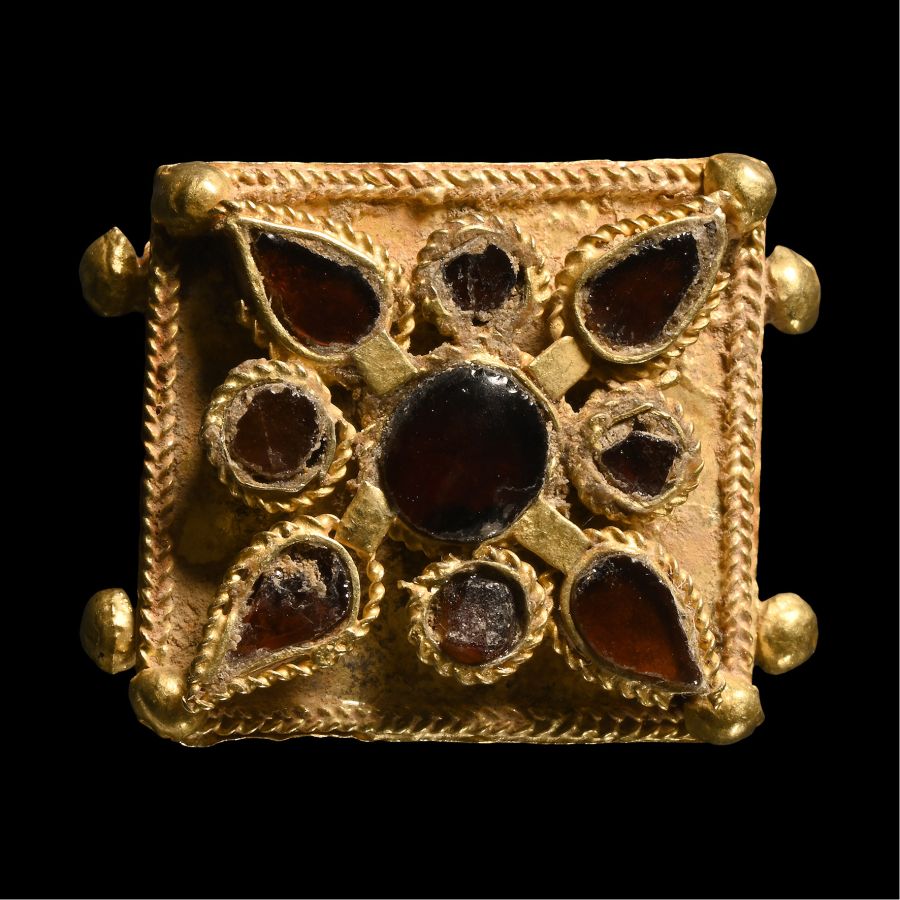
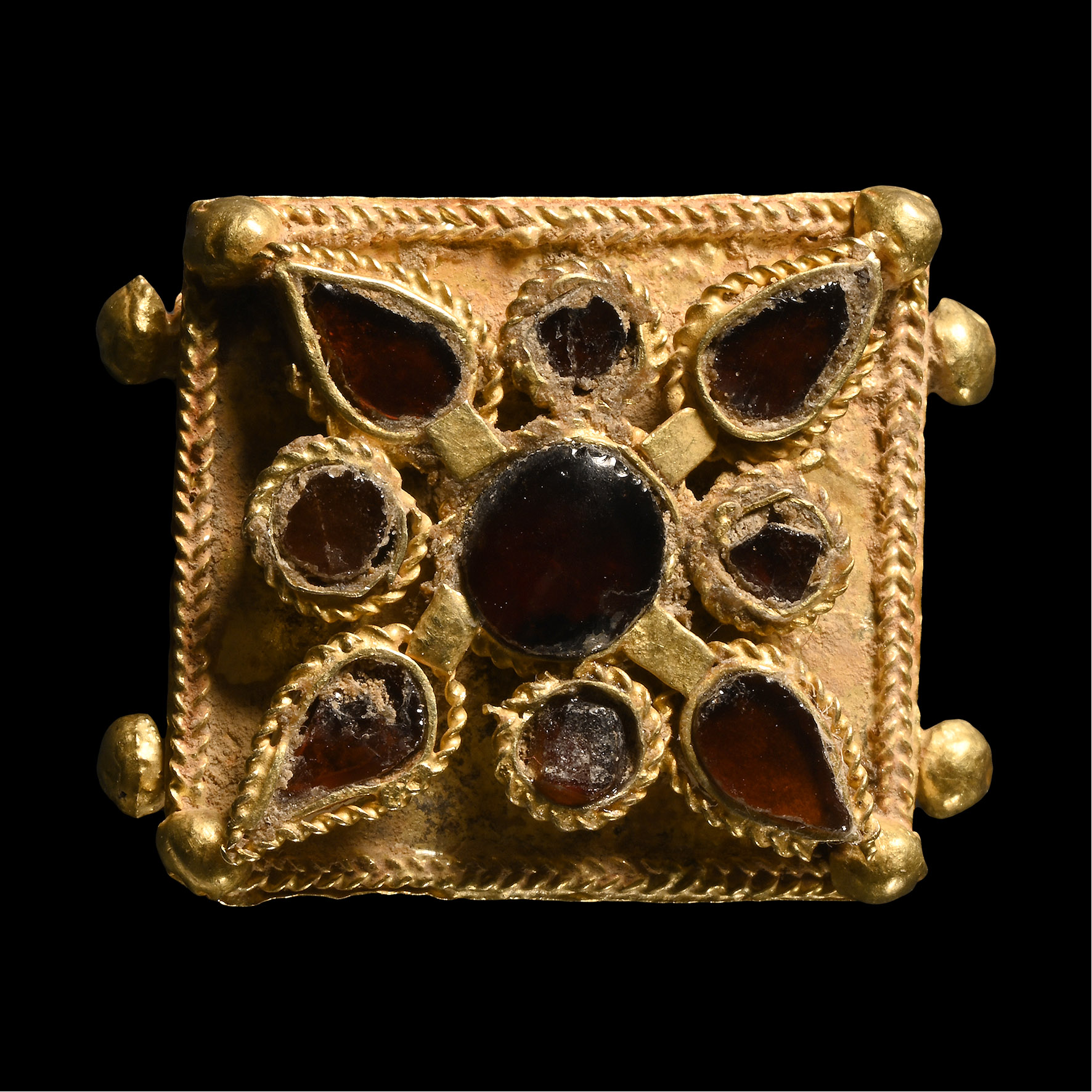
Western Asiatic Garnet-Set Gold Element
CIRCA 12TH-13TH CENTURY A.D.
1 in. (4.06 grams, 24.66 mm).
Of square form, the central stone flanked by teardrop-shaped stone at each corner, with round stones to interstices, all with raised settings with braided borders; the reverse with two rows of pierced spheres, each end with an applied sphere.
ProvenanceFrom a private family collection formed in the 1970s.
CONDITIONTimeLine Auctions follows a vetting process to ensure the authenticity and legality of all items, reinforcing our commitment to integrity and responsible trading. Each antiquity, antique, and coin lot undergoes thorough examination by a vetting committee of at least ten external specialists, professional trade association members, scientists, and archaeologists: Our Vetting Process
AUCTIONS:
TimeLine is a leading auction house specialising in antiquities, ancient art, collectables, natural history, coins, medals, and books. Our auctions offer museums, collectors, historians, and enthusiasts the opportunity to acquire unique and historically significant pieces.
-
.jpg)
Western Asiatic Bronze Ring with Armed Warrior
Mid 1st millennium B.C.Sold for (Inc. bp): £72
The slender hoop with worn remains of decorative notching to shoulders, oval bezel engraved with stylised standing figure holding shield and a spear or other weapon. 2.06 grams, 18.52 mm overall, 15.90 mm internal diameter (approximate size British I 1/2, USA 4 1/2, Europe 8.07, Japan 7)
Private collection formed since the 1940s. UK art market. Property of an Essex gentleman. -
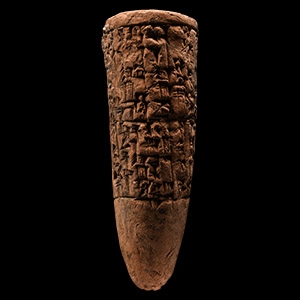
Old Babylonian Clay Cone of Ishme Dagan
Circa 20th-18th century B.C.Sold for (Inc. bp): £2,340
Of conical form with flat base and 18 lines of impressed cuneiform script; Sumerian text denoting a royal name: 'Ishme-Dagan, mighty man, King of Isin, king of the four world regions: when he cancelled the taxes of Nippur, the city beloved of Enlil, and excused its men from military service, he built the city wall of Isin. The name of that wall is Ishme-Dagan.' 350 grams, 14.4 cm
Formerly with an ADA member's gallery, 1980-1990s. From the collection of Dr D Gerrard, Buckinghamshire, UK. Accompanied by a copy of the original catalogue entry. -
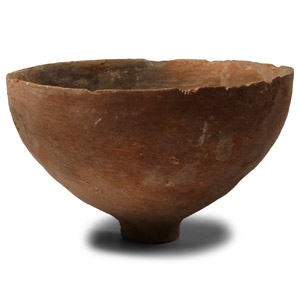
Trans-Jordan Polished Terracotta Bowl
Early Bronze Age, 3rd-2nd millennium B.C.Sold for (Inc. bp): £46
Hemispherical n profile with small foot, dimple to the underside; rim chipped. 145 grams, 65 mm high
From a family collection pre 1988.
