
Loading, please wait...
LOT 1213
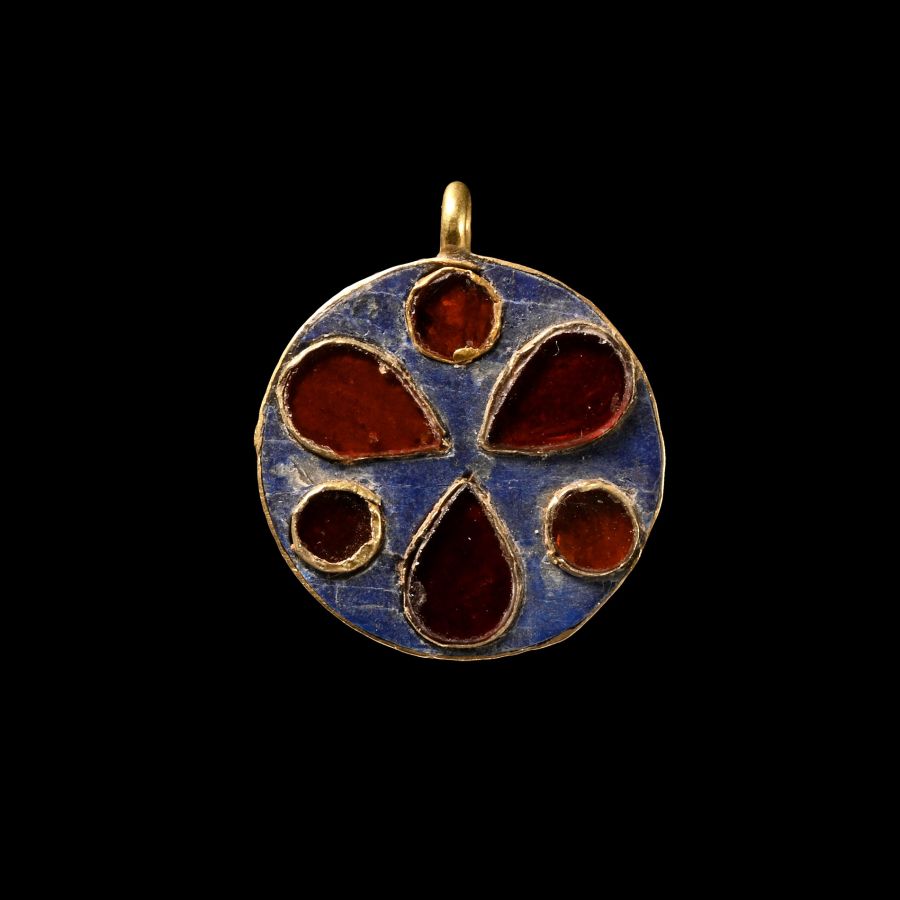
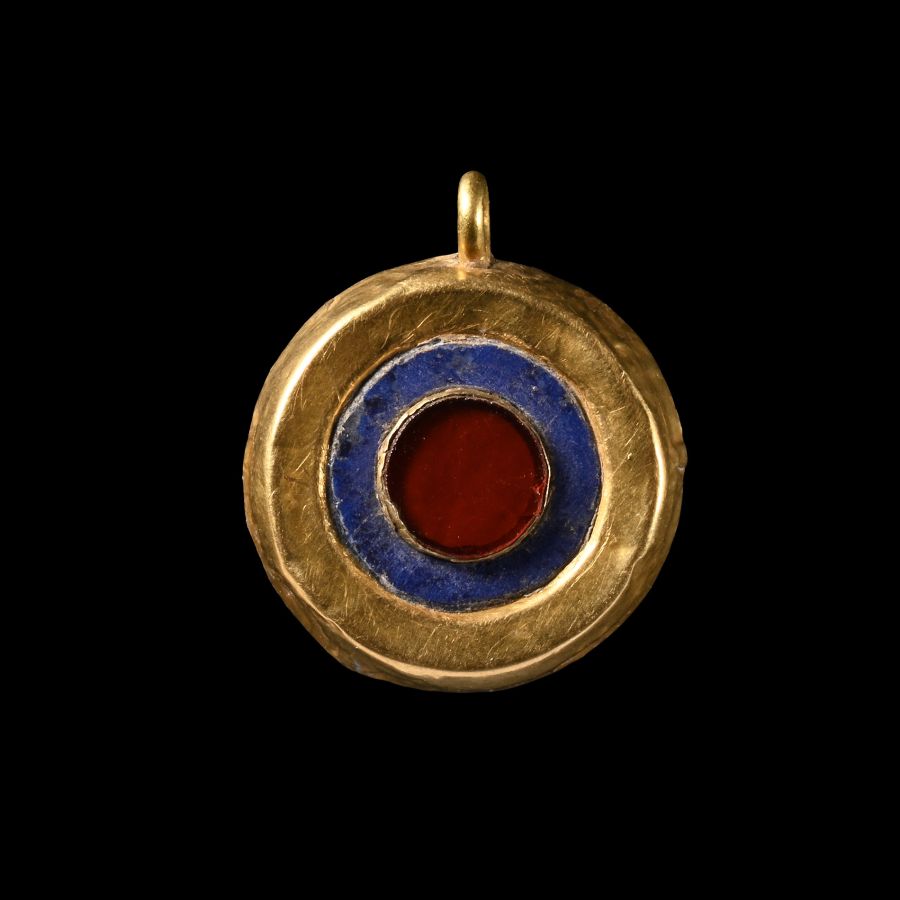
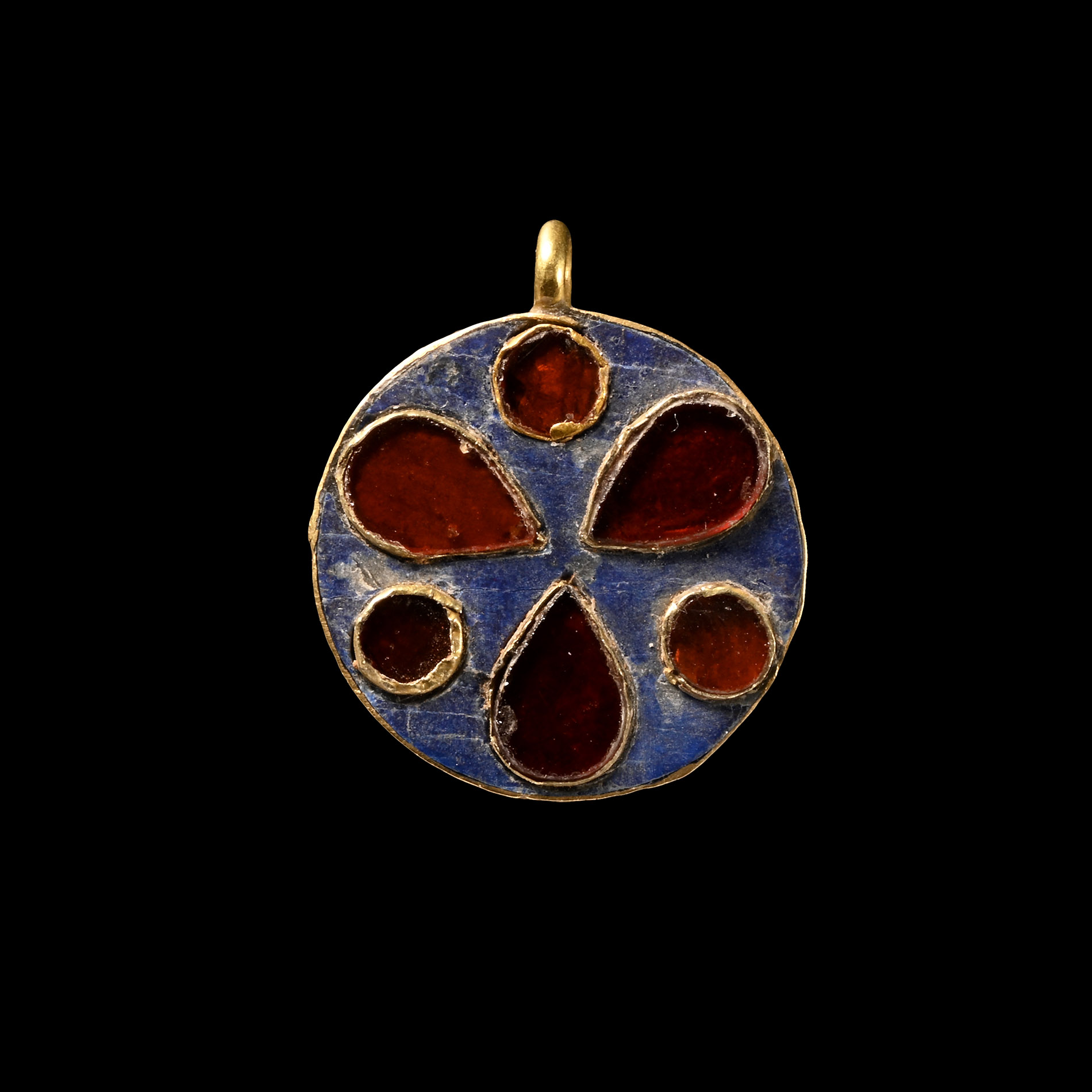
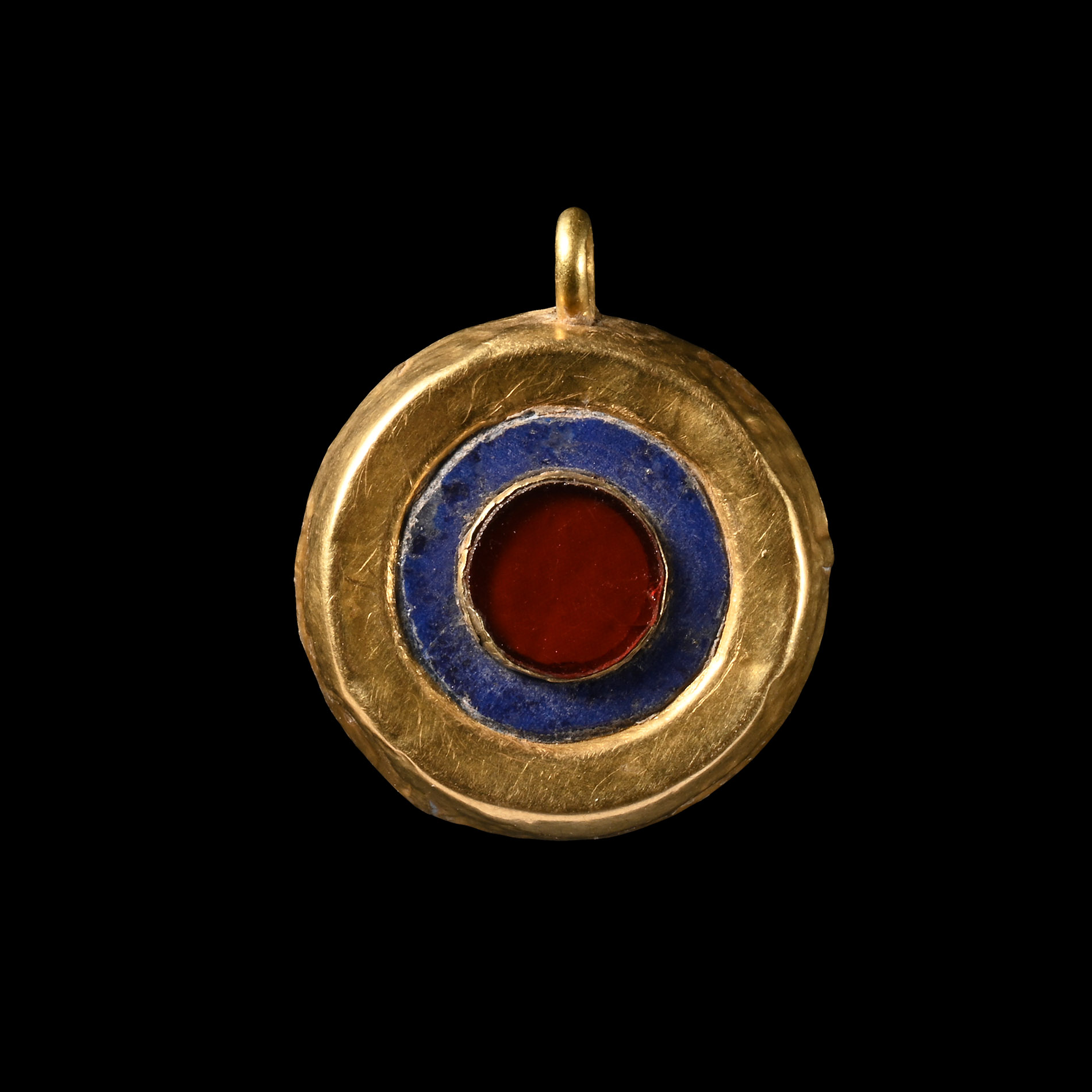
Western Asiatic Enamelled Gold Pendant with Inlaid Garnet
1ST MILLENNIUM B.C.
3/4 in. (3.31 grams, 21 mm).
Discoid cell with inset blue enamel plaque, design of three inset leaf-shaped garnet cloisons an three discs, larger disc cloison to the underside.
ProvenanceFrom a late Japanese specialist collector, 1970-2000s.
CONDITIONTimeLine Auctions follows a vetting process to ensure the authenticity and legality of all items, reinforcing our commitment to integrity and responsible trading. Each antiquity, antique, and coin lot undergoes thorough examination by a vetting committee of at least ten external specialists, professional trade association members, scientists, and archaeologists: Our Vetting Process
AUCTIONS:
TimeLine is a leading auction house specialising in antiquities, ancient art, collectables, natural history, coins, medals, and books. Our auctions offer museums, collectors, historians, and enthusiasts the opportunity to acquire unique and historically significant pieces.
LOT 1213
Western Asiatic Enamelled Gold Pendant with Inlaid Garnet
Sold for (Inc. bp): £520
-
Western Asiatic White Painted Pottery Vessel
Circa 1st millennium B.C.Sold for (Inc. bp): £65
With globular body and square-section neck, loop handle to shoulder and white linear ornament. 200 grams, 10 cm
From the property of Mr O.S., a late Suffolk, UK, gentleman, who acquired at auction from the 1960s. -
Heavy Sassanian Silver Bowl
5th-7th century A.D.Sold for (Inc. bp): £3,640
A high quality bowl raised from a single sheet with round base and an inverted rim. 370 grams, 15.5 cm
Ex London, UK, gallery, 1971-early 2000s. This lot has been checked against the Interpol Database of stolen works of art and is accompanied by search certificate no.12066-214195. -
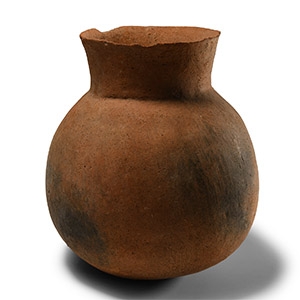
Trans Jordan Terracotta Jar
Early Bronze Age, 3rd millennium B.C.Sold for (Inc. bp): £124
With globular body and broad flared mouth; cracked. 415 grams, 15 cm high
Ex London, UK, collection, 1988.
