
Loading, please wait...
LOT 1090
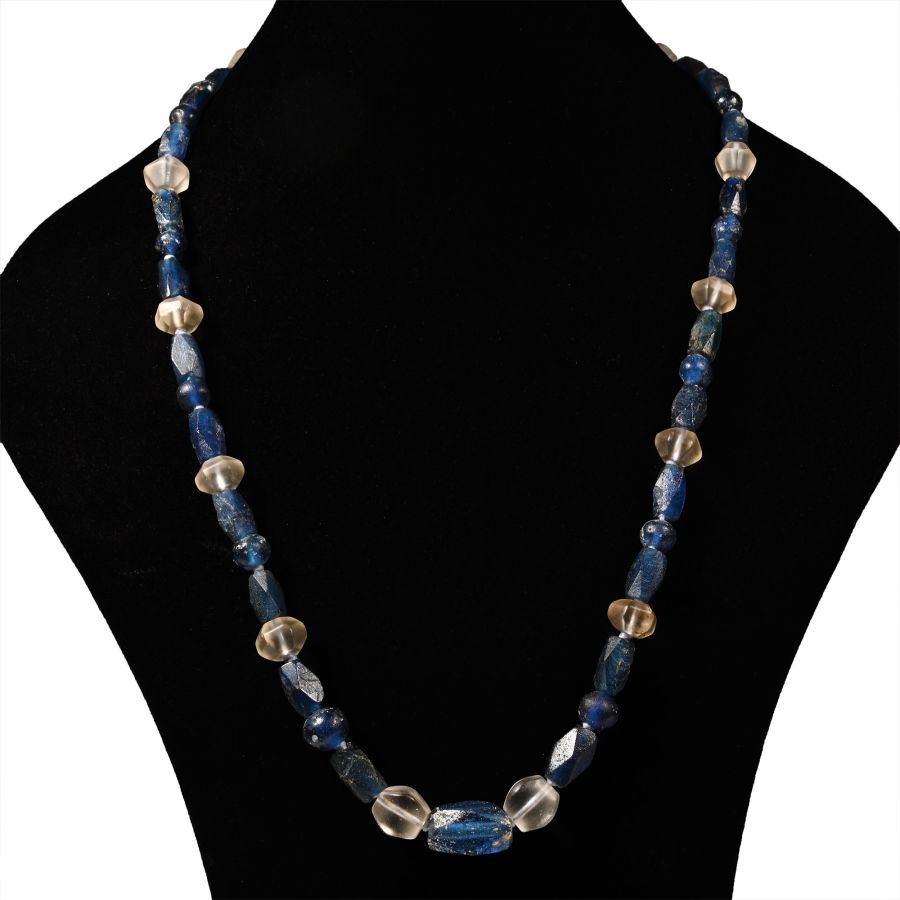
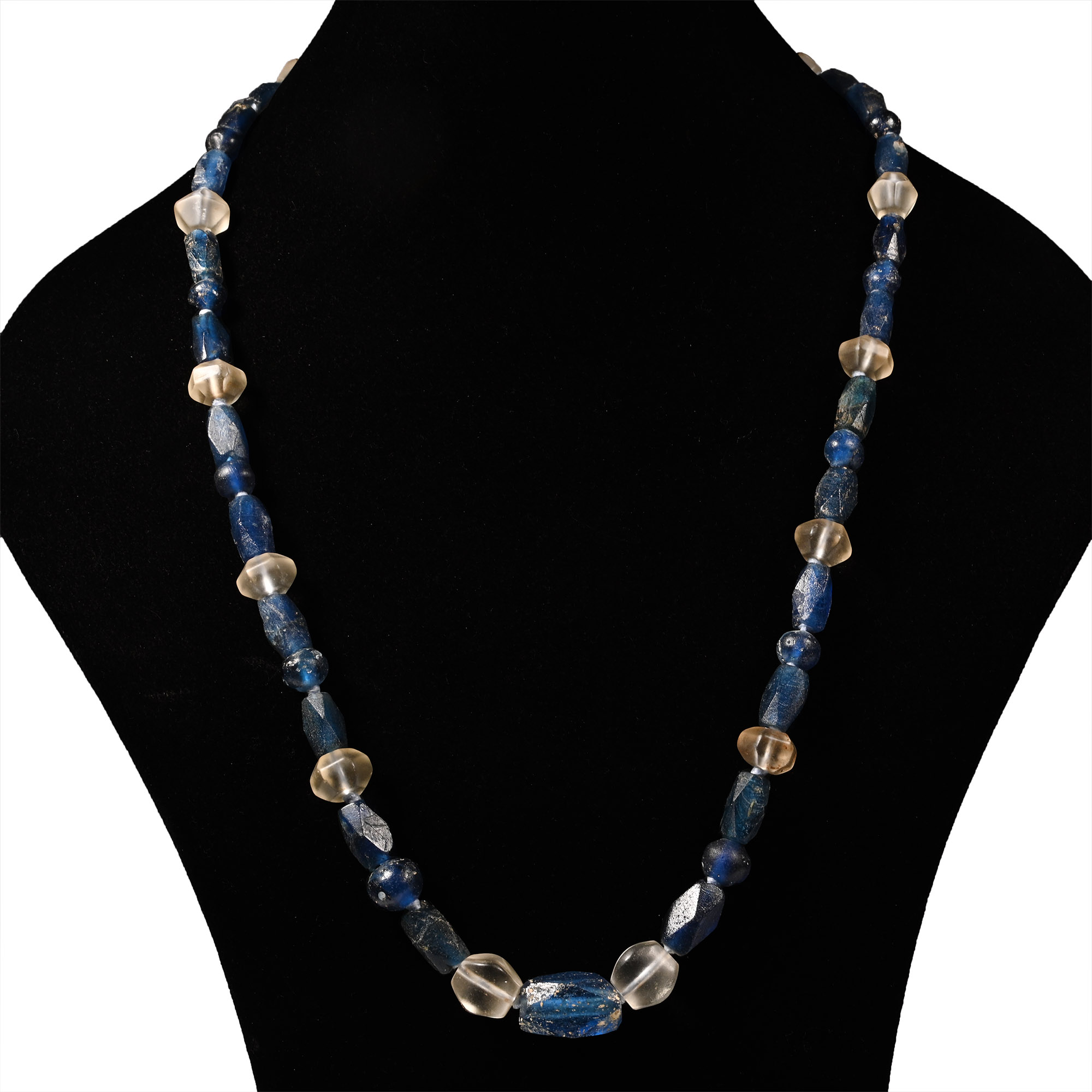
Western Asiatic Deep Blue Glass and Rock Crystal Necklace
4TH-5TH CENTURY A.D. AND LATER
29 1/8 in. (90 grams, 74 cm).
Restrung group of polyhedral, barrel-shaped, oblate and other beads in glass, later facetted rock crystal beads.
ProvenancePrivate collection, London, UK.
This lot has been cleared against the Art Loss Register database, and is accompanied by an illustrated lot declaration signed by the Head of the Antiquities Department, Dr Raffaele D'Amato.
TimeLine Auctions follows a vetting process to ensure the authenticity and legality of all items, reinforcing our commitment to integrity and responsible trading. Each antiquity, antique, and coin lot undergoes thorough examination by a vetting committee of at least ten external specialists, professional trade association members, scientists, and archaeologists: Our Vetting Process
AUCTIONS:
TimeLine is a leading auction house specialising in antiquities, ancient art, collectables, natural history, coins, medals, and books. Our auctions offer museums, collectors, historians, and enthusiasts the opportunity to acquire unique and historically significant pieces.
LOT 1090
Western Asiatic Deep Blue Glass and Rock Crystal Necklace
Sold for (Inc. bp): £312
-
Achaemenid Pale Blue Glass Bead Necklace String
6th-4th century B.C. and laterSold for (Inc. bp): £46
Restrung group of cylindrical, polyhedral, biconical and other beads. 7.54 grams, 34 cm
Ex London, UK, collection, 1990s. This lot has been cleared against the Art Loss Register database, and is accompanied by an illustrated lot declaration signed by the Head of the Antiquities Department, Dr Raffaele D'Amato. -
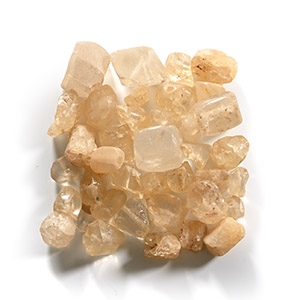
Western Asiatic Rock Crystal Bead Group
1st millennium B.C. and laterSold for (Inc. bp): £33
Comprising mostly irregular, unpolished beads; including three large parallelepiped and some cylindrical beads. 46 grams total, 6-15 mm
Ex London, UK, collection, 1990s. This lot has been cleared against the Art Loss Register database, and is accompanied by an illustrated lot declaration signed by the Head of the Antiquities Department, Dr Raffaele D'Amato. -
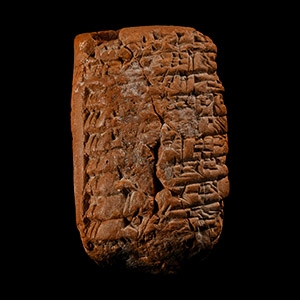
Old Babylonian Cuneiform Tablet Recording Transactions Involving Named Individuals
2000-1600 B.C.Sold for (Inc. bp): £572
Pillow-shaped with impressed cuneiform text to outer face; partly opened to reveal core; stabilised. 43.5 grams, 57 mm
Acquired on the German art market, 1989-1995. with The Museum Gallery, 19 Bury Place, London, WC1, UK, 1998-2003. Property of a London based academic, 2003-present. This lot has been cleared against the Art Loss Register database, and is accompanied by an illustrated lot declaration signed by the Head of the Antiquities Department, Dr Raffaele D'Amato.
