
Loading, please wait...
LOT 1283
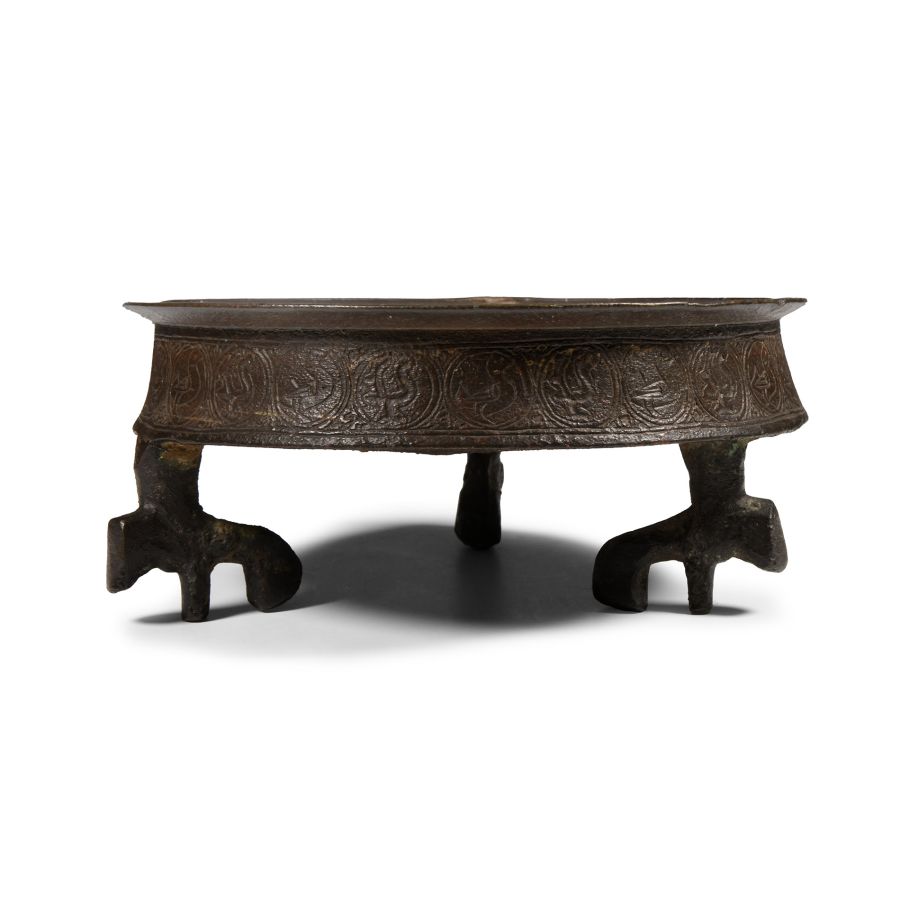
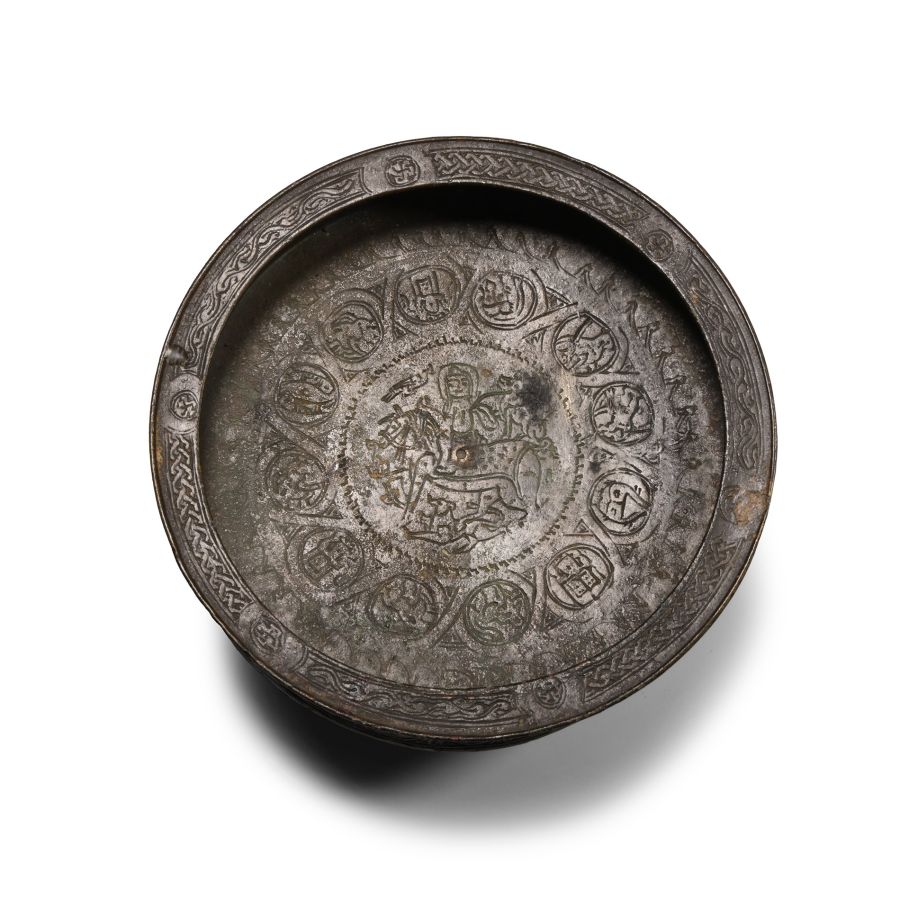
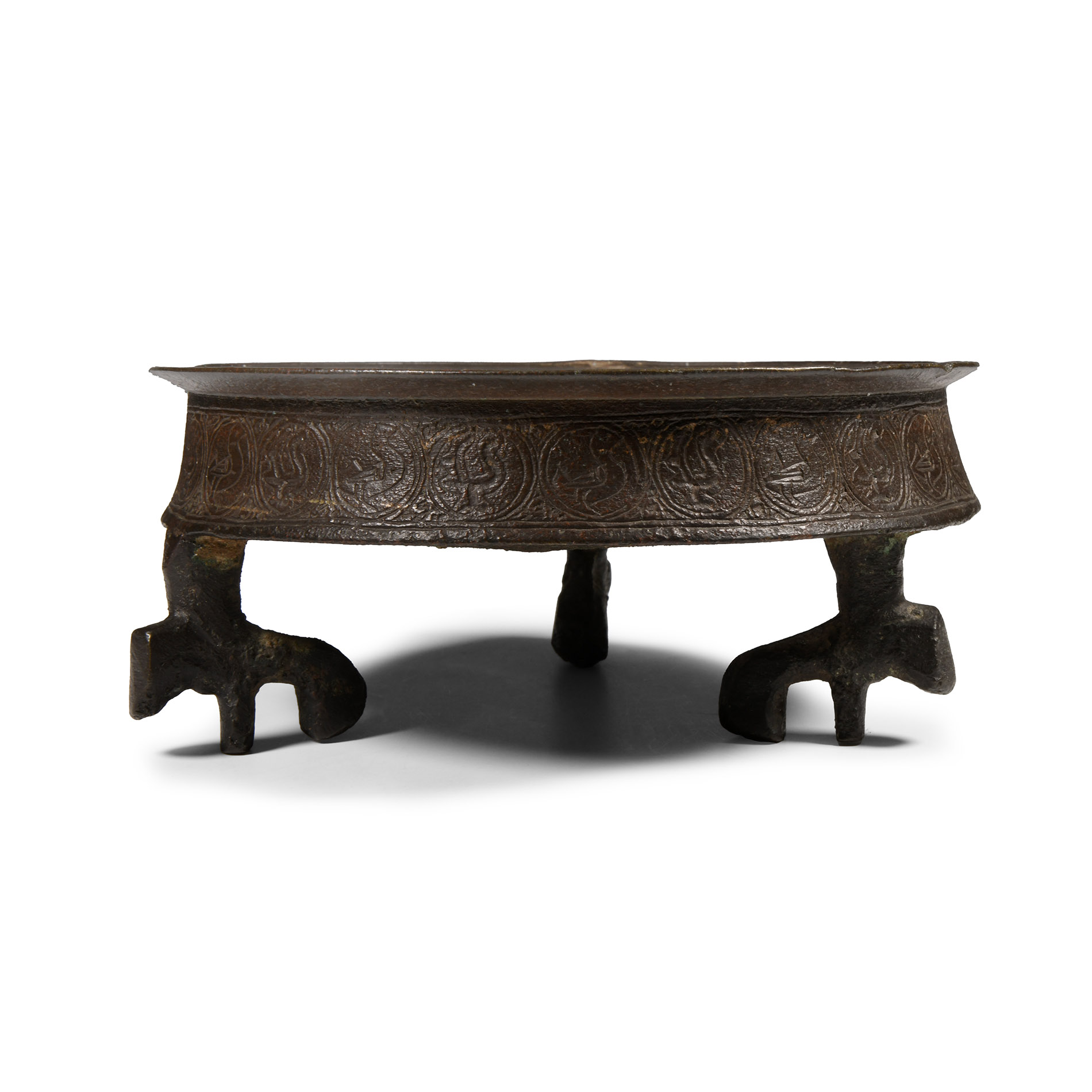
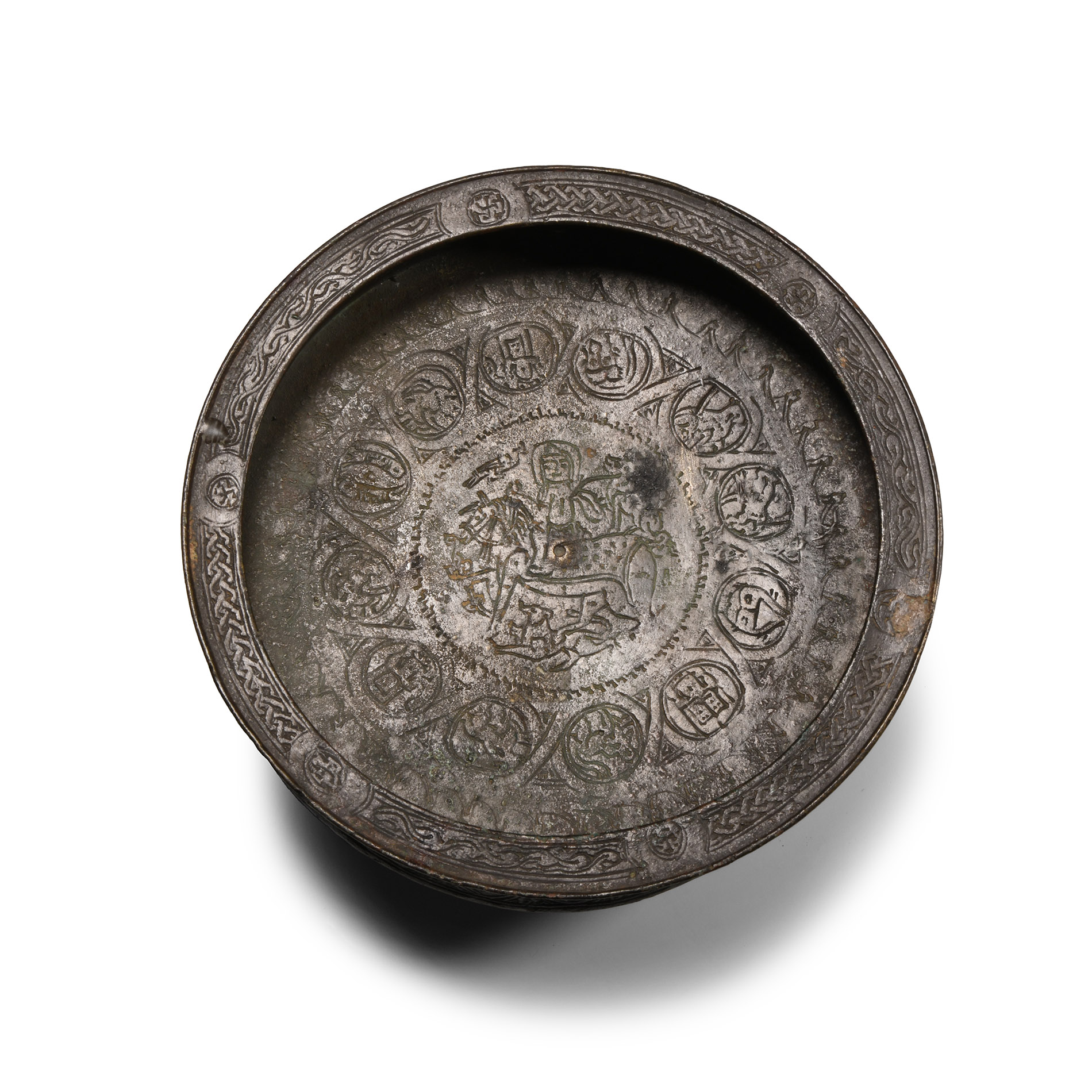
Western Asiatic Decorated Dish with Animal Feet
12TH CENTURY A.D.
7 in. (1.15 kg, 18 cm diameter).
With low sidewall and flat everted rim, three radiating feet to the underside, each a quadruped with lowered head; sidewall with band of low-relief roundels each containing a perching bird in profile; rim with knotwork and guilloche panels interrupted by roundels; inner face of the bowl with low-relief band of roundels containing profile birds, hounds and other animals, surrounding a scene depicting a huntsman on horseback with billowing cape, a hound running beside the horse's legs and a bird perching above the horse's head, second hound crouching above the horse's rump.
ProvenanceEx London, UK, gallery, 1971-early 2000s.
Property of a London gentleman.
TimeLine Auctions follows a vetting process to ensure the authenticity and legality of all items, reinforcing our commitment to integrity and responsible trading. Each antiquity, antique, and coin lot undergoes thorough examination by a vetting committee of at least ten external specialists, professional trade association members, scientists, and archaeologists: Our Vetting Process
AUCTIONS:
TimeLine is a leading auction house specialising in antiquities, ancient art, collectables, natural history, coins, medals, and books. Our auctions offer museums, collectors, historians, and enthusiasts the opportunity to acquire unique and historically significant pieces.
LOT 1283
Western Asiatic Decorated Dish with Animal Feet
Estimate £400 - 600€460 - 700 (for guidance only)$540 - 810 (for guidance only)
-
Luristan Bronze Pin Collection
2nd-1st millennium B.C.Sold for (Inc. bp): £156
Comprising: six specimens with a tapering round-section shank, balustered finial topped with a conical head, fastening holes; four specimens with tapering round section, poppy-shaped head and flared collar beneath. 714 grams total, 14.1-41.7 cm
From a collection of a gentleman, acquired on the London art market in the 1990s.
According to the study of Moorey, the knobbed pins from Iran are documented from the earliest periods of metallurgy, increasing in quantity during the late 2nd millennium, to reach the peak of the production from the early 1st millennium. Pins were used as hair and clothing fasteners, but it is not excluded that they could have been used by women as personal means of defence in dangerous situations. -
.jpg)
Old Babylonian Cuneiform Administrative Tablet Listing Twelve Names
20th-19th century B.C.Sold for (Inc. bp): £1,170
Tongue-shaped tablet with impressed cuneiform text to one broad face and the upper part of the reverse. 73 grams, 76 mm
From the private collection of the late Dr D.G., 1990s. -
Western Asiatic Bronze Oil Lamp
12th-14th century A.D.Estimate: £200 - 300 (+bp*)
Opening Bid: £100
Comprising an oblate body with lateral trilobe ledge handles, raised rim to filler hole, long nozzle rectangular in plan with lip at forward edge, loop handle to rear and pierced leaf-shaped reflector. 143 grams, 15 cm
Private UK collection. Acquired in the 1980s. Property of a Cambridgeshire gentleman.
