
Loading, please wait...
LOT 0294
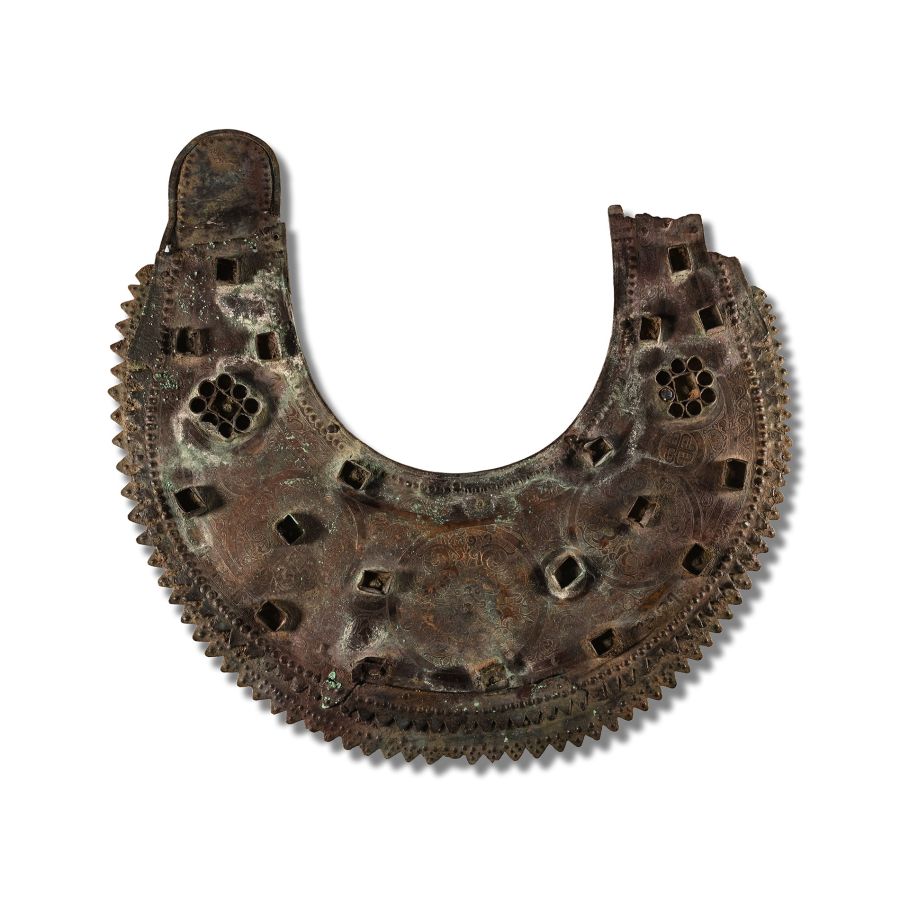
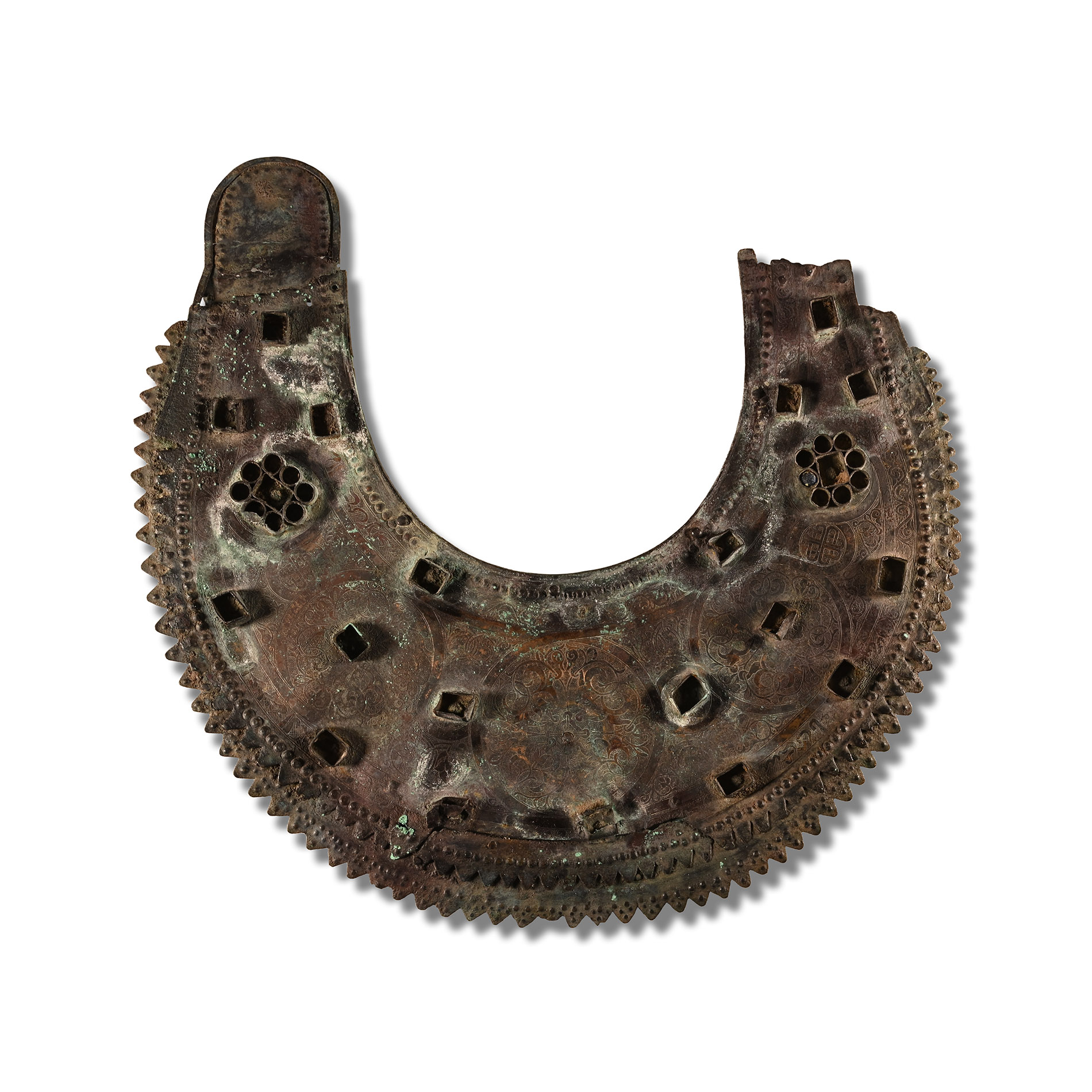
Western Asiatic Decorated Bronze Pectoral Collar
12TH-14TH CENTURY A.D.
13 5/8 in. (638 grams, 34.5 cm).
Broad sheet-bronze halter-shaped collar with dentilled outer edge, in two offset overlapped layers; bands of repoussé domed pellets to the outer and inner edges, rectangular cells to accept glass or organic inserts, two clusters of circular cells surrounding rectangular ones; the surface with dense hatching and reserved tendril and leaf motifs; attachment loops to reverse.
ProvenanceGerman art market.
European private collection, 1970s-early 2000s.
Acquired from the above; thence by descent.
Private collection, London.
This lot has been checked against the Interpol Database of stolen works of art and is accompanied by a search certificate number no.12282-221445.
TimeLine Auctions follows a vetting process to ensure the authenticity and legality of all items, reinforcing our commitment to integrity and responsible trading. Each antiquity, antique, and coin lot undergoes thorough examination by a vetting committee of at least ten external specialists, professional trade association members, scientists, and archaeologists: Our Vetting Process
AUCTIONS:
TimeLine is a leading auction house specialising in antiquities, ancient art, collectables, natural history, coins, medals, and books. Our auctions offer museums, collectors, historians, and enthusiasts the opportunity to acquire unique and historically significant pieces.
LOT 0294
Western Asiatic Decorated Bronze Pectoral Collar
Estimate £5,000 - 7,000€5,800 - 8,120 (for guidance only)$6,750 - 9,450 (for guidance only)
-
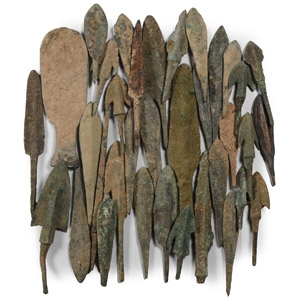
Mesopotamian Bronze Arrowhead Collection
Circa 1800-900 B.C.Sold for (Inc. bp): £234
Including triangular-section, barbed, paddle-shaped, and other types. 353 grams total, 4-12 cm
Ex London, UK, collection, 1990s.
Paddle-shaped arrowheads with a flat, comparatively wide mid-rib and the blade shaped to a point were typical of Old Babylonian Empire. The shoulders were pronounced and the arrowhead had a rectangular-section tapering tang. They are the majority in this group, which comprises also barbed triangular arrowheads of type V from Marlik-Luristan, and one interesting specimen of trilobate arrowhead. -
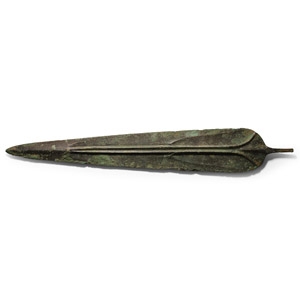
Luristan Wide-Bladed Bronze Sword with Blood Channels
1st millennium B.C.Sold for (Inc. bp): £390
Two-edged leaf-shaped blade with short rectangular tang, corrugated midrib extending almost to the tip and flared at the shoulders. 671 grams, 48.5 cm
Acquired 1980-2015. Ex Abelita family collection.
Luristan was hardly an ethnic or political entity, but the people of Luri had relations through warfare and trade with Sumerians, Lullubi, Assyrians, Babylonians and Elamites in a large time period, spanning from the 3rd to the 2nd millennium BC. The ruling elites of warrior horsemen were buried in the graves with their weapons and horses. -
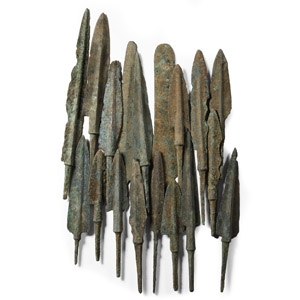
Luristan Bronze Arrowhead Collection
Circa 2nd millennium B.C.-9th century B.C.Sold for (Inc. bp): £234
Including triangular, leaf-shaped, barbed, square-section, and other types. 446 grams total, 10-17.5 cm
Ex London, UK, collection, 1990s.
It is significant to remember that the use of winged and barbed heads in Anatolia was common since the second millennium B.C., but apparently their employment began earlier in this area, where types like these occur alongside the non-barbed, predominantly ribbed and tanged types.
