
Loading, please wait...
LOT 1152
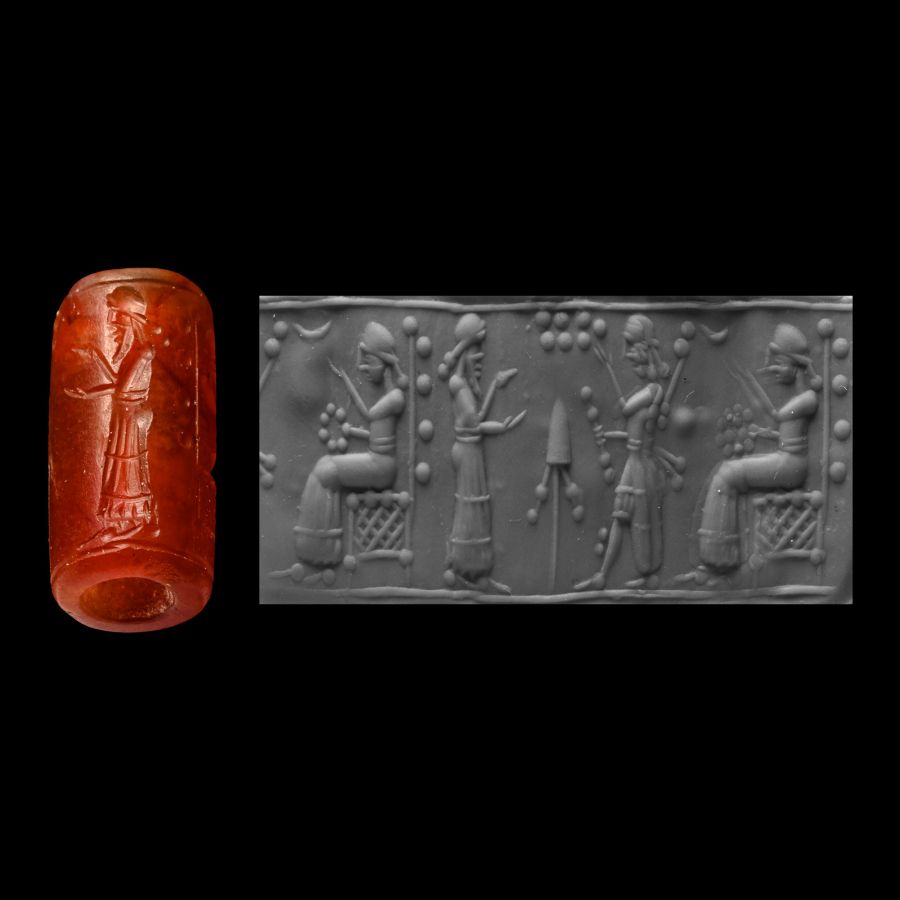
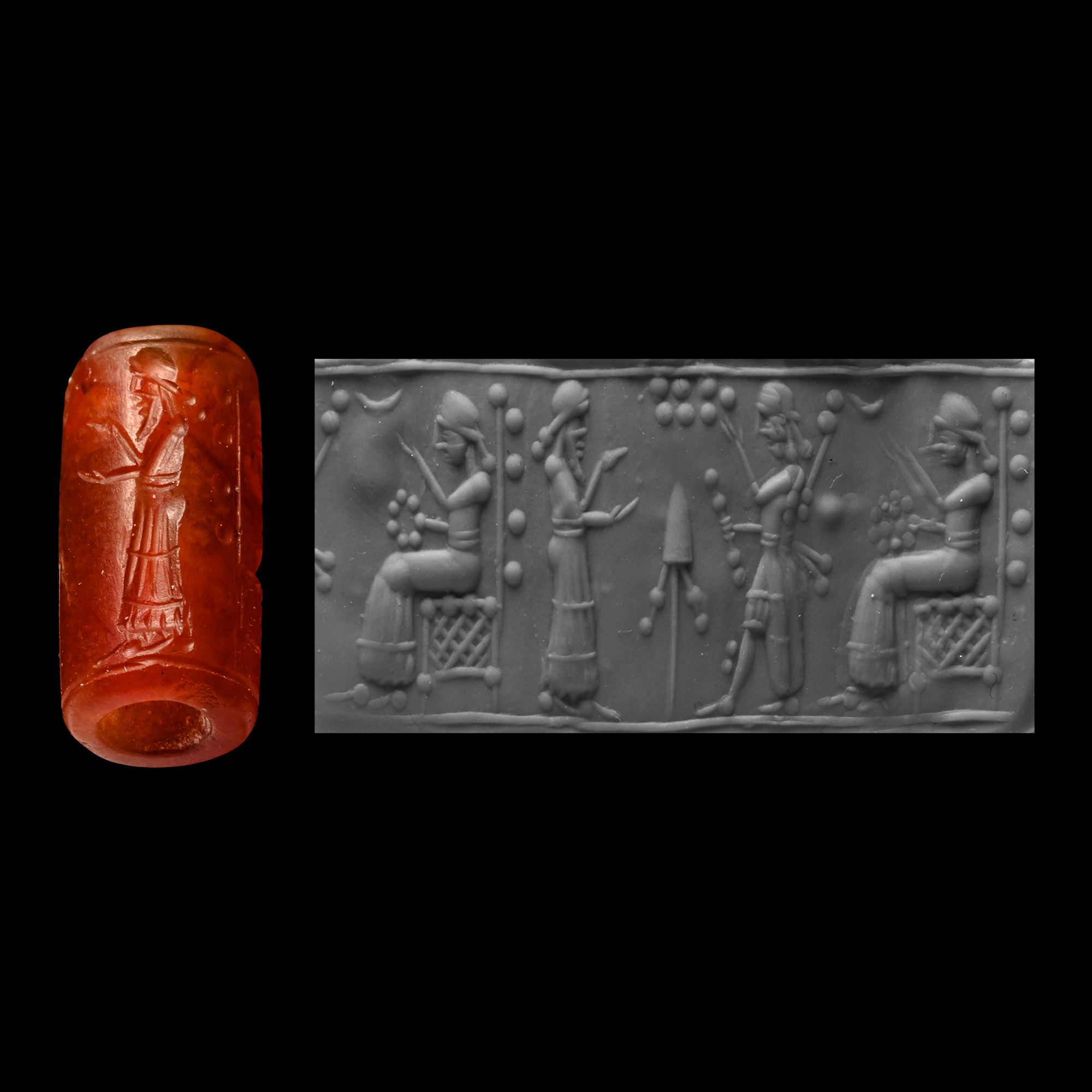
Western Asiatic Cylinder Seal with Throne Scene
1ST MILLENNIUM B.C.
7/8 in. (3.75 grams, 21 mm).
Carnelian seal with intaglio frieze of a robed figure seated on a throne and holding a wreath with one arm raised towards a standing figure wearing a tunic and longer robe with one arm raised and holding a sceptre towards a spear with streamers and a figure facing him in a long robe with hands held out; pellets and objects in the field; supplied with a museum-quality impression. [No Reserve]
ProvenanceAcquired in the 1970s.
Property of a London lady, part of her family's collection.
TimeLine Auctions follows a vetting process to ensure the authenticity and legality of all items, reinforcing our commitment to integrity and responsible trading. Each antiquity, antique, and coin lot undergoes thorough examination by a vetting committee of at least ten external specialists, professional trade association members, scientists, and archaeologists: Our Vetting Process
AUCTIONS:
TimeLine is a leading auction house specialising in antiquities, ancient art, collectables, natural history, coins, medals, and books. Our auctions offer museums, collectors, historians, and enthusiasts the opportunity to acquire unique and historically significant pieces.
-
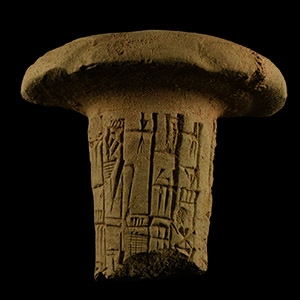
Mesopotamian Cuneiform Foundation Nail
3rd-2nd millennium B.C.Sold for (Inc. bp): £442
Conical foundation nail fragment with broad domed top, columns of cuneiform text to the shank. 322 grams, 96 mm
Acquired in London in 1995. European private collection.
Temple nails or cones were placed in the foundations of newly-built temples. Their form imitates nails or pegs and they bear inscriptions stating the name of the reigning king and regnal year, and the god(s) to whom the temple was dedicated. -
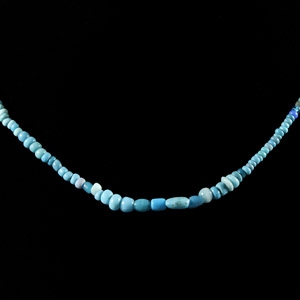
Western Asiatic Turquoise Blue Glass Bead Necklace String
1st millennium B.C. and laterSold for (Inc. bp): £59
Restrung using graduated oblate and other beads, central feature with larger oblate and barrel-shaped beads. 5.6 grams, 46 cm long
UK gallery, early 2000s.
Turquoise has been known since prehistoric times, and it is widely used in jewellery in the Middle East (Egypt and Persia), the Far East (Tibet, Mongolia and China) and even by native North Americans. Turquoise was very fashionable also in Europe, especially during the 18th and 19th centuries. -
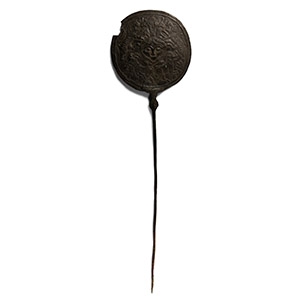
Large Neo-Elamite Decorated Bronze Pin
Circa 1200-800 B.C.Estimate: £800 - 1,000 (+bp*)
Opening Bid: £400
Comprising a large circular finial with symmetrical repoussé design and a long tapering shank; the finial with a large central head with hatched hair and beard, possibly representing a mask of a deity; two addorsed ibexes below, each with a rosette above and foliage in front; at the top, two rampant lions flanking the 'Master of Animals' motif; the motif with pricked ears and wearing a two-tiered headpiece, a pair of zoomorphic figure emerging from his cheeks and grasp onto the flanking lions; mounted on a custom-made fabric-covered backing. 228 grams total, 43 cm long
Ex Rabi Gallery 1980-1990. From an important London, UK, collection.
