
Loading, please wait...
LOT 1890
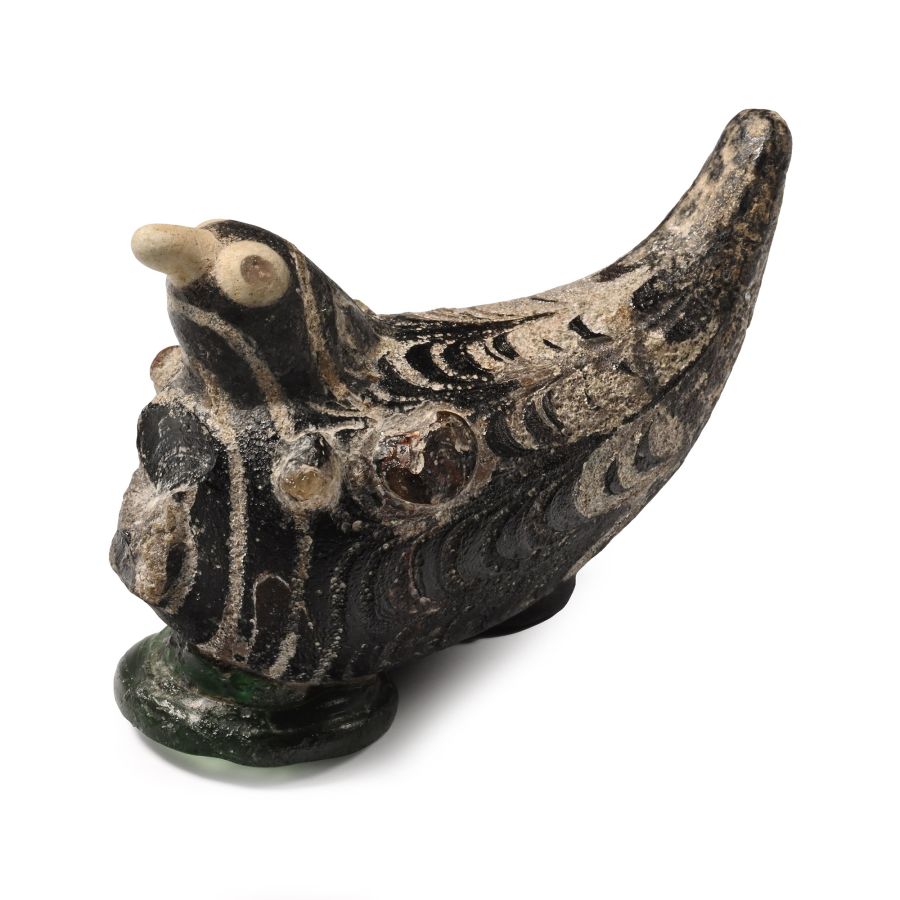
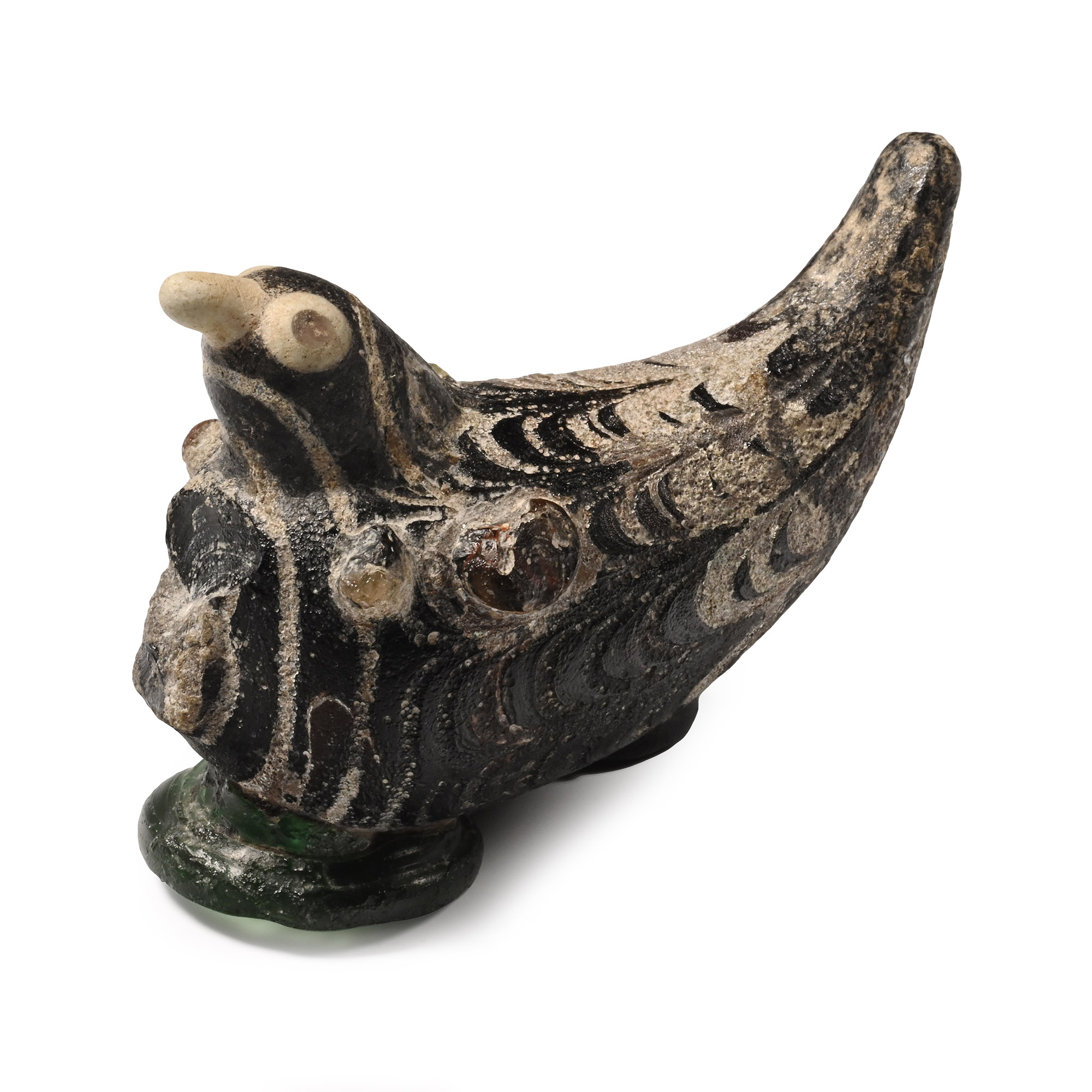
Western Asiatic Core-Formed Glass Bird
20TH CENTURY A.D. OR EARLIER
2 7/8 in. (116 grams, 73 mm).
With discoid base, applied beak, eyes and studs to the wings, dragged-trail detailing to indicate plumage. [No Reserve]
ProvenanceAcquired in London, 1992.
Private collection, London, UK.
This lot is accompanied by an illustrated lot declaration signed by the Head of the Antiquities Department, Dr Raffaele D'Amato.
TimeLine Auctions follows a vetting process to ensure the authenticity and legality of all items, reinforcing our commitment to integrity and responsible trading. Each antiquity, antique, and coin lot undergoes thorough examination by a vetting committee of at least ten external specialists, professional trade association members, scientists, and archaeologists: Our Vetting Process
AUCTIONS:
TimeLine is a leading auction house specialising in antiquities, ancient art, collectables, natural history, coins, medals, and books. Our auctions offer museums, collectors, historians, and enthusiasts the opportunity to acquire unique and historically significant pieces.
-
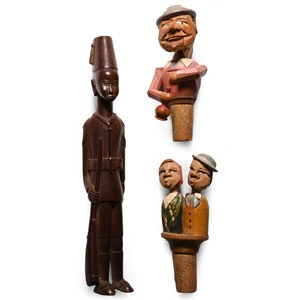
Wooden Figure and Articulated Figural Bottle Stop Group
Mid 20th century A.D.Sold for (Inc. bp): £7
Comprising: carved hardwood military figure (King's African Rifles); bottle-stop with activating lever to simulate dinking from a bottle; bottle-stop with activating lever to make the figures kiss. 215 grams total, 12.5-24.5 cm
Property of an East Anglian gentleman, 1970s-early 2000s. This lot is accompanied by an illustrated lot declaration signed by the Head of the Antiquities Department, Dr Raffaele D'Amato. -
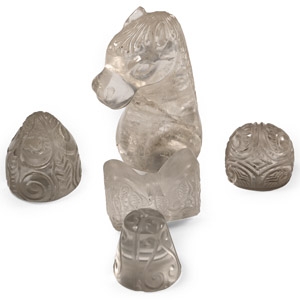
Western Asiatic Style Rock Crystal Gaming Piece Group
20th century A.D.Sold for (Inc. bp): £715
Comprising: a large horse-head shaped piece, three conical with engraved scroll motifs, and a bow-shaped piece with engraved leaves. 334 grams total, 27-77 mm
From the family collection of a Hampstead gentleman; formerly acquired in the 1980s. This lot is accompanied by an illustrated lot declaration signed by the Head of the Antiquities Department, Dr Raffaele D'Amato. -
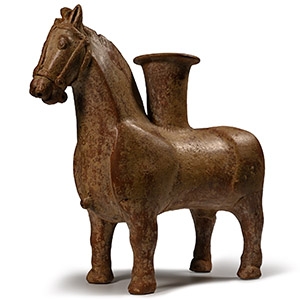
Western Asiatic Style Ceramic Horse Rhyton
20th century AD.Sold for (Inc. bp): £91
Formed as a stocky horse wearing a bridle, small spout to the chest, tall tubular neck to the back with everted rim. 1.16 kg, 28 cm wide
From the family collection of a Hampstead gentleman; formerly acquired in the 1980s. This lot is accompanied by an illustrated lot declaration signed by the Head of the Antiquities Department, Dr Raffaele D'Amato.
