
Loading, please wait...
_900x900.jpg "Western Asiatic Cobalt-Blue Footed Bowl")
_200x200.jpg "Western Asiatic Cobalt-Blue Footed Bowl")
_900x900.jpg "Western Asiatic Cobalt-Blue Footed Bowl")
_200x200.jpg "Western Asiatic Cobalt-Blue Footed Bowl")
.jpg "Western Asiatic Cobalt-Blue Footed Bowl")
.jpg "Western Asiatic Cobalt-Blue Footed Bowl")
LOT 0323
Western Asiatic Cobalt-Blue Footed Bowl
9TH CENTURY A.D.
7 1/4 in. (498 grams, 18.5 cm).
With carinated sidewall, rolled and everted rim, shallow foot; partial lustre-glaze to surface with four trapezoidal panels: two with reserved regardant bird and two with tracery motif.
ProvenancePrivate collection, Japan, acquired prior to 1982.
Private collection, U.K.
This lot has been checked against the Interpol Database of stolen works of art and is accompanied by a search certificate number no.12724-235155.
This lot has been cleared against the Art Loss Register database, and is accompanied by an illustrated lot declaration signed by the Head of the Antiquities Department, Dr Raffaele D'Amato.
Masterpieces of Lustre-Painted Pottery: Persian Ceramics from Distant Lands (ラスタ―彩名陶展), The Asahi Shimbun Company, 1982, no. I-32, illustrated.
Exhibited:
Nihonbashi Takashimaya, Tokyo, 20–25 May 1982.
Maruei Sky Building, Nagoya, 29 May–3 June 1982.
Takashimaya, Osaka, 10–15 June 1982.
Takashimaya, Okayama, 17–22 June 1982.
TimeLine Auctions follows a vetting process to ensure the authenticity and legality of all items, reinforcing our commitment to integrity and responsible trading. Each antiquity, antique, and coin lot undergoes thorough examination by a vetting committee of at least ten external specialists, professional trade association members, scientists, and archaeologists: Our Vetting Process
AUCTIONS:
TimeLine is a leading auction house specialising in antiquities, ancient art, collectables, natural history, coins, medals, and books. Our auctions offer museums, collectors, historians, and enthusiasts the opportunity to acquire unique and historically significant pieces.
LOT 0323
Western Asiatic Cobalt-Blue Footed Bowl
Estimate £7,000 - 9,000€8,120 - 10,440 (for guidance only)$9,450 - 12,150 (for guidance only)
-
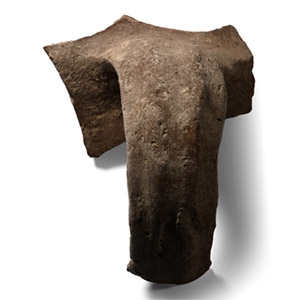
Royal Stamped Terracotta Jar Handle
Late 8th century B.C.Estimate: £300 - 400 (+bp*)
Opening Bid: £150
The handle fragment from a Tufnell type 484 jar, bearing an oval stamp to the upper handle. 129 grams, 10 cm
Ex S.M. London collection, UK, 1970-1990s. Accompanied by a description from Peter Gert Van der Veen, senior lecturer of Levantine Archaeology, Johannes Gutenberg-Universität, Mainz. This lot has been cleared against the Art Loss Register database, and is accompanied by an illustrated lot declaration signed by the Head of the Antiquities Department, Dr Raffaele D'Amato. -
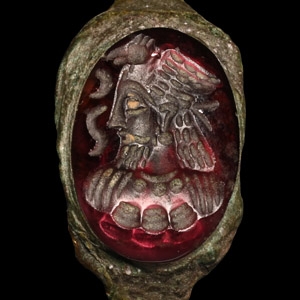
Sasanian Bronze Ring with Gemstone
4th-7th century A.D.Sold for (Inc. bp): £442
Comprising a slender hoop and wide bezel, intaglio engraved with a facing bearded bust. 2.85 grams, 22.66 mm overall, 19.92 mm internal diameter (approximate size British N 1/2, USA 6 3/4, Europe 14.35, Japan 13)
Acquired on the UK art market before 2000. Property of an Essex, UK, gentleman. This lot has been cleared against the Art Loss Register database, and is accompanied by an illustrated lot declaration signed by the Head of the Antiquities Department, Dr Raffaele D'Amato. -
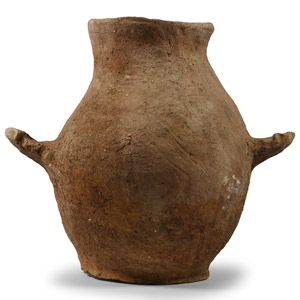
Transjordan Holy Land Terracotta Jar with Ledge Handles
Early Bronze Age I, 3rd millennium B.C.Estimate: £200 - 300 (+bp*)
Opening Bid: £100
Biconvex globular body with broad neck, flared rim, two ledge handles to the equator. 2.34 kg, 23.5 cm
From the collection of a gentleman, Geneva, before 1988. This lot has been cleared against the Art Loss Register database, and is accompanied by an illustrated lot declaration signed by the Head of the Antiquities Department, Dr Raffaele D'Amato.
