
Loading, please wait...
LOT 1144
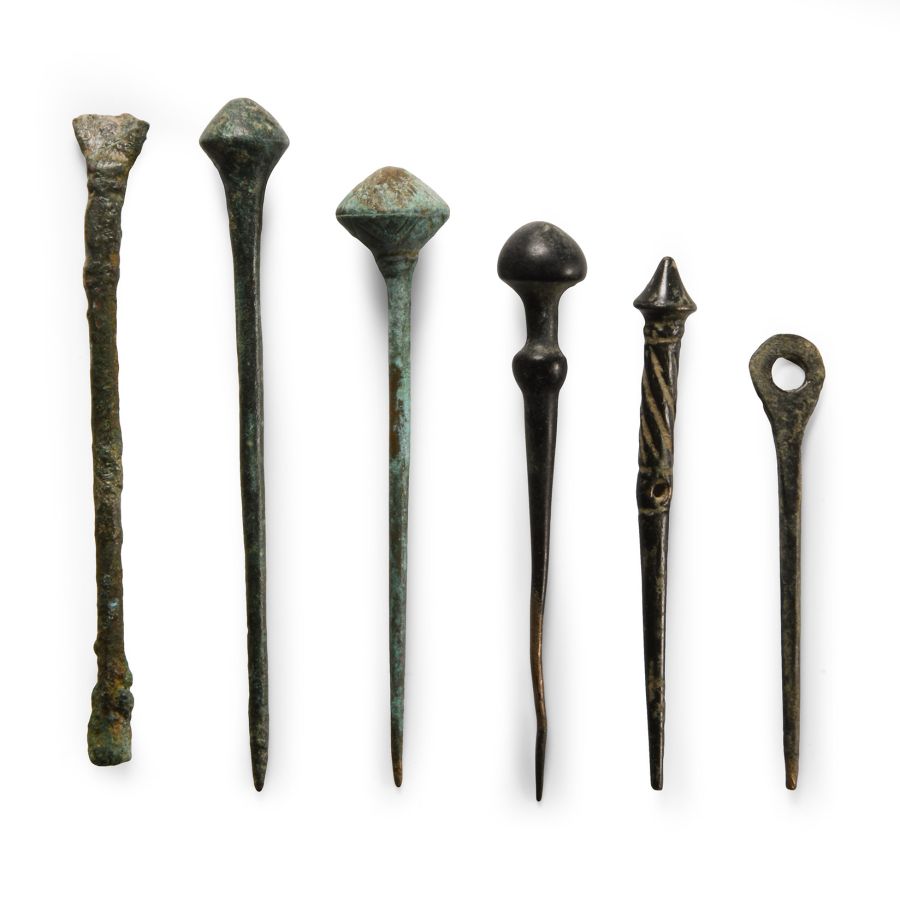
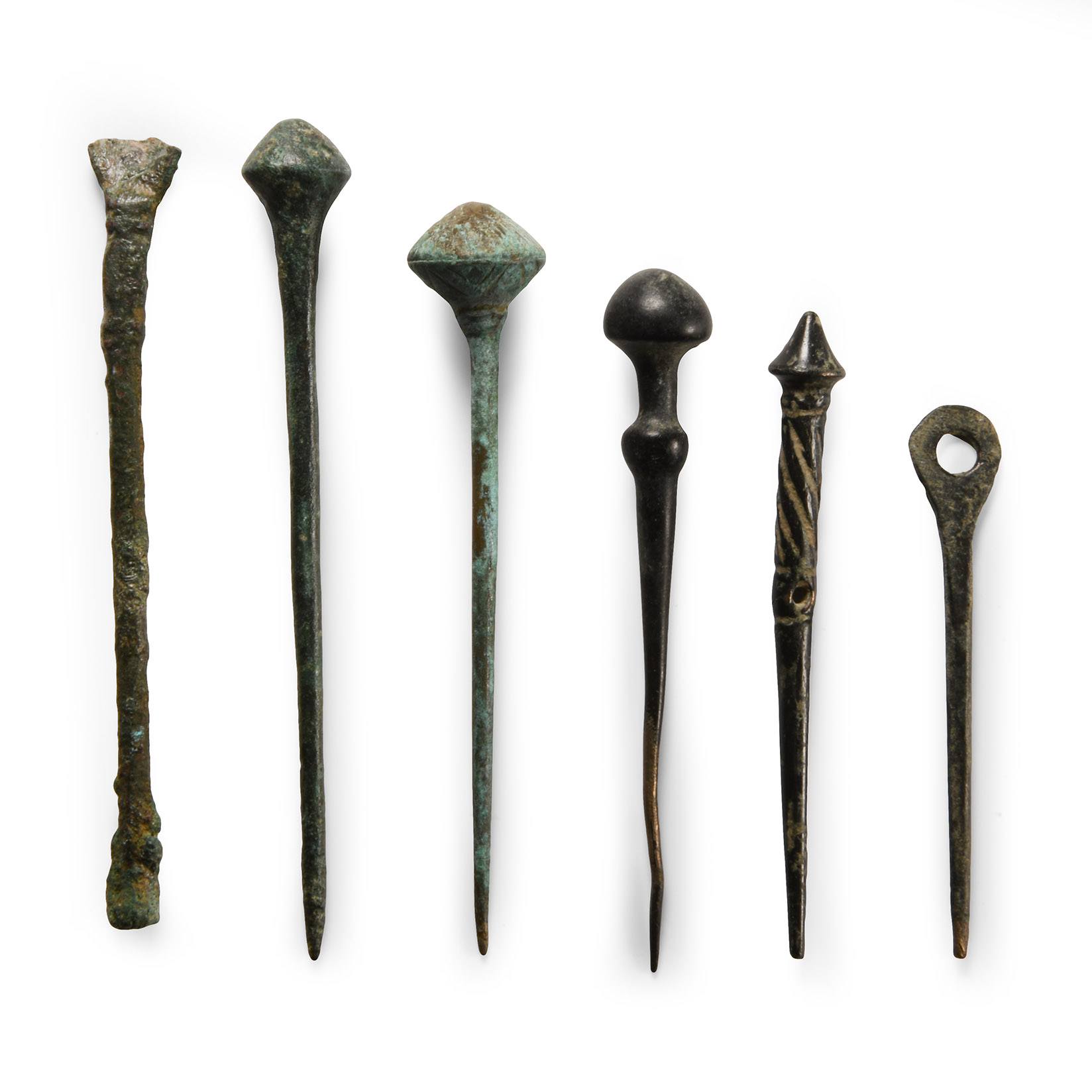
Western Asiatic Clothing Pin Group
1ST MILLENNIUM B.C.
2 - 3 1/8 in. (34.5 grams total, 52-80 mm).
Comprising four pins with conical finials, a looped pin, and a section of a pin with flared finial. [6, No Reserve]
ProvenanceUK private collection before 2000.
On the UK art market.
Property of a London gentleman.
TimeLine Auctions follows a vetting process to ensure the authenticity and legality of all items, reinforcing our commitment to integrity and responsible trading. Each antiquity, antique, and coin lot undergoes thorough examination by a vetting committee of at least ten external specialists, professional trade association members, scientists, and archaeologists: Our Vetting Process
AUCTIONS:
TimeLine is a leading auction house specialising in antiquities, ancient art, collectables, natural history, coins, medals, and books. Our auctions offer museums, collectors, historians, and enthusiasts the opportunity to acquire unique and historically significant pieces.
-
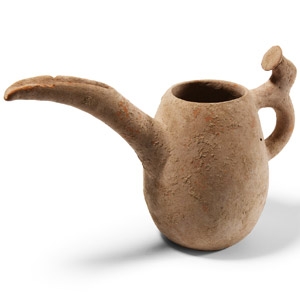
Amlash Spouted Terracotta Vessel
1st millennium B.C.Sold for (Inc. bp): £176
Hollow-formed oblate vessel with curved spout, loop handle and thumb-pad. 700 grams, 27 cm wide
Ex Rabi Gallery, Mayfair, London, UK. Ex private collection. -
.jpg)
Large Middle Elamite Cylinder Seal of Kidnu, Chief Overseer of King Tan-Ruhurater II
Circa 1450 B.C.Sold for (Inc. bp): £15,600
A high-status green chalcedony seal with frieze depicting a seated figure in horned headdress facing a standing figure with arms outstretched, small monkey to the legs; six columns of Akkadian cuneiform text transliterated as: 1. ki-di-nu UGULA KUŠ-MEŠ 2. GAL šà tan-dru-hu- 3. ra-te-er EŠŠANA šu-ši 4. u an-za-an ARAD 5. šà dha-te-ri-iš 6. šak(?) ì-lí-šu 'Kidinu, chief overseer of the equerries(?) of Tan-Ruhurater, King of Susa and Anzan, servant of Haterishshak, his god'. The seal's owner was an official of King Tan-Ruhurater II (circa 1450 B.C.), king of Susa and Anzan. The title used to describe Kidinu is sometimes translated 'high official', elsewhere 'horse groom' or 'animal trainer'; the Elamite deity Haterish is otherwise unknown. 23.8 grams, 39 mm
From a Mayfair gallery, London, UK; previously acquired in the 1980s. Property of a North London lady; gifted from her father's collection. From a collection acquired from various auction houses in the UK. From the estate of Mr R.W., a private Wiltshire, UK, collector; thence by descent. Accompanied by a copy of a specialist academic report dated June 2017. This lot has been checked against the Interpol Database of stolen works of art and is accompanied by a search certificate number no.12122-215563. -
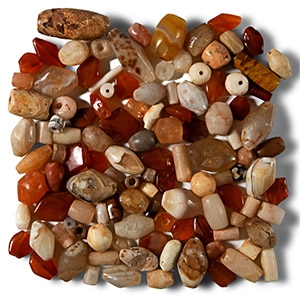
Western Asiatic Mixed Agate and Carnelian Bead Group
1st millennium B.C. and laterEstimate: £500 - 700 (+bp*)
Opening Bid: £250
Including tubular, fusiform, tabular, biconvex and other types. 193 grams total, 7-32 mm
Acquired 1980-2015. Ex Abelita family collection.
