
Loading, please wait...


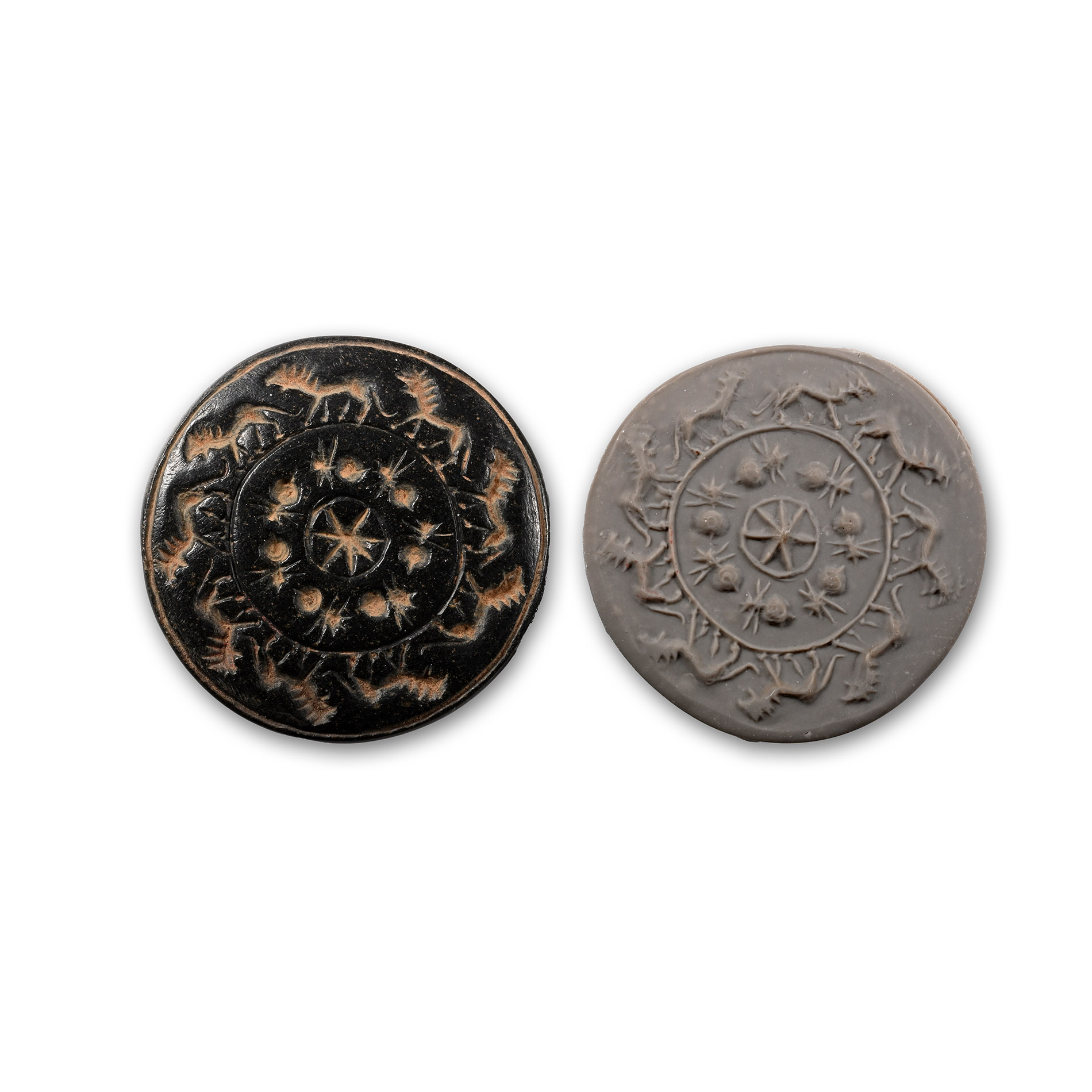
LOT 0214
Western Asiatic Circular Black Stone Seal with Lion Procession
1ST MILLENNIUM B.C.
1 3/4 in. (46.1 grams, 44 mm).
Plano-convex in profile with incuse design to underside: concentric rings with procession of lions around pomegranates, starburst to the centre.
ProvenanceCollected from 1970-1999.
From the collection of the late Mr S.M., London, UK.
TimeLine Auctions follows a vetting process to ensure the authenticity and legality of all items, reinforcing our commitment to integrity and responsible trading. Each antiquity, antique, and coin lot undergoes thorough examination by a vetting committee of at least ten external specialists, professional trade association members, scientists, and archaeologists: Our Vetting Process
AUCTIONS:
TimeLine is a leading auction house specialising in antiquities, ancient art, collectables, natural history, coins, medals, and books. Our auctions offer museums, collectors, historians, and enthusiasts the opportunity to acquire unique and historically significant pieces.
LOT 0214
Western Asiatic Circular Black Stone Seal with Lion Procession
Estimate £1,000 - 1,400€1,160 - 1,620 (for guidance only)$1,350 - 1,890 (for guidance only)
-
.jpg)
Old Babylonian Cuneiform Tablet
2nd millennium B.C.Sold for (Inc. bp): £338
Pillow-shaped with cuneiform text to both broad faces and one long edge. 87 grams, 71 mm
From specialised collection of cuneiform texts, formed in the 1950s-1990s. The property of a London gentleman and housed in London, thence by descent to family members. Examined by Professor Wilfrid George Lambert FBA (1926-2011), historian, archaeologist, and specialist in Assyriology and Near Eastern archaeology, in the late 1980s and 1990s. The collection is exceptional for the variety of types, including some very rare and well preserved examples. -
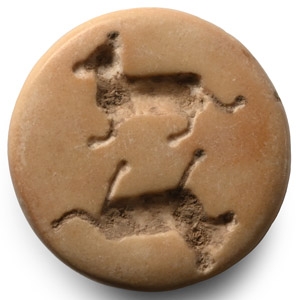
Proto-Sumerian Stone Stamp Seal with Two Animals
Circa 3000 B.C.Sold for (Inc. bp): £234
Plano-convex stamp seal with design of two crouching quadrupeds placed tête-bêche. 17 grams, 30 mm
Acquired in the mid 1980s-1990s. Private collection, Switzerland, thence by descent. Private collection, since the late 1990s.
The motifs have been created using a drill, hence the rounded appearance. -
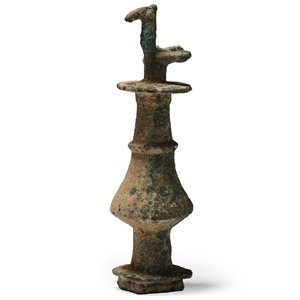
Luristan Bronze Standard Finial with Bird
13th-7th century B.C.Estimate: £100 - 140 (+bp*)
Opening Bid: £50
With a conical, collared body; the top with a stylised bird modelled in the round. 87.4 grams, 99 mm
Acquired on the UK art market before 2000. Property of an Essex, UK, gentleman.
