
Loading, please wait...
_900x900.jpg "Western Asiatic Ceramic Necklace Bead Group")
_200x200.jpg "Western Asiatic Ceramic Necklace Bead Group")
.jpg "Western Asiatic Ceramic Necklace Bead Group")
LOT 1199
Western Asiatic Ceramic Necklace Bead Group
1ST MILLENNIUM B.C. OR LATER
1/8 in. (12.1 grams total, 7-8 mm).
Composed of ribbed oval-shaped beads, with a 'bee-hive' appearance. [35, No Reserve]
ProvenanceUK gallery, early 2000s.
CONDITIONTimeLine Auctions follows a vetting process to ensure the authenticity and legality of all items, reinforcing our commitment to integrity and responsible trading. Each antiquity, antique, and coin lot undergoes thorough examination by a vetting committee of at least ten external specialists, professional trade association members, scientists, and archaeologists: Our Vetting Process
AUCTIONS:
TimeLine is a leading auction house specialising in antiquities, ancient art, collectables, natural history, coins, medals, and books. Our auctions offer museums, collectors, historians, and enthusiasts the opportunity to acquire unique and historically significant pieces.
-
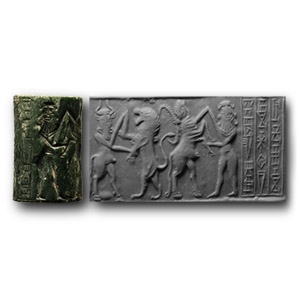
Large Akkadian Inscribed Cylinder Seal with Contest Scenes
2nd millennium B.C.Sold for (Inc. bp): £3,120
Green serpentine with two contest scenes between beast-men and rearing animals, three columns of cuneiform text. 22.8 grams, 30 mm
From the Rihani family collection, formed 1970-1980s. From a collection acquired from various auction houses in the UK. From the estate of Mr R.W., a private Wiltshire, UK, collector; thence by descent. -
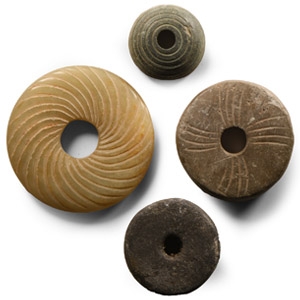
Western Asiatic Mixed Spindle Whorl Group
1st millennium B.C. and laterSold for (Inc. bp): £26
Including plano-onvex, oblate and other types. 113 grams total, 29-55 mm
From a collection acquired on the UK art market from various auction houses and collections mostly before 2000. From an important Cambridgeshire estate; thence by descent. -
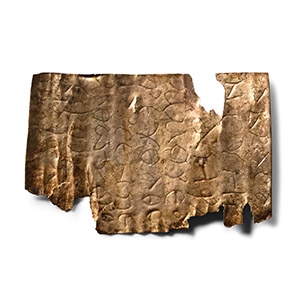
Western Asiatic Silver Magical Scroll with Greek Inscription
Circa 2nd-8th century A.D.Sold for (Inc. bp): £780
Sheet-silver rectangle with lightly incised enigmatic Greek-script text in nine lines. 1.58 grams, 41 mm
From the collection of a gentleman, acquired on the London art market in the 1990s.
