
Loading, please wait...
LOT 0196
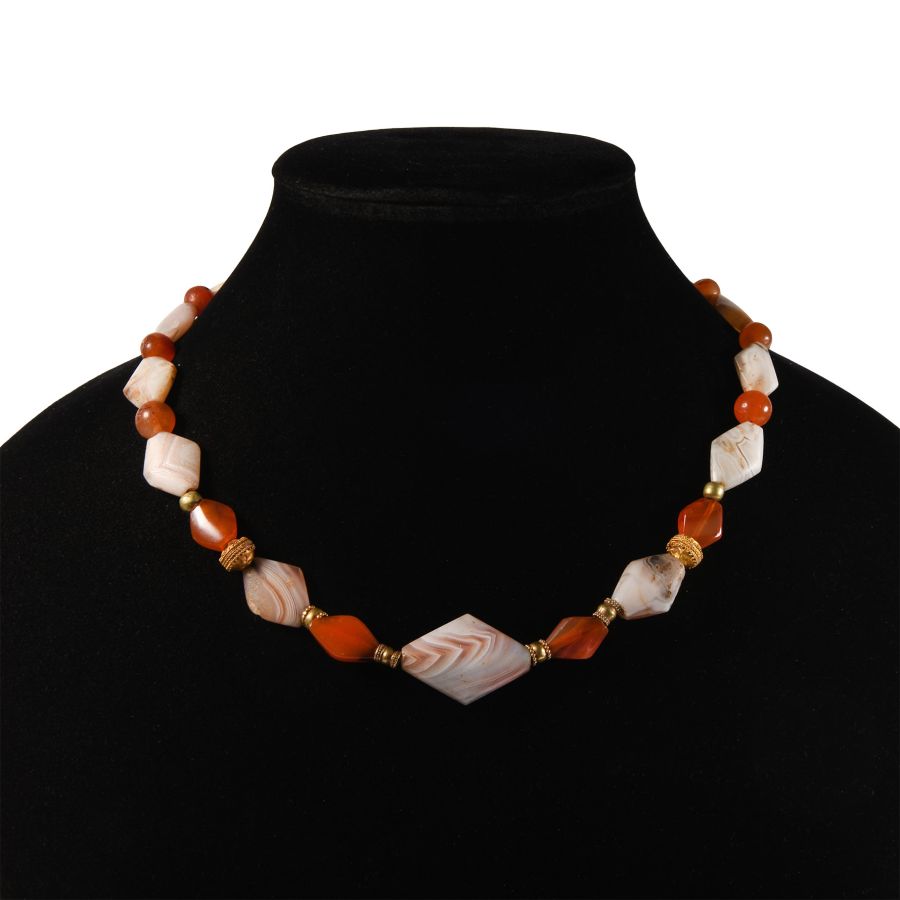
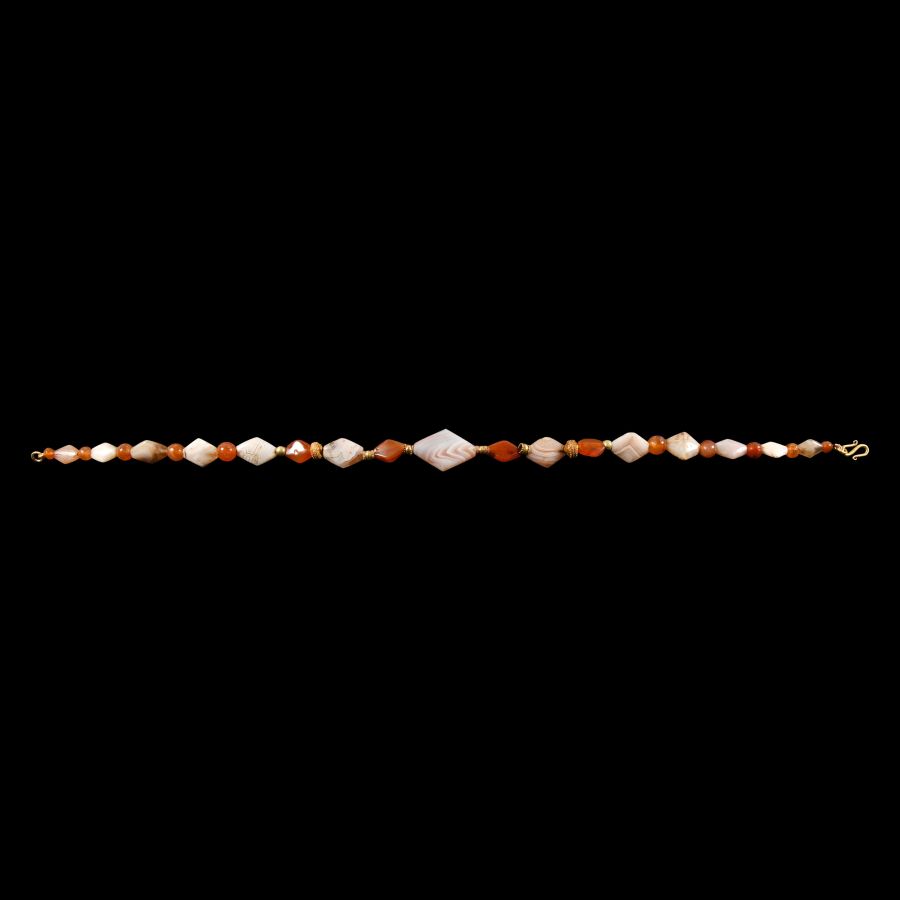
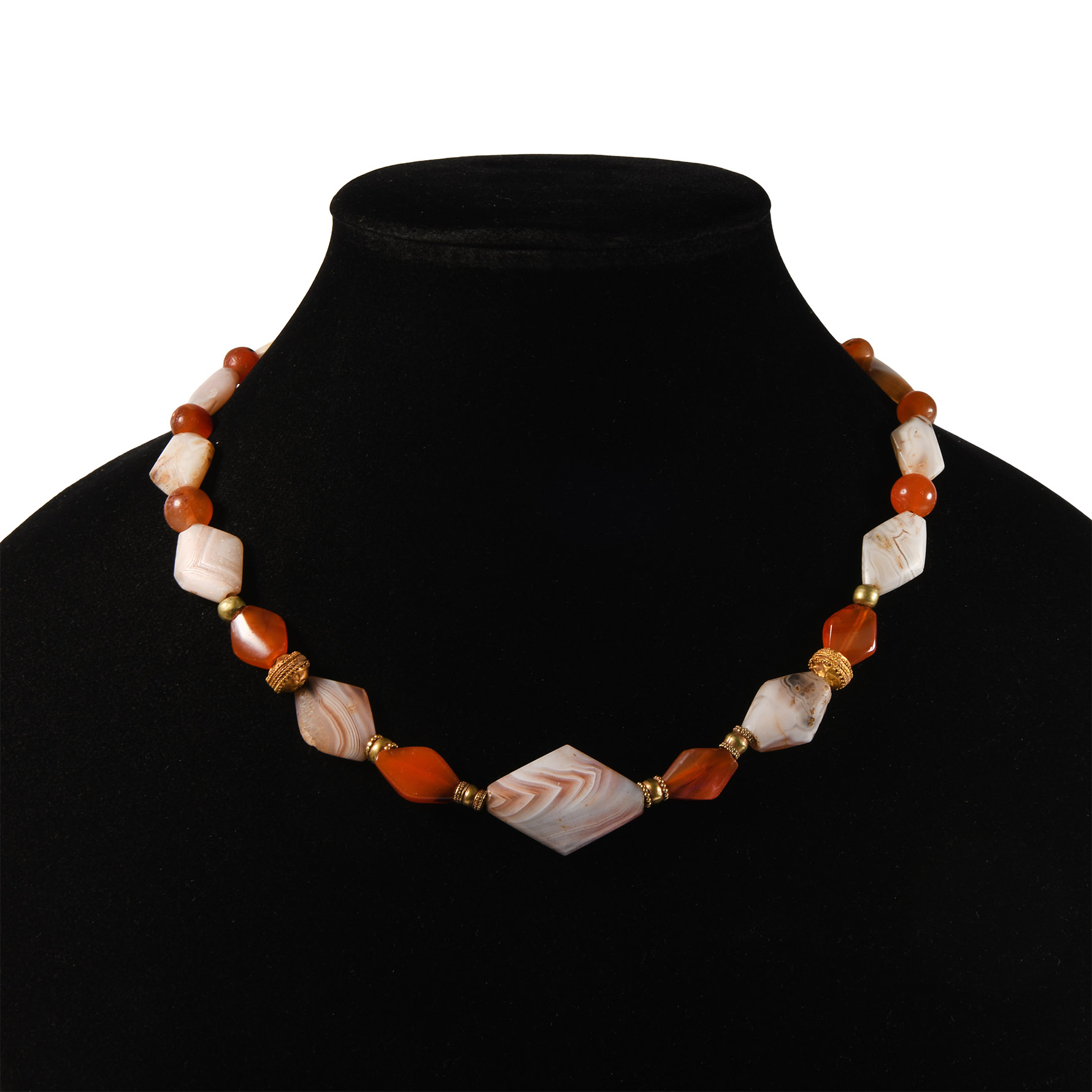
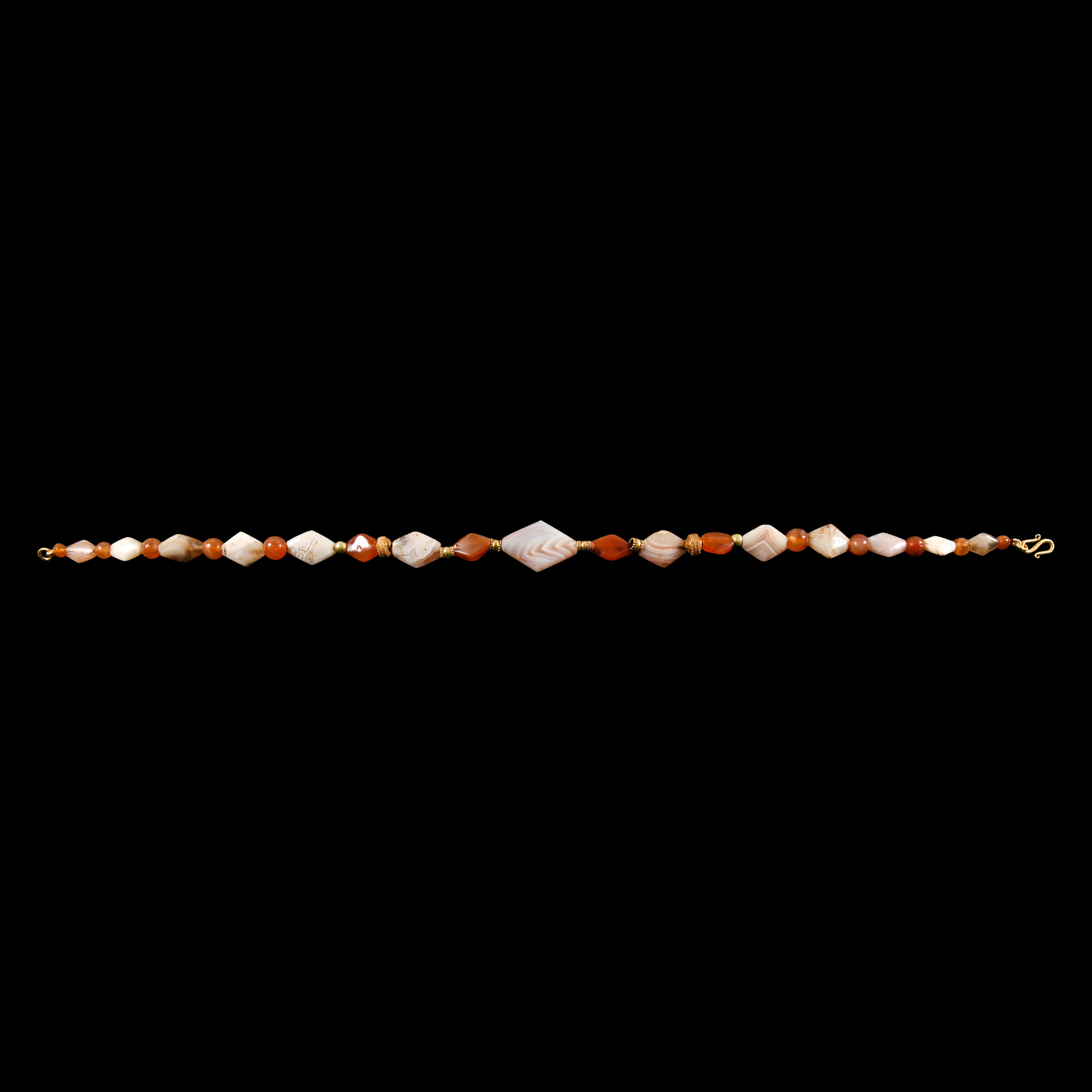
Western Asiatic Carnelian, Agate and Gold Bead Necklace
2ND MILLENNIUM B.C. AND LATER
17 1/8 in. (44.2 grams, 43.5 cm long).
Composed mainly of restrung and graduated lozenge-shaped and spherical beads, together with later gold beads of different types adorned with granulated collars and filigree; modern silver-gilt hook-and-eye clasp.
ProvenanceAcquired 1969-1999.
From the private collection of the late Mr S.M., London, UK, thence by descent.
TimeLine Auctions follows a vetting process to ensure the authenticity and legality of all items, reinforcing our commitment to integrity and responsible trading. Each antiquity, antique, and coin lot undergoes thorough examination by a vetting committee of at least ten external specialists, professional trade association members, scientists, and archaeologists: Our Vetting Process
AUCTIONS:
TimeLine is a leading auction house specialising in antiquities, ancient art, collectables, natural history, coins, medals, and books. Our auctions offer museums, collectors, historians, and enthusiasts the opportunity to acquire unique and historically significant pieces.
LOT 0196
Western Asiatic Carnelian, Agate and Gold Bead Necklace
Sold for (Inc. bp): £1,170
-
Western Asiatic Stone Macehead
Late 4th millennium B.C.Sold for (Inc. bp): £117
Drilled vertically to accommodate a wooden shaft. 621 grams, 87 mm
Acquired 1960s-1990s. Late Alison Barker collection, a retired London barrister. -
Sumerian Clay Cuneiform Tablet with Administrative Sargonic Text
Mid 3rd millennium B.C.Sold for (Inc. bp): £364
To two faces of the lentoid-section tablet. 29.3 grams, 39 mm
Specialised collection of cuneiform texts, the property of a London gentleman and housed in London before 1992. Thence by descent to family members. Examined by Professor Wilfrid George Lambert FBA (1926-2011), historian, archaeologist, and specialist in Assyriology and Near Eastern archaeology, in the late 1980s and early 1990s. The collection is exceptional for the variety of types, including some very rare and well preserved examples. -
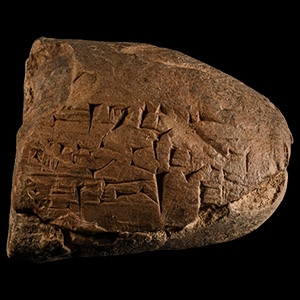
Mesopotamian Clay Cuneiform Tablet Fragment
Circa 2nd millennium B.C.Sold for (Inc. bp): £143
Bearing text to one face; the tablet roughly semi-circular in plan with a plano-convex cross-section. 48.9 grams, 43 mm
Specialised collection of cuneiform texts, the property of a London gentleman and housed in London before 1992. Thence by descent to family members. Examined by Professor Wilfrid George Lambert FBA (1926-2011), historian, archaeologist, and specialist in Assyriology and Near Eastern archaeology, in the late 1980s and early 1990s. This small collection is exceptional for the variety of types, including some very rare and well preserved examples.
