
Loading, please wait...
LOT 1309
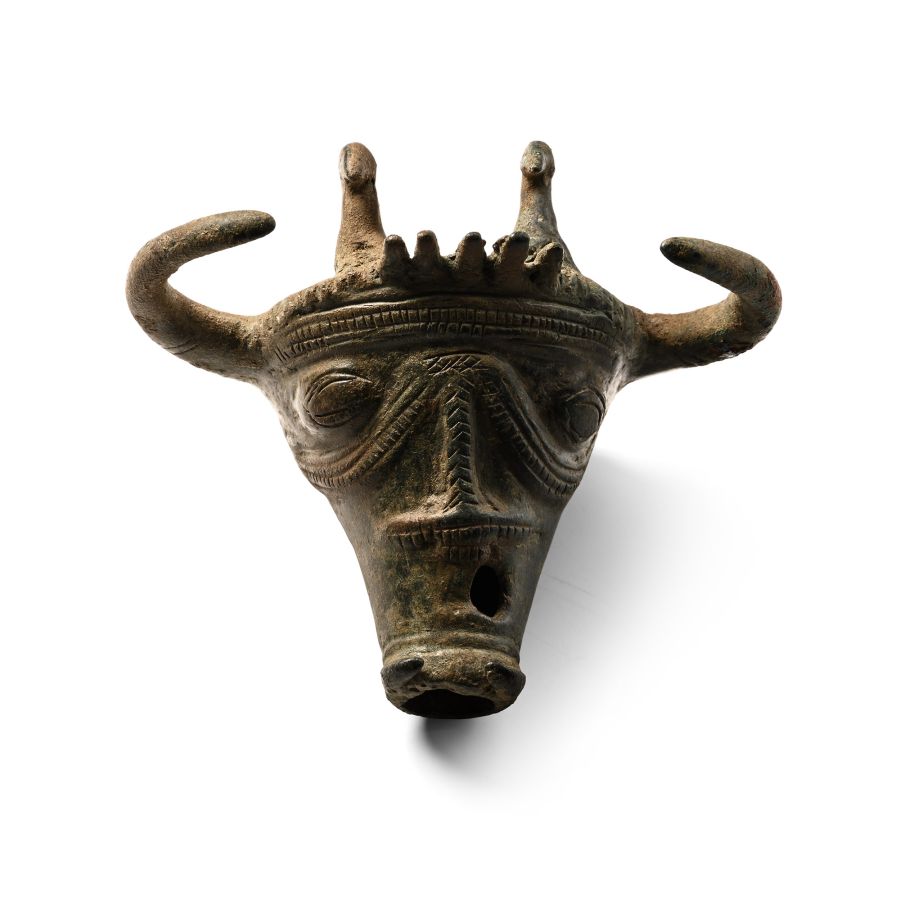
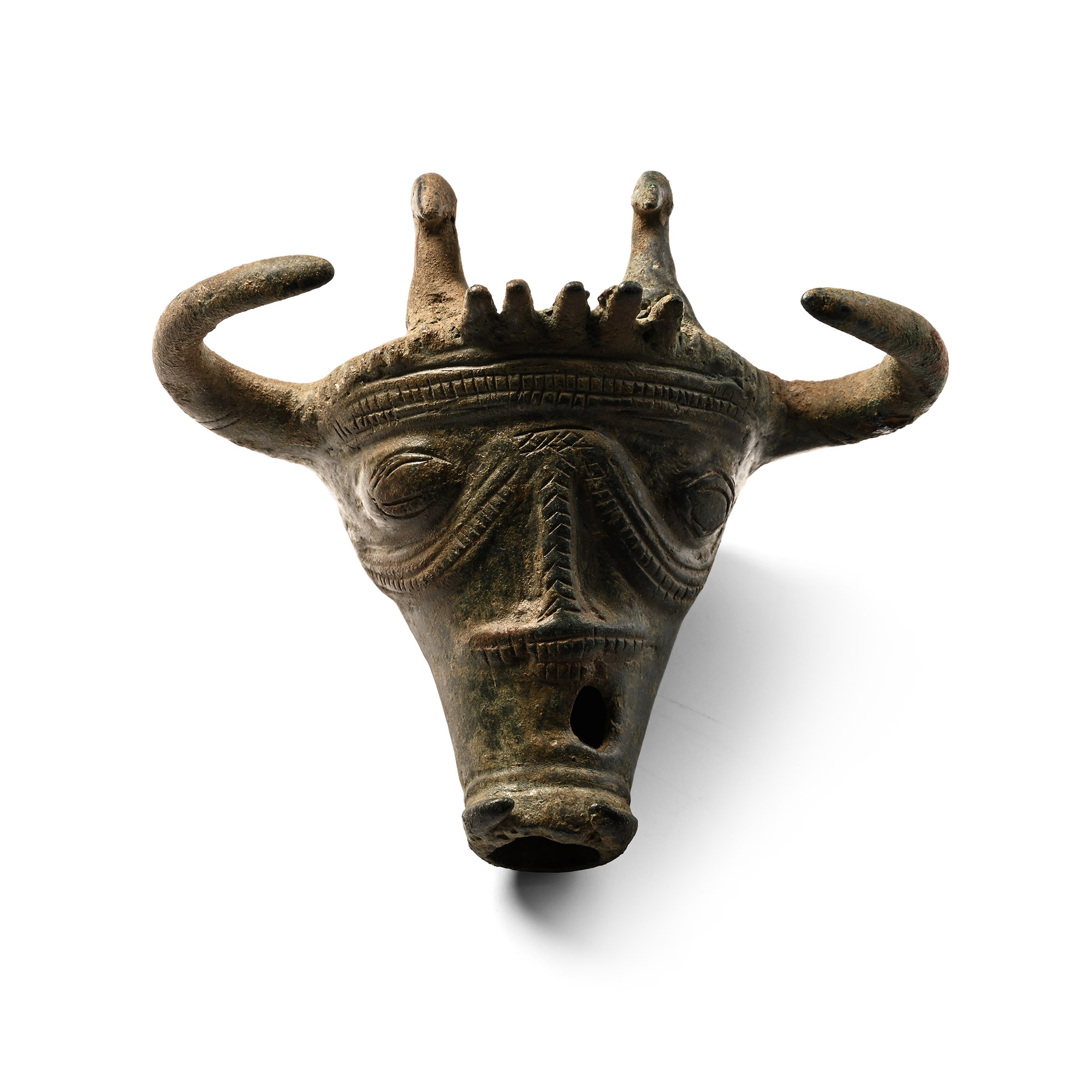
Western Asiatic Bronze Zoomorphic Bell
EARLY 1ST MILLENNIUM B.C.
3 1/4 in. (189 grams, 83 mm wide).
Hollow-formed as a beast-head, conical in plan with open muzzle flanked by tusks, raised almond-shaped eyes and bridle bands, segmented band to the brow, two lateral curved horns; rear face with two birds and loop above the aperture.
ProvenanceEx London, UK gallery, 1971-early 2000s.
Private collection, London, UK.
TimeLine Auctions follows a vetting process to ensure the authenticity and legality of all items, reinforcing our commitment to integrity and responsible trading. Each antiquity, antique, and coin lot undergoes thorough examination by a vetting committee of at least ten external specialists, professional trade association members, scientists, and archaeologists: Our Vetting Process
AUCTIONS:
TimeLine is a leading auction house specialising in antiquities, ancient art, collectables, natural history, coins, medals, and books. Our auctions offer museums, collectors, historians, and enthusiasts the opportunity to acquire unique and historically significant pieces.
-
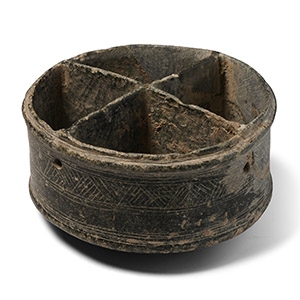
Mesopotamian Compartmented Stone Vessel
1st millennium B.C.Sold for (Inc. bp): £208
Squat and broad with hatched band below the everted rim, segmented internally. 256 grams, 86 mm wide
Ex Mayfair, London, UK, gallery, 2000s. -
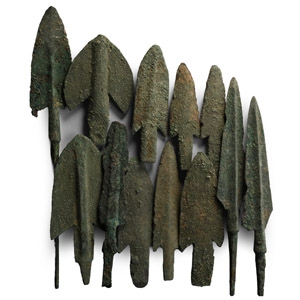
Luristan Bronze Arrowhead Collection
2nd-1st millennium B.C.Sold for (Inc. bp): £130
Mainly leaf-shaped barbed and tanged types, some with midrib. 360 grams total, 7.1-18.1 cm
Ex London, UK, collection, 1990s. -
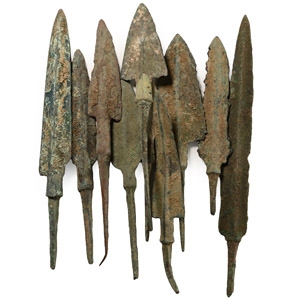
Luristan Bronze Arrowhead Collection
13th-9th century B.C.Sold for (Inc. bp): £152
Comprising large triangular and leaf-shaped types with one barbed example. 225 grams total, 94 - 158 mm
Ex London art market, 1980-1990s. This lot has been cleared against the Art Loss Register database, and is accompanied by an illustrated lot declaration signed by the Head of the Antiquities Department, Dr Raffaele D'Amato.
One series of arrowheads seem to belong to the category of lanceolate head and rounded shoulders from the category Type V, i.e. triangular arrowheads with rounded or angular midrib. Some other arrowheads seem to be a subcategory of subtype A of Khorasani but longer.
