
Loading, please wait...


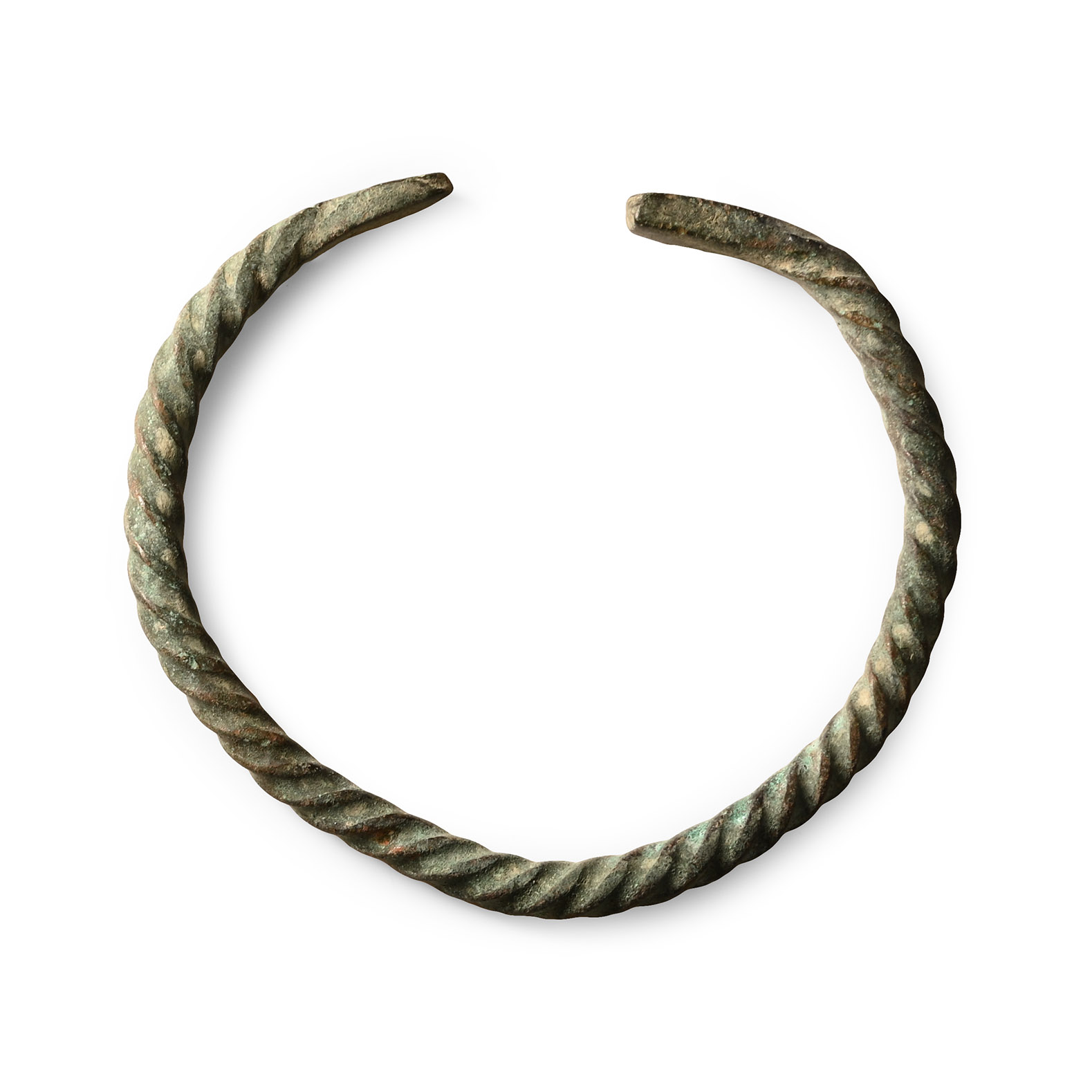
LOT 1227
Western Asiatic Bronze Twisted Bracelet
1ST MILLENNIUM B.C.
2 3/4 in. (29 grams, 71 mm).
Penannular in form with the shank formed as a bar twisted about its own axis, the ends tapering to a square butt. [No Reserve]
ProvenanceFrom a collection of a gentleman, acquired on the London art market in the 1990s.
CONDITIONTimeLine Auctions follows a vetting process to ensure the authenticity and legality of all items, reinforcing our commitment to integrity and responsible trading. Each antiquity, antique, and coin lot undergoes thorough examination by a vetting committee of at least ten external specialists, professional trade association members, scientists, and archaeologists: Our Vetting Process
AUCTIONS:
TimeLine is a leading auction house specialising in antiquities, ancient art, collectables, natural history, coins, medals, and books. Our auctions offer museums, collectors, historians, and enthusiasts the opportunity to acquire unique and historically significant pieces.
-
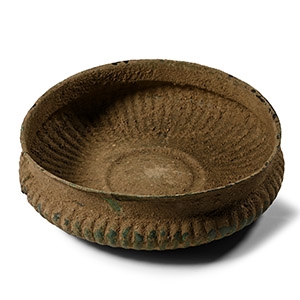
Late Achaemenid Bronze Phiale Mesomphalos
6th-4th century B.C.Sold for (Inc. bp): £91
A broad carinated bowl with radiating repoussé panels, central roundel, carination below the rim; cracked. 242 grams, 18.5 cm
Acquired 1980-2015. Ex Abelita family collection. -
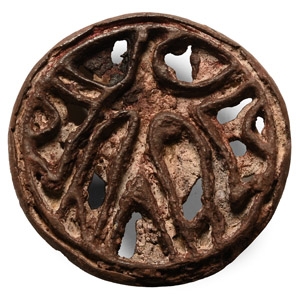
West Central Asian Bronze Stamp Seal with Human Figure
23rd-19th century B.C.Estimate: £250 - 350 (+bp*)
Opening Bid: £125
Openwork discoid seal with anthropomorphic motif; accompanied by an old scholarly note, typed and signed by W.G. Lambert, late Professor of Assyriology, University of Birmingham, 1970-1993, which states: 'Stamp Seal of Bronze. 57x59x17 mm. This is round, with flat compartmented and open-work face. The back has a stout suspension loop. The design on the face is of a standing creature -- human with bird's head -- and filling shapes. This comes from West Central Asia and dates to c. 2300-1900 B.C. It is a rare design and the seal is in fair condition: some of the edge of the plain outer band is lost.' 53 grams, 58 mm
Ex Signo collection, the property of a West London businessman, formed in the late 1980s-early 1990s; collection number Y-905, academically researched and catalogued by the late Professor Lambert in the early 1990s. -
.jpg)
Mesopotamian Stone Butterfly Bead Necklace
4th millennium B.C.Sold for (Inc. bp): £111
Graduated group of restrung butterfly-shaped beads with labrys-shaped spacers. 29.8 grams, 37 cm
Acquired 1980-2015. Ex Abelita family collection.
