
Loading, please wait...
LOT 1360
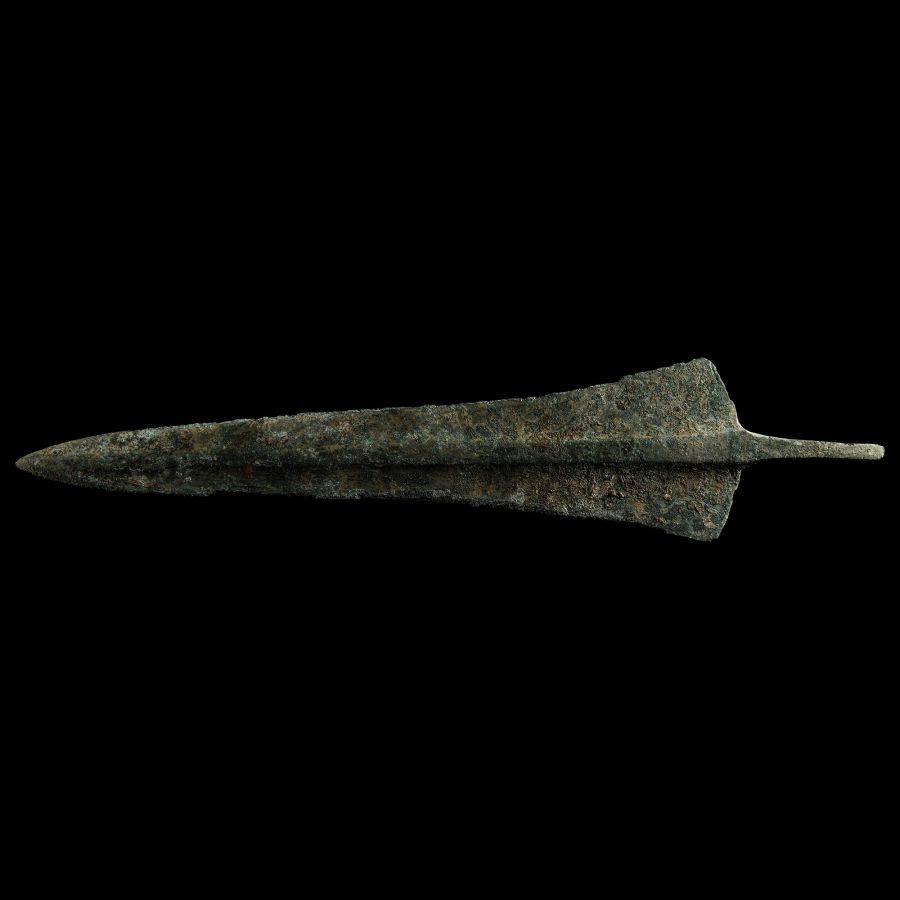
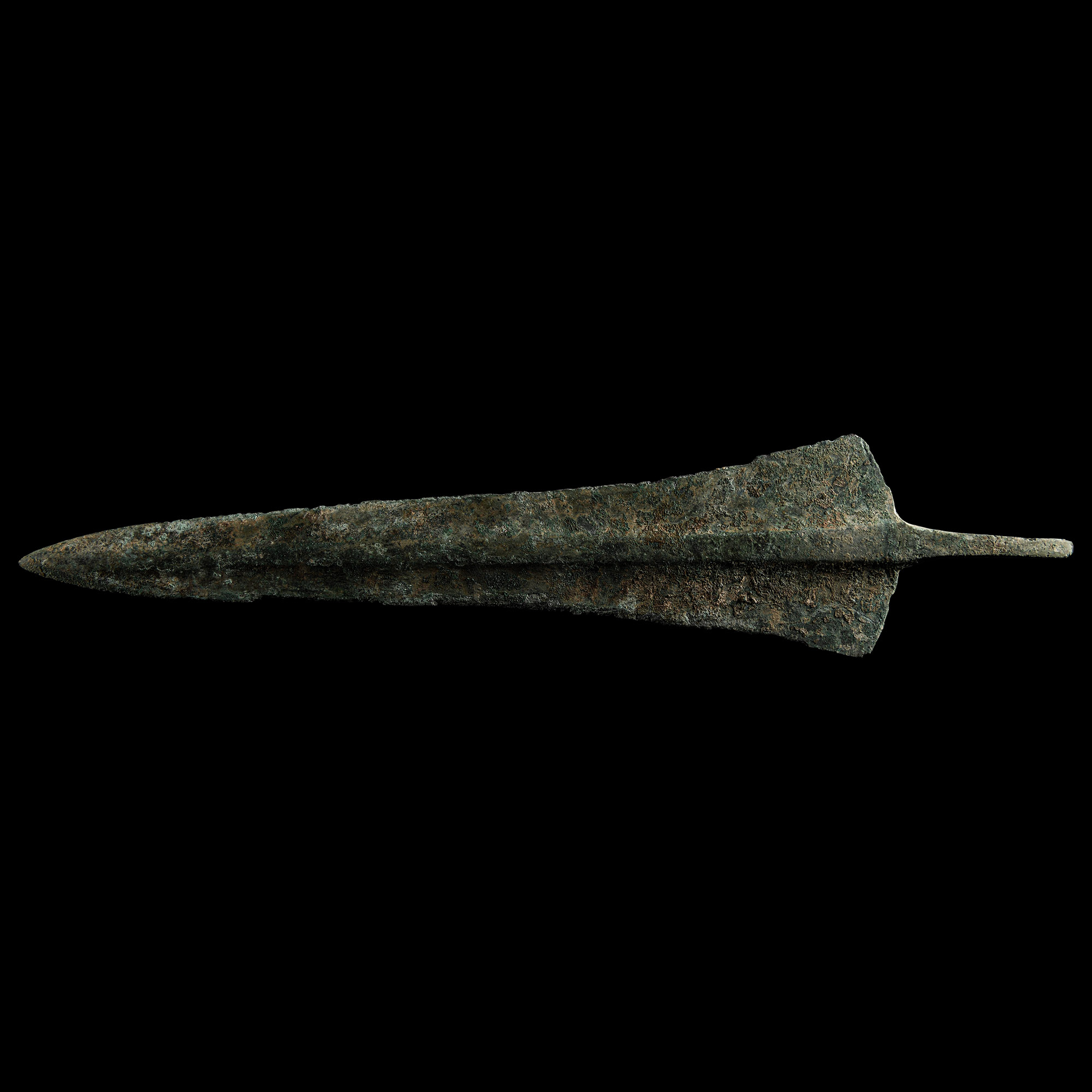
Western Asiatic Bronze Tanged Spearhead
CIRCA 13TH-6TH CENTURY B.C.
12 1/4 in. (255 grams, 31 cm).
With leaf-shaped blade and rounded tip, pronounced medial rib and shoulder flanges, short flat-section tang.
ProvenanceAcquired 1980-2015.
Ex Abelita family collection.
See Negahban, E., Weapons from Marlik, Berlin, 1995, plate IX, no.117; Khorasani M.M., Arms and Armour from Iran. The Bronze Age to the End of the Qajar Period, Tübingen, 2006, item 283, for type.
FootnotesThe spearhead belongs to type 2 of spearheads according to the classification of Khorasani. A similar specimen was excavated by Negahban in Marlik.
CONDITIONTimeLine Auctions follows a vetting process to ensure the authenticity and legality of all items, reinforcing our commitment to integrity and responsible trading. Each antiquity, antique, and coin lot undergoes thorough examination by a vetting committee of at least ten external specialists, professional trade association members, scientists, and archaeologists: Our Vetting Process
AUCTIONS:
TimeLine is a leading auction house specialising in antiquities, ancient art, collectables, natural history, coins, medals, and books. Our auctions offer museums, collectors, historians, and enthusiasts the opportunity to acquire unique and historically significant pieces.
LOT 1360
Western Asiatic Bronze Tanged Spearhead
Estimate £100 - 140€120 - 160 (for guidance only)$140 - 190 (for guidance only)
-
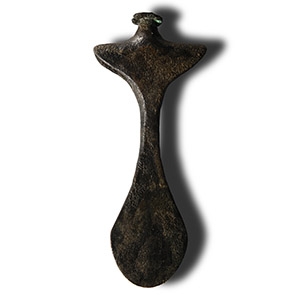
Margiana Bronze Axehead
Late 2nd millennium B.C.Estimate: £200 - 300 (+bp*)
Opening Bid: £111
With a narrow neck and rounded bill-shaped blade, rounded wings to the socket and square-headed stud behind. 289 grams, 18.3 cm
Ex Abelita family collection, 1988.
These categories of axes were of Oriental production, coming from the territories of Bactria and Margiana, occasionally imported to Elam and Luristan. The anthropomorphic and zoomorphic patterns are sometimes visible, and the button at the back of the heel (very common) is related to examples from Luristan, but the style differs markedly. -
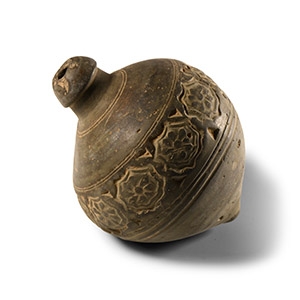
Byzantine 'Greek Fire' Ceramic Fire Bomb or Hand Grenade
9th-11th century A.D.Sold for (Inc. bp): £260
Piriform body with band of impressed rosettes to the equator, domed filler-hole, intended to be filled with explosive liquid and wick, used as a hand grenade. 547 grams, 12.1 cm
From a specialist collection of militaria, London, UK, collected 1990s onwards. Accompanied by an academic paper by military specialist Dr Raffaele D'Amato, dated 15 July 2019 and titled 'Eastern Roman Empire - Greek Fire Bomb or Hand Grenade (μεσαίον kακάβιον) 9th-11th century AD'.
Apart from the use of siphons or manual flame-throwers called cheirosiphona, special corps of Roman soldiers employed terracotta grenades, in the form of small jars, abundantly evidenced in archaeological excavations. They were called μεσαία kακαβιά or κυτροκακάβια where the former had a bulbous shape and the latter a more cylindrical form. -
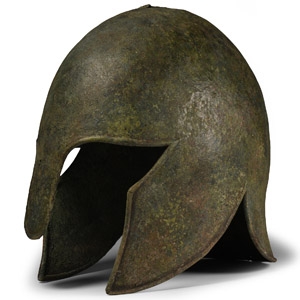
Greek Style Reproduction Helmet
20th century A.D. or earlierSold for (Inc. bp): £416
Modelled on the Corinthian form with broad nasal and fixed chek-protectors, rolled edges. 709 grams, 24.6 cm
Private collection, UK.
