
Loading, please wait...
LOT 1400
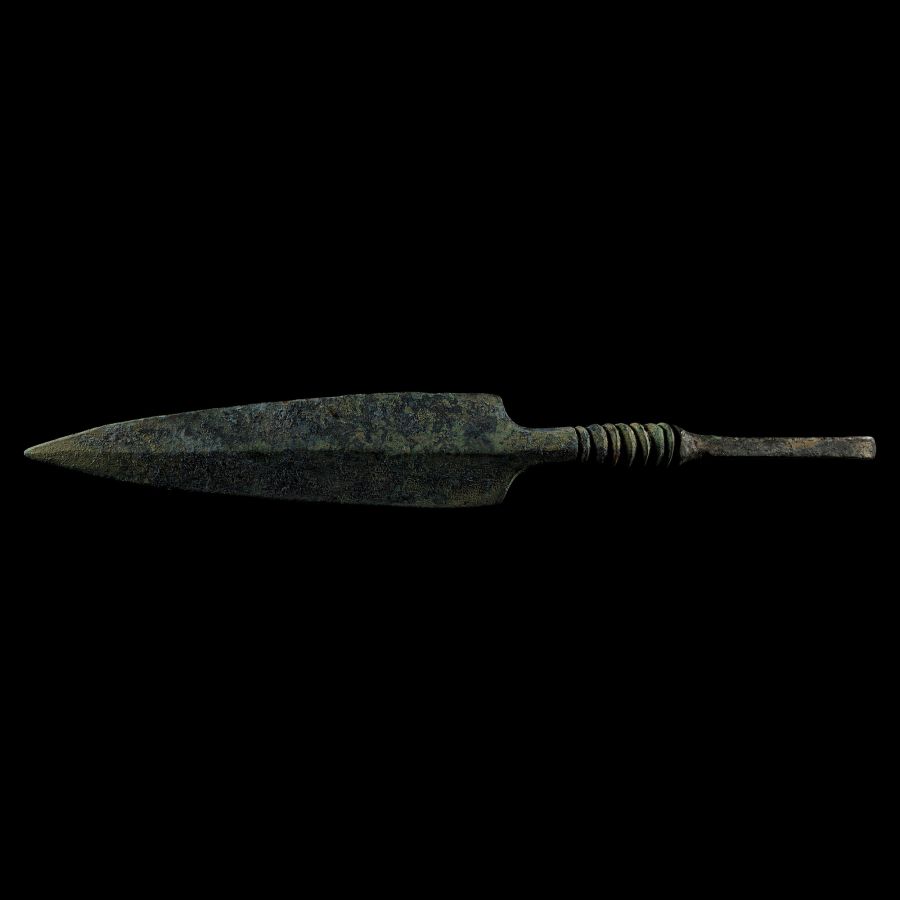
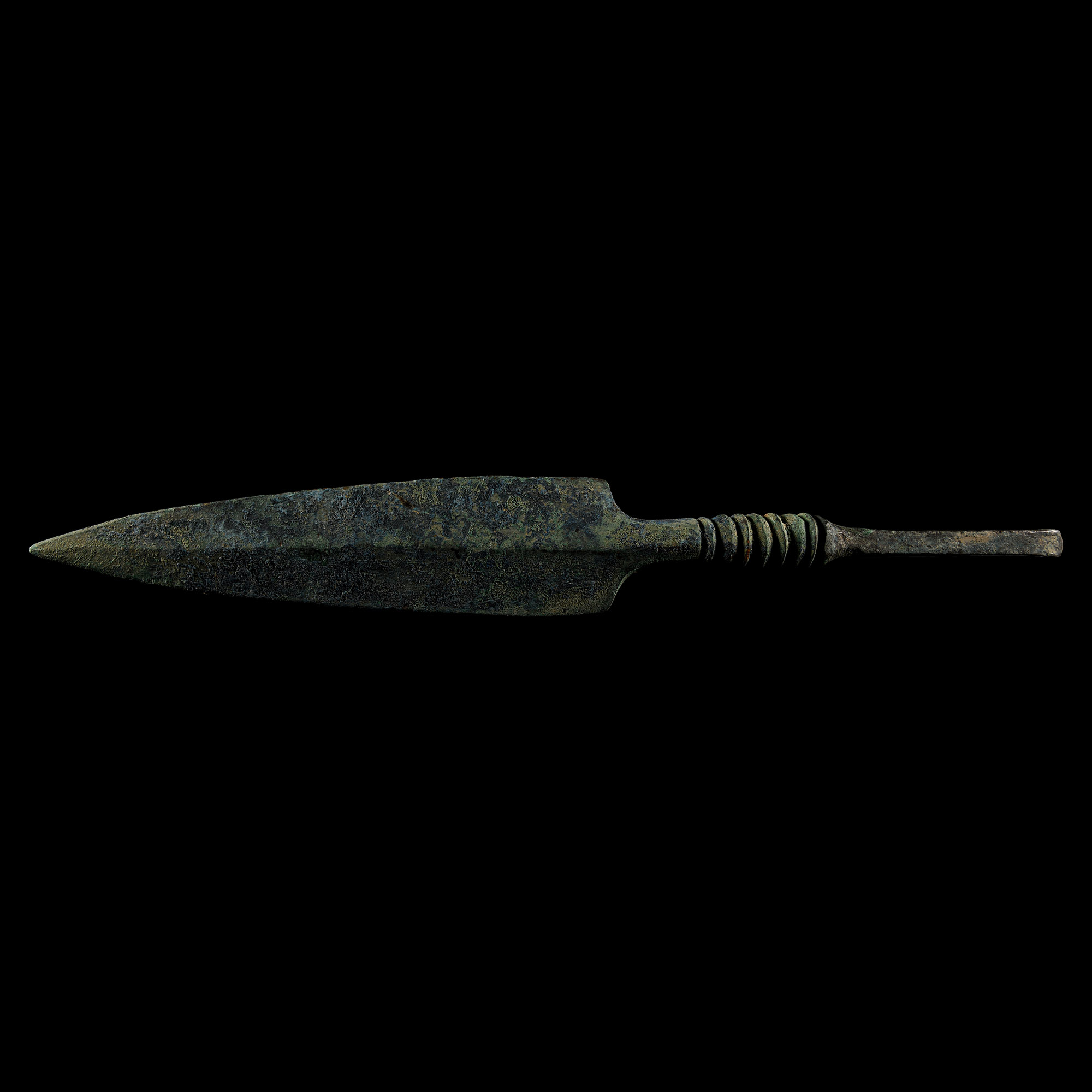
Western Asiatic Bronze Tanged Spearhead
3RD-2ND MILLENNIUM B.C.
123 5/8 in. (423 grams, 34.5 cm).
With long blade, shallow midrib, rectangular-section tang; engraved, reinforced shaft, and squared shoulders.
ProvenanceAcquired 1980-2015.
Ex Abelita family collection.
Cf. Gernez, G., L’armament en métal au Proche et Moyen-Orient: des origines a 1750 av. J.C., Paris, 2007, fig.2.91, subtype L2 F.c.
FootnotesAccording to Gernez, this spear belongs to the group of tripartite spears with bulging biconcave ogival blade, a marked stop and tang, usually curved. The tomb KCG 14 of Carchemish, yielded a similar example, in association with spears and ceramic dated from the second half of the 3rd millennium. A very similar spear comes from a tomb at Tell Mozan. A larger example with a decoration of rings in relief on the stem belongs to the λ deposit of Byblos. Another spear, of similar form, presents a decoration of vertical lines on the stem. It was found in the tomb of the Lord of the Caprids at Ebla, making it the most recent in the series (around 1750 B.C.).
CONDITIONTimeLine Auctions follows a vetting process to ensure the authenticity and legality of all items, reinforcing our commitment to integrity and responsible trading. Each antiquity, antique, and coin lot undergoes thorough examination by a vetting committee of at least ten external specialists, professional trade association members, scientists, and archaeologists: Our Vetting Process
AUCTIONS:
TimeLine is a leading auction house specialising in antiquities, ancient art, collectables, natural history, coins, medals, and books. Our auctions offer museums, collectors, historians, and enthusiasts the opportunity to acquire unique and historically significant pieces.
-
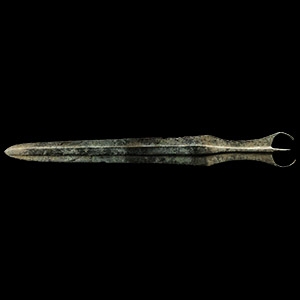
North-Western Persian Bronze Sword Blade with Horns
Circa 1st millennium B.C.Sold for (Inc. bp): £338
With curved 'horns' projecting on either side at the top of the waisted grip, blade with flat mid-rib. 325 grams, 51 cm
Acquired 1980-2015. Ex Abelita family collection.
The Luristani people produced a quantity of fine metalwork, which according to Dr Khorasani, could be due to a settled period which arose as a result of the defeat of the Elamites by the Babylonians, leaving the Luristani people in relative peace for a period of time after 1200 B.C. According to Khorasani 'A culture of innovation and experimentation flourished, and the repertoire of the Luristan smiths expanded in the period between 1150-1050 B.C.' -
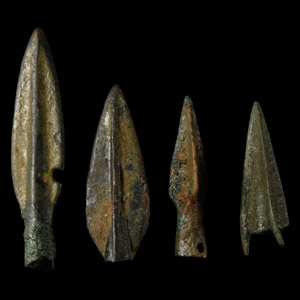
Greek Bronze Arrowhead Collection
Circa 5th-3rd century B.C.Sold for (Inc. bp): £111
Comprising: two leaf-shaped with raised midribs; one triangular with barbs; one triangular with short socket. 18 grams total, 34-52 mm
From an old UK collection, acquired on the UK art market. Property of a Shropshire private collector. -
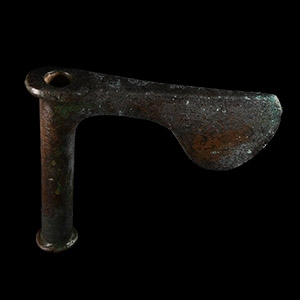
Elamite Bronze Crescentic Axehead
Mid 3rd-early 2nd millennium B.C.Estimate: £150 - 200 (+bp*)
Opening Bid: £80
With slender tubular socket, horizontal upper cheek and curved lower one, scooped profile to blade with convex cutting edge. 333 grams, 12.5 cm
Acquired 1980-2015. Ex Abelita family collection.
