Loading, please wait...

Use mousewheel to zoom in and out, click to enlarge

Details

LOT 1174

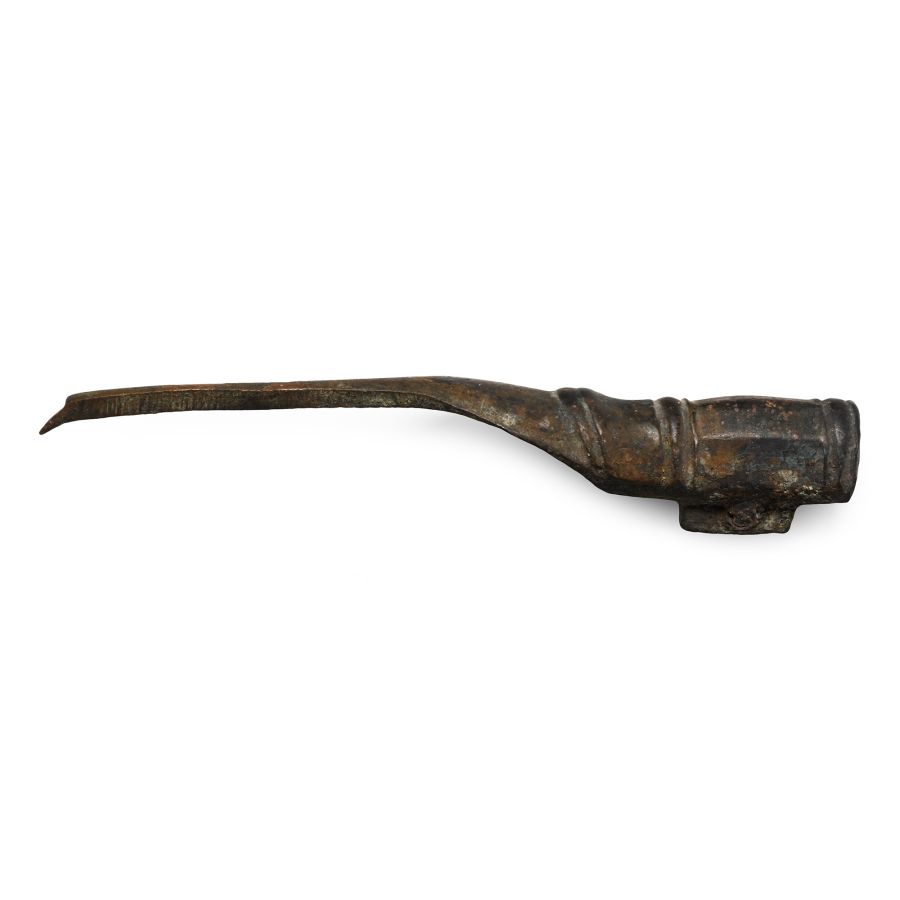
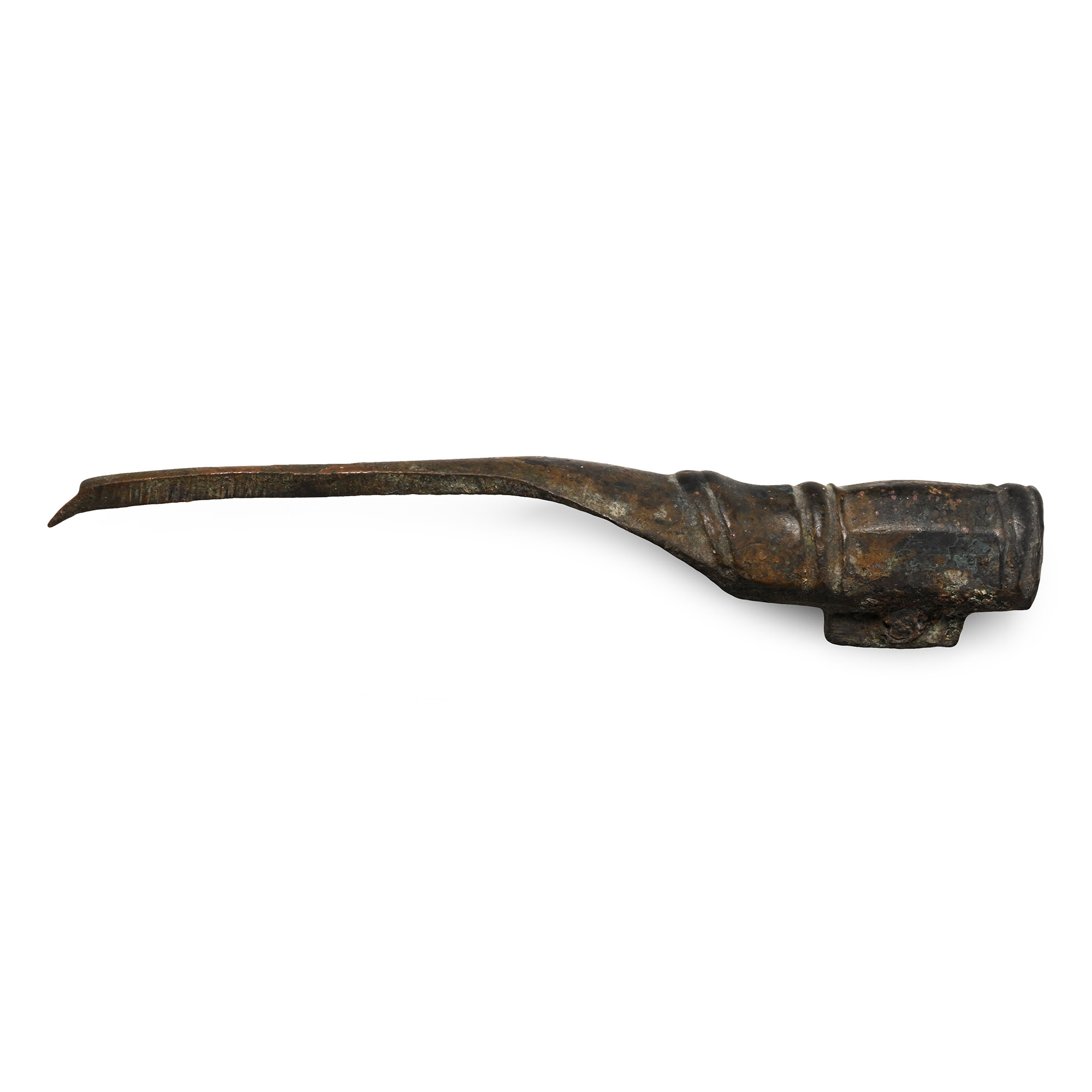
Western Asiatic Bronze Stylus

LATE 1ST MILLENNIUM A.D.

3 1/4 in. (17.8 grams, 84 mm).

Comprising a barrel-shaped facetted socket with a rivetted lug to the rear, the body extending to a tapering nib with a sharp point.

Provenance

From the collection of a gentleman, acquired on the London art market in the 1990s.

CONDITION

VETTING:

TimeLine Auctions follows a vetting process to ensure the authenticity and legality of all items, reinforcing our commitment to integrity and responsible trading. Each antiquity, antique, and coin lot undergoes thorough examination by a vetting committee of at least ten external specialists, professional trade association members, scientists, and archaeologists: Our Vetting Process


AUCTIONS:

TimeLine is a leading auction house specialising in antiquities, ancient art, collectables, natural history, coins, medals, and books. Our auctions offer museums, collectors, historians, and enthusiasts the opportunity to acquire unique and historically significant pieces.

LOT 1174

Western Asiatic Bronze Stylus

Estimate £100 - 140€120 - 160 (for guidance only)$140 - 190 (for guidance only)

Print page

RELATED LOTS

  • Large Luristan Bronze Master of Animals Bronze Finial
    Large Luristan Bronze 'Master of Animals' Bronze Finial
    8th-7th century B.C.

    Sold for (Inc. bp): £2,340

    Formed as a Master of Animals atop a collared tubular stem with flared foot; the finial composed of two goats with heads returned and a looped band at the rump, above these two birds standing looking up towards two quadrupeds each with a bird's head on the rump; each in the grip of the Master standing crowned between them; the Master with tubular body, animal-like ears, prominent nose above a small mouth and wearing collars, neck rings and tiered headdress with addorsed bovine heads; waisted socket below and flared dentilled rim; mounted on a display stand. 916 grams total, 43 cm including stand


    Acquired in Iran, 1967. Private collection, UK. Accompanied by an academic report by Dr Raffaele D'Amato. This lot has been checked against the Interpol Database of stolen works of art and is accompanied by a search certificate number no.12824-241323.

    The “Master of Animals” is a long-lived Near Eastern motif showing a central figure—human, heroic or divine—grasping two confronting beasts, usually by their necks or forelegs. First seen in late 4th–3rd millennium BC Mesopotamian seals, it spread across Iran, Anatolia and the Levant and remained current into the 1st millennium BC. Its meaning is straightforward and powerful: control over the wild, the protection of order, and the sanction of royal or divine authority. The image appears on seals, plaques and weapons, and in the round on bronze fittings and finials (notably in Luristan), where it likely marked status and carried an apotropaic force. For collectors, the type is prized for its clear silhouette and economy of form, the instant legibility of a hero mastering chaos, a theme as old as the first cities and as compelling today.

    Lot Details

  • Large Western Asiatic Silver Bracelet
    Large Western Asiatic Silver Bracelet
    1st millennium A.D.

    Sold for (Inc. bp): £286

    Penannular type with polyhedral terminals, blocks of pointillé detailing and hatching. 141 grams, 10.3 cm


    Ex property of a Dutch gentleman; formerly in an old collection formed in the 1970s.

    Lot Details

  • Large Bactrian Black Chlorite Vessel with Opposing Pairs of Serpents
    Large Bactrian Black Chlorite Vessel with Opposing Pairs of Serpents
    3rd millennium B.C.

    Sold for (Inc. bp): £8,775

    Drum-shaped vessel with reserved frieze to the outer face: pairs of opposed snakes with bodies entwined; shallow socket to each of the eyes to accept an inlay panel. 2 kg, 18 cm wide


    with Gallery Rosen Ancient Art, Tel Aviv, 1960s. Ex London, UK, gallery, 1971-early 2000s. London, UK, collection. This lot has been checked against the Interpol Database of stolen works of art and is accompanied by a search certificate no.12772-237880.

    The chlorite stone vessels of early Bactria were kidney-shaped vessels with simple geometric decoration or cylindrical like our specimen. Small cylindrical vases were used as cosmetic containers, together with chlorite cosmetic flasks.

    Lot Details

Stay up-to-date with the latest from TimeLine Auctions by joining our mailing list