
Loading, please wait...
LOT 0918
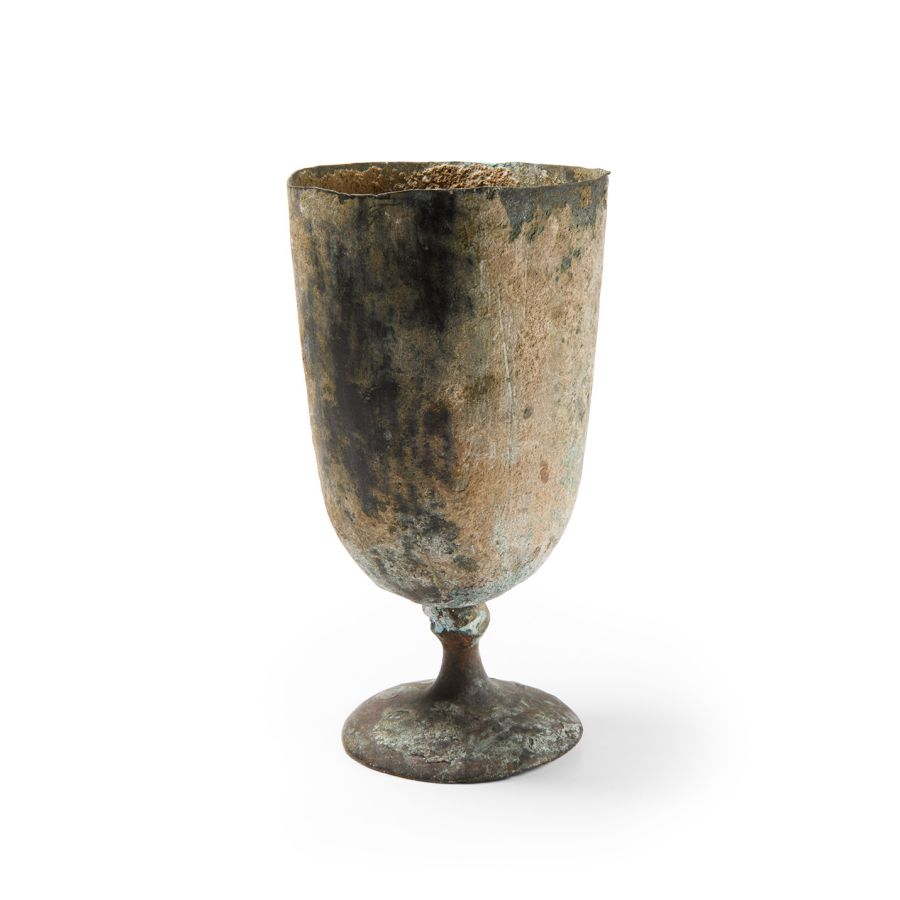
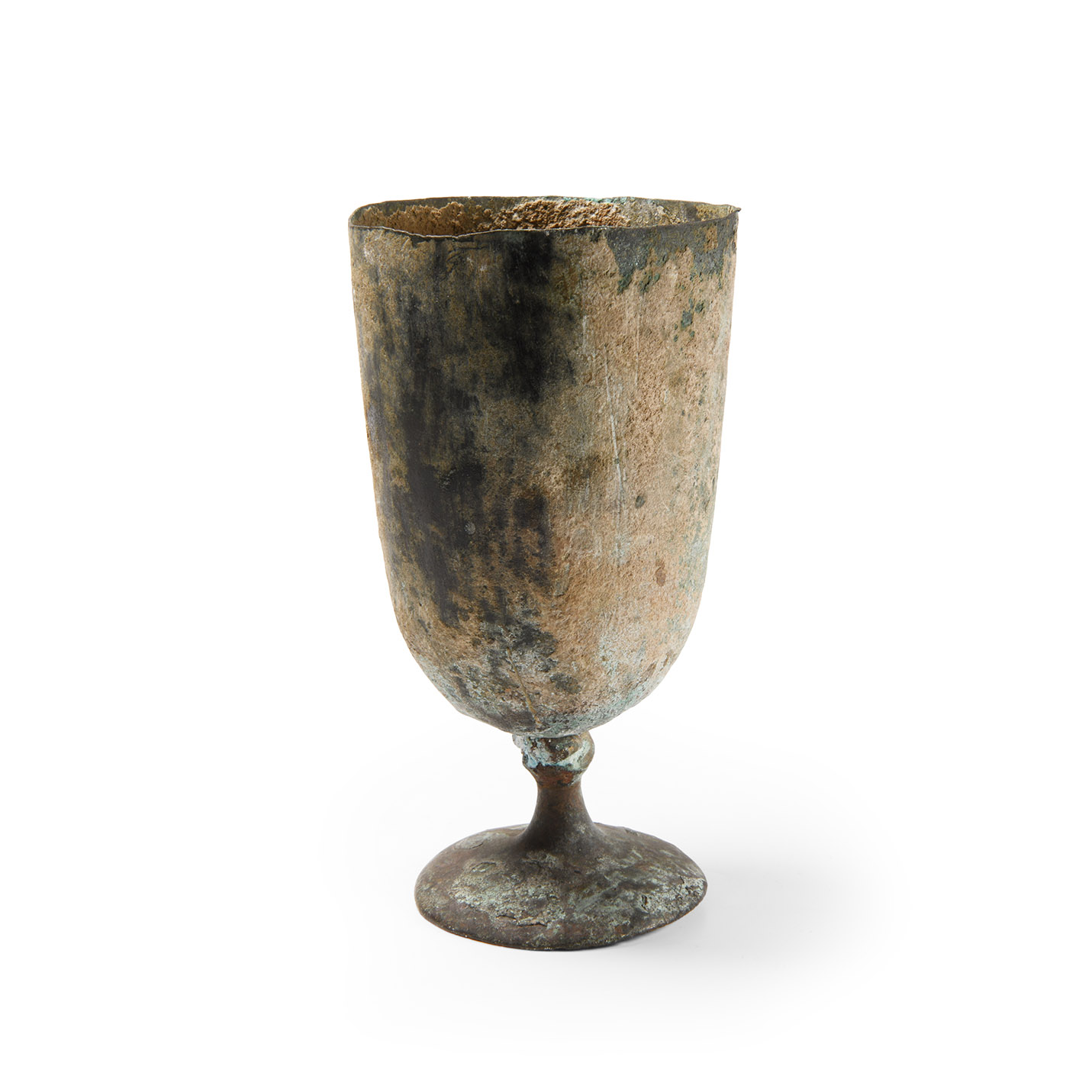
Western Asiatic Bronze Stemmed Goblet
1ST MILLENNIUM B.C.
5 1/8 in. (188 grams, 13 cm high).
Composed of a marriage of a conical bowl and foot with slender stem, decorative upper body and slightly domed everted foot.
ProvenanceEx Mayfair gallery, 1980s.
The Kusmirek Collection, UK.
TimeLine Auctions follows a vetting process to ensure the authenticity and legality of all items, reinforcing our commitment to integrity and responsible trading. Each antiquity, antique, and coin lot undergoes thorough examination by a vetting committee of at least ten external specialists, professional trade association members, scientists, and archaeologists: Our Vetting Process
AUCTIONS:
TimeLine is a leading auction house specialising in antiquities, ancient art, collectables, natural history, coins, medals, and books. Our auctions offer museums, collectors, historians, and enthusiasts the opportunity to acquire unique and historically significant pieces.
-
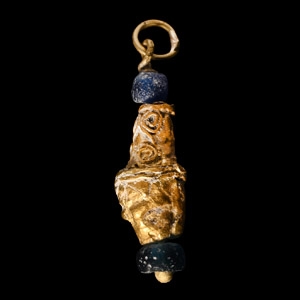
Western Asiatic Gold and Bead Pendant
1st millennium B.C.Sold for (Inc. bp): £169
Composed of a lions' head body adorned with filigree scrolls, blue glass beads above and below. 1.55 grams, 28 mm
Acquired 1970-2010. Collection of a late Japanese gentleman. -
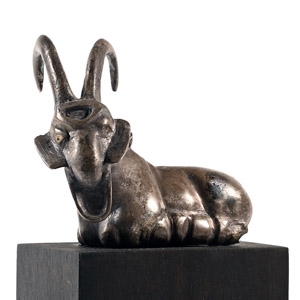
Proto-Elamite Silver Ibex Figurine
3rd millennium B.C.Sold for (Inc. bp): £7,800
Modelled in the round in a resting position with its legs folded underneath the body; the head turned to the left, large curving horns, applied glass paste for the eyes; small loop to the back; repaired and mounted on a custom-made display stand. 222 grams total, 14 cm (including base)
Ex private collection, 1960s-1970s. Accompanied by an academic report by Dr Raffaele D’Amato. Accompanied by a copy of metallurgic analytical results, written by metallurgist Dr Peter Northover (ex Department of Materials, Materials Science-Based Archaeology Group & Department of Materials, University of Oxford). This lot has been checked against the Interpol Database of stolen works of art and is accompanied by search certificate number no.11743-202215.
Like the silver-gilt mountain goat in the Boston Museum, it is possible that this figure originally had applied gilded elements. -
.jpg)
Central Asian Ziwiye Turquoise Frit Offering Basket
Circa 6th century B.C.Estimate: £1,800 - 2,400 (+bp*)
Opening Bid: £800
Conical outer body with pierced geometric panels, handle surmounted by facing quadrupeds flanking a swan at apex, horned bull's heads to either handle base. 982 grams, 23.2 cm
With the previous owner, 1990-2012. Acquired in 2012. Accompanied by an IADAA search certificate dated 9 April 2020.
