
Loading, please wait...
LOT 1338
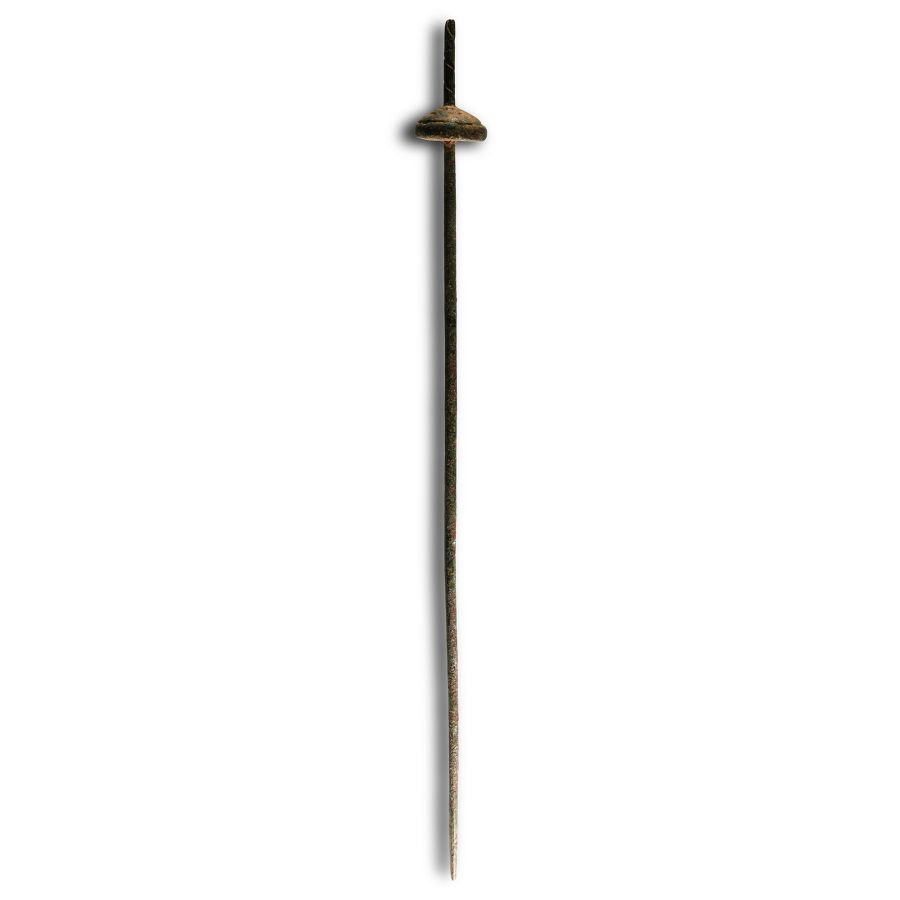
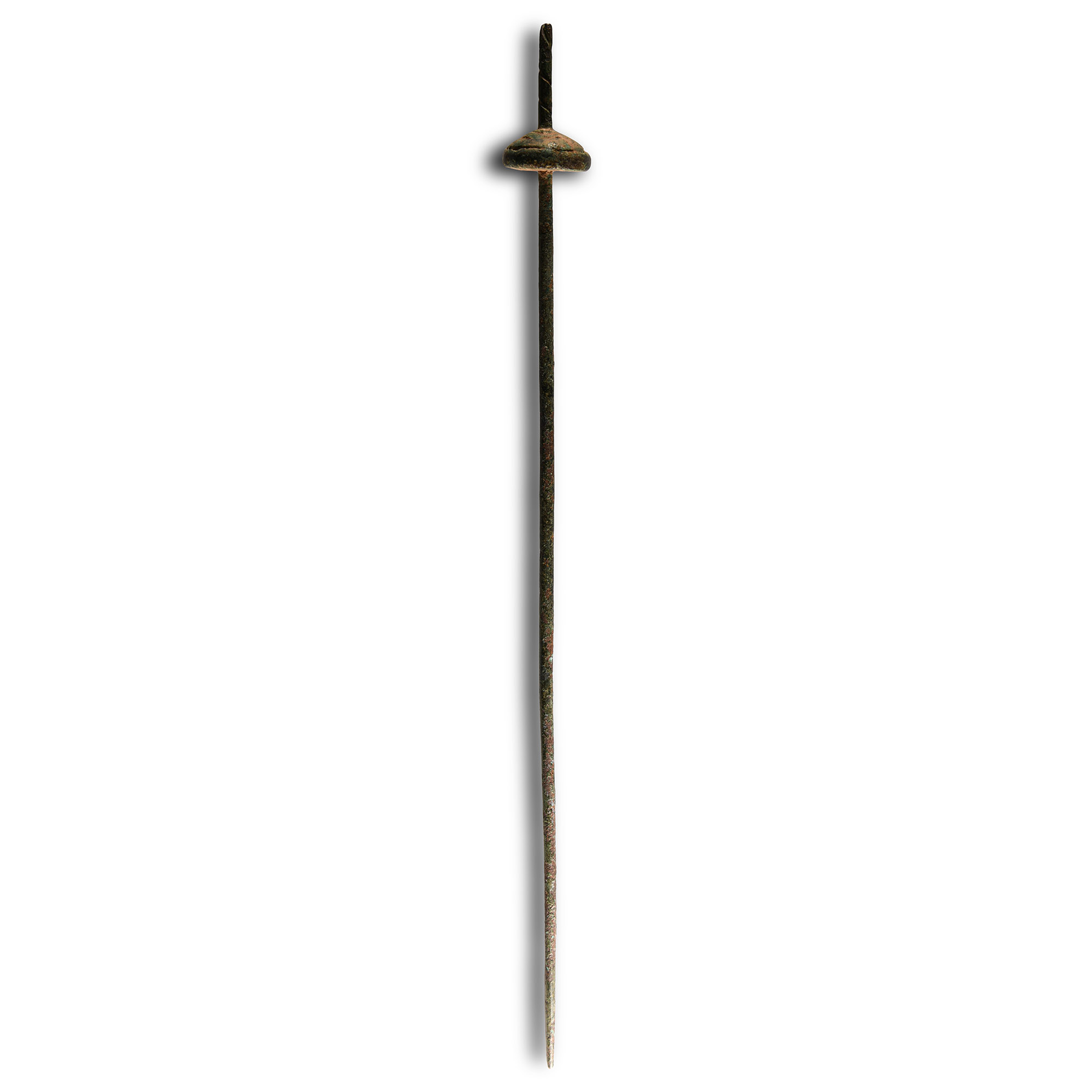
Western Asiatic Bronze Spindle Whorl on Distaff
2ND MILLENNIUM B.C.
12 5/8 in. (60 grams, 32 cm).
Distaff with spiral slot to the thicker end, separate domed whorl and tapering shank. [No Reserve]
ProvenanceCollected from 1969-1999.
From the collection of the late Mr S.M., London, UK.
Cf. Grütter, N., ‘Spindle Whorls and Other Textile Tools’ in Münger, S. (ed.), Kinneret II,2 – The Early Iron Age. Report on Finds and Findings from Tell el-‘Orēme/Tēl Kinrōt, Excavations 1994– 2008, Bern, 2020, pp.1-22, fig.6.
FootnotesSpindle whorls are one of the most durable traces of textile craft in the archaeological record. They can be found in copious quantities and diverse types. Whorls in the shape of discs, cylinders and cones of clay, bone, stone and other more precious materials are widespread in all areas and periods, evidencing the skills of craftswomen engaged in textile production.
CONDITIONTimeLine Auctions follows a vetting process to ensure the authenticity and legality of all items, reinforcing our commitment to integrity and responsible trading. Each antiquity, antique, and coin lot undergoes thorough examination by a vetting committee of at least ten external specialists, professional trade association members, scientists, and archaeologists: Our Vetting Process
AUCTIONS:
TimeLine is a leading auction house specialising in antiquities, ancient art, collectables, natural history, coins, medals, and books. Our auctions offer museums, collectors, historians, and enthusiasts the opportunity to acquire unique and historically significant pieces.
-
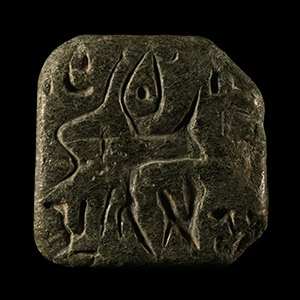
Very Large Western Asiatic Stone Stamp Seal
Circa 3000 B.C.Sold for (Inc. bp): £338
Of square shape, striated lines and locating holes on the surface; the reverse with a domed, pierced plaque. 100 grams, 51 mm
Collected from 1969-1999. From the collection of the late Mr S.M., London, UK.
Such seals can be associated with distinct communities during the Bronze Age, particularly those engaged in trade with the Indus Valley. In particular, they are associated with the presence of Mesopotamians on the Iranian plateau and the emergent elite of the Early Dynastic city-states. -
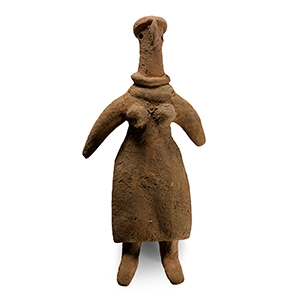
Chalcolithic Terracotta Figure
Circa 3rd millennium B.C.Estimate: £800 - 1,000 (+bp*)
Opening Bid: £400
Modelled in the round with columnar head and neck, pinched and impressed facial details, applied headdress, collar and calf-length skirt, stub arms. 173 grams, 17.5 cm high
From the property of the late Mr SM, London, UK, 1969-1999. Accompanied by a thermoluminescence analysis report no.N122k33 from Oxford Authentication. -
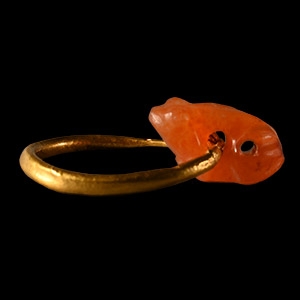
Old Babylonian Carnelian Frog Amulet on Gold Earring
20th-16th century B.C.Estimate: £1,500 - 2,000 (‡+bp*)
Opening Bid: £556
The frog modelled in the round, pierced at the middle and mounted on an asymmetrical gold hoop, possibly a marriage. 2.45 grams, 29.30 mm
Ex K.J. collection. Acquired on the North American art market, 1999. European private collection.
