
Loading, please wait...
LOT 1436
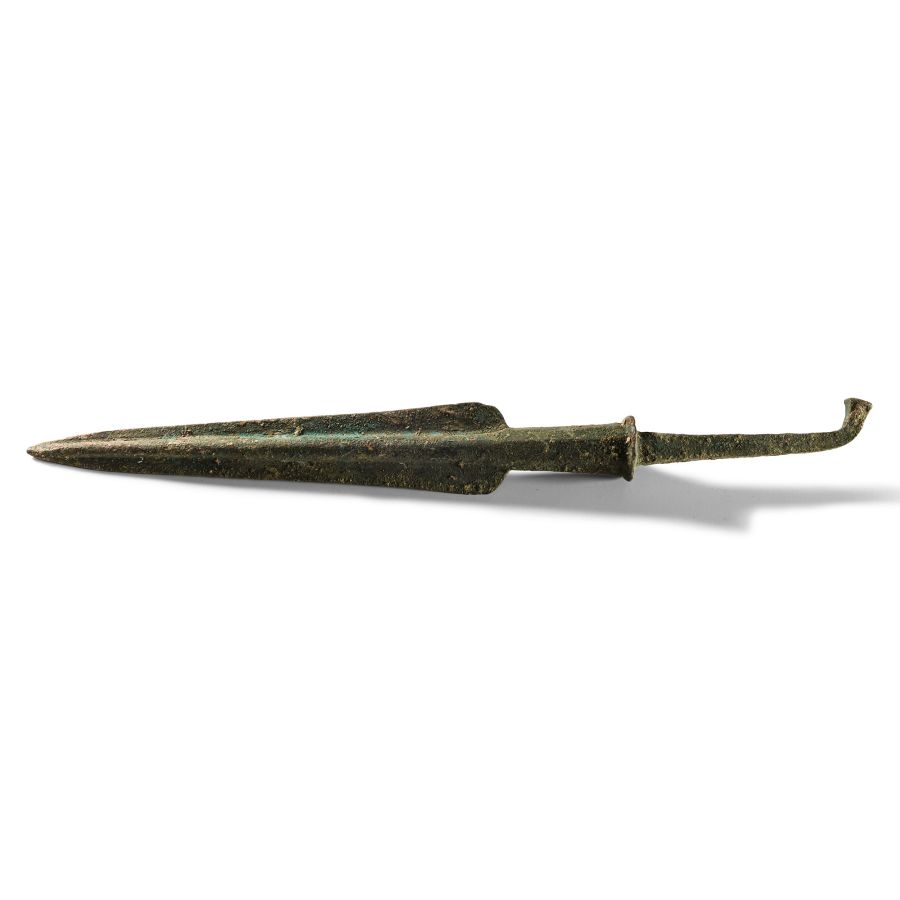
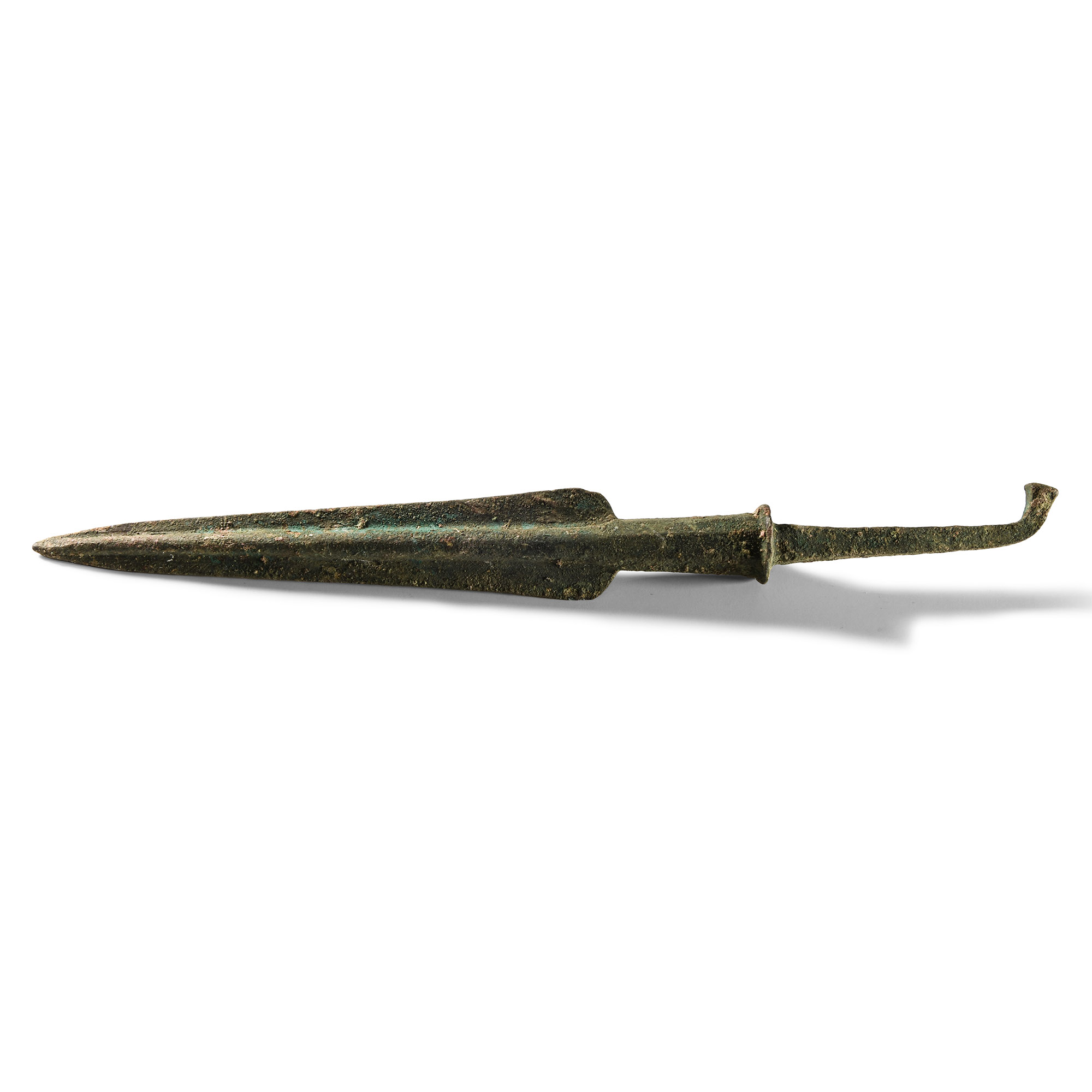
Western Asiatic Bronze Spearhead
1500-1000 B.C.
11 1/4 in. (247 grams, 28.5 cm).
With heavily ridged and tapered blade, short collared shaft and tapered bent tang with round stud terminal.
ProvenanceAcquired in Europe in 1997.
European private collection.
Khorasani, M.M., Arms and Armour from Iran. The Bronze Age to the End of the Qajar Period, Tübingen, 2006, s. cat 280, for type
CONDITIONTimeLine Auctions follows a vetting process to ensure the authenticity and legality of all items, reinforcing our commitment to integrity and responsible trading. Each antiquity, antique, and coin lot undergoes thorough examination by a vetting committee of at least ten external specialists, professional trade association members, scientists, and archaeologists: Our Vetting Process
AUCTIONS:
TimeLine is a leading auction house specialising in antiquities, ancient art, collectables, natural history, coins, medals, and books. Our auctions offer museums, collectors, historians, and enthusiasts the opportunity to acquire unique and historically significant pieces.
LOT 1436
Western Asiatic Bronze Spearhead
Estimate £300 - 400€350 - 460 (for guidance only)$410 - 540 (for guidance only)
-
Medieval Iron Arrowhead
Circa 14th-16th century A.D.Sold for (Inc. bp): £59
Composed of a rectangular-section tip with a single barb, twisted shank and a tubular socket with a single piercing. 7.85 grams, 12 cm
Found Norfolk, UK. -
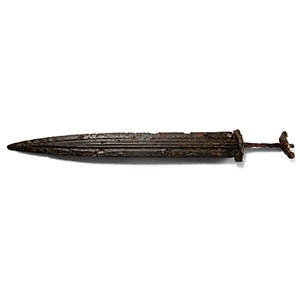
Iron Age Celtiberian Dagger
Circa 2nd-1st century B.C.Sold for (Inc. bp): £975
Hand-forged with leaf-shaped blade and three pronounced midribs, rounded shoulder, stepped lower guard square-section tang, upper guard with stepped upper face. 186 grams, 37.5 cm
Ex Mayfair gallery, London, UK, before 1999. Property of a London, UK, gentleman. Accompanied by a copy of a previous catalogue information page. -
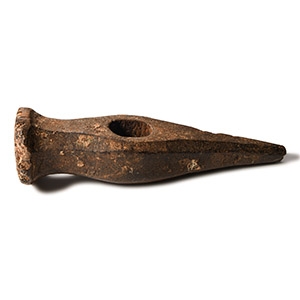
'The Customs House' Tudor Inscribed Iron Hammer-Head
16th century A.D.Sold for (Inc. bp): £156
Octagonal in section with one tapering end and one flat, circular end; square punch marks to one face in a pattern: '10B'. 2.82 kg, 24.2 cm
Found Thames foreshore, Customs House, London, UK, on Thursday 9th November 2006. Accompanied by a copy of the British Museum's Portable Antiquities Scheme (PAS) report no.LON-D6B085.
