
Loading, please wait...
LOT 1142
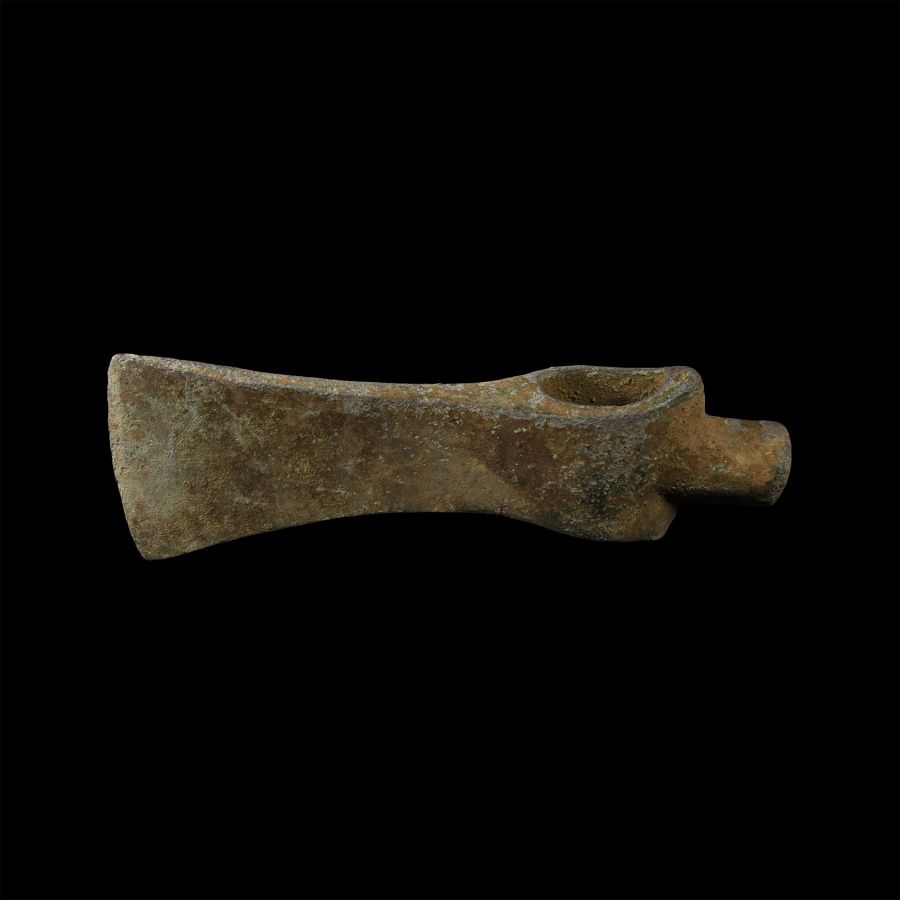
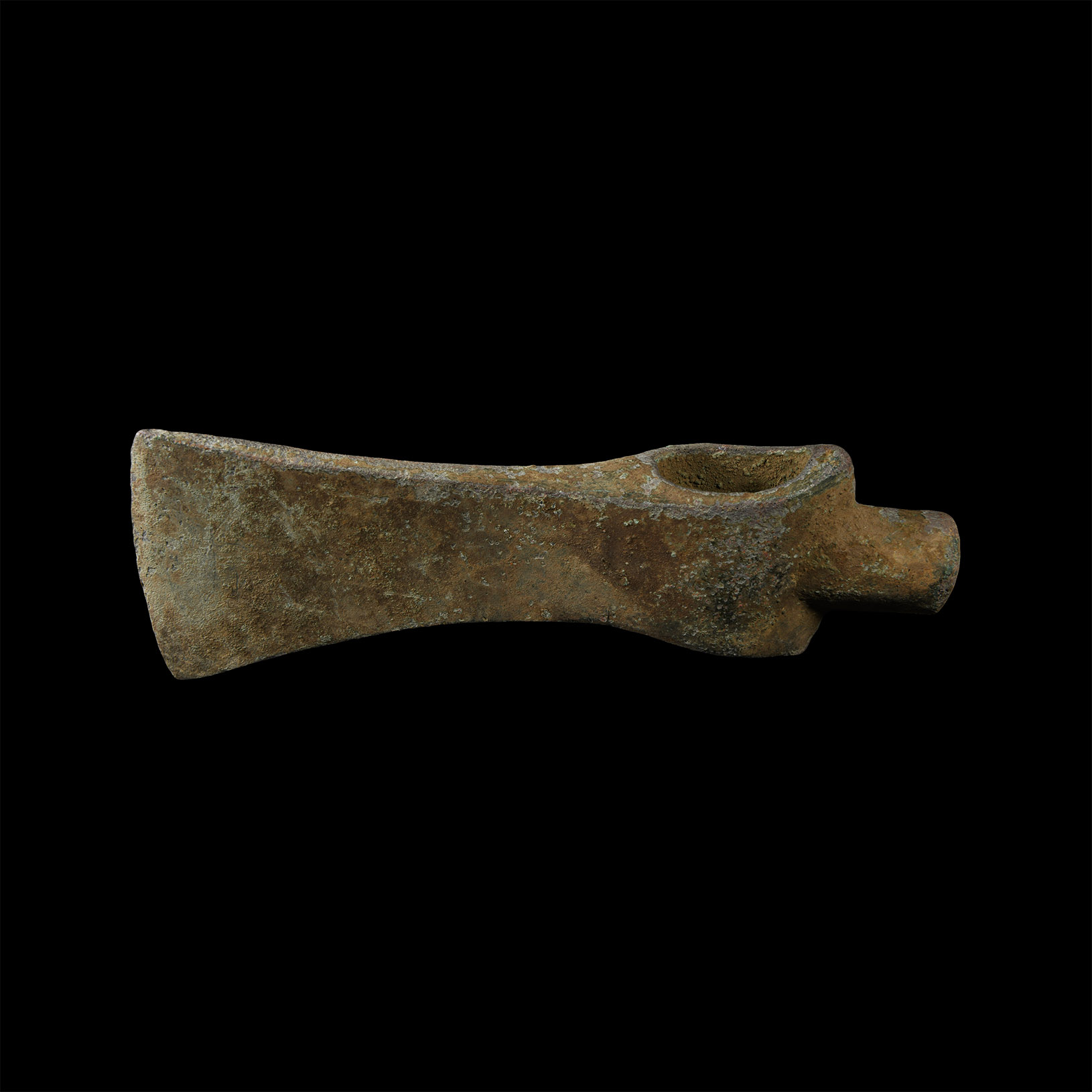
Western Asiatic Bronze Socketted Axehead
2ND-1ST MILLENNIUM B.C.
5 3/4 in. (302 grams, 14.6 cm).
The cheeks with a straight upper edge and curved lower one, elliptical socket and lozengiform butt.
ProvenanceAcquired 1980-2015.
Ex Abelita family collection.
TimeLine Auctions follows a vetting process to ensure the authenticity and legality of all items, reinforcing our commitment to integrity and responsible trading. Each antiquity, antique, and coin lot undergoes thorough examination by a vetting committee of at least ten external specialists, professional trade association members, scientists, and archaeologists: Our Vetting Process
AUCTIONS:
TimeLine is a leading auction house specialising in antiquities, ancient art, collectables, natural history, coins, medals, and books. Our auctions offer museums, collectors, historians, and enthusiasts the opportunity to acquire unique and historically significant pieces.
LOT 1142
Western Asiatic Bronze Socketted Axehead
Estimate £100 - 140€120 - 160 (for guidance only)$140 - 190 (for guidance only)
-
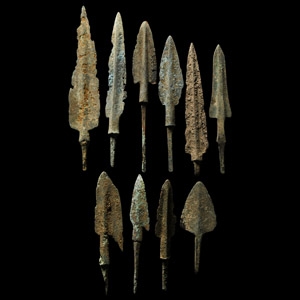
Luristan Bronze Arrowhead Group
2nd-1st millennium B.C.Estimate: £150 - 200 (+bp*)
Opening Bid: £80
Mainly composed of tanged examples of barbed and leaf-shaped types. 220 grams total, 7.5-12.5 cm
Acquired 1990s. From the collection of a late Japanese weaponry collector. -
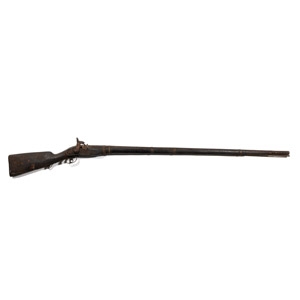
Percussion Long Musket
19th century A.D.Estimate: £200 - 300 (+bp*)
Opening Bid: £80
Long-barrelled (101cm) and slightly flared to an octagonal muzzle, bound to wood stock with six brass bands; with percussion lock (working order); fitted with iron butt plate and brass trigger guard; numbered 'D22/81' to side of butt; with a steel ramrod to underside of barrel (end ferrule of slot absent); probably native workmanship, copying European type. 4.50 kg, 150 cm overall
Acquired 1990s-early 2000s. East Anglian private collection.
Sold as an exempt item under Section 58 (2) of the Firearms Act, 1968, to be held as a curiosity or ornament. No license required but buyer must be over 18 years of age. Overseas bidders should note that, due to UK regulations governing export of all firearms, overseas buyers will need to make arrangements for shipping this lot out of the UK directly, by air freight, with a specialist company or agent. -
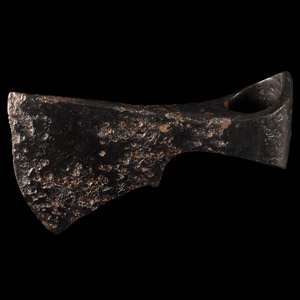
Viking Iron Bearded Axehead
9th-12th century A.D.Sold for (Inc. bp): £234
Composed of a flanged and rounded butt, shaped lower edge and convex cutting edge. 688 grams, 16.2 cm
Ex American collection, acquired 1980-200. The Kusmirek Collection, UK.
