
Loading, please wait...
LOT 1189
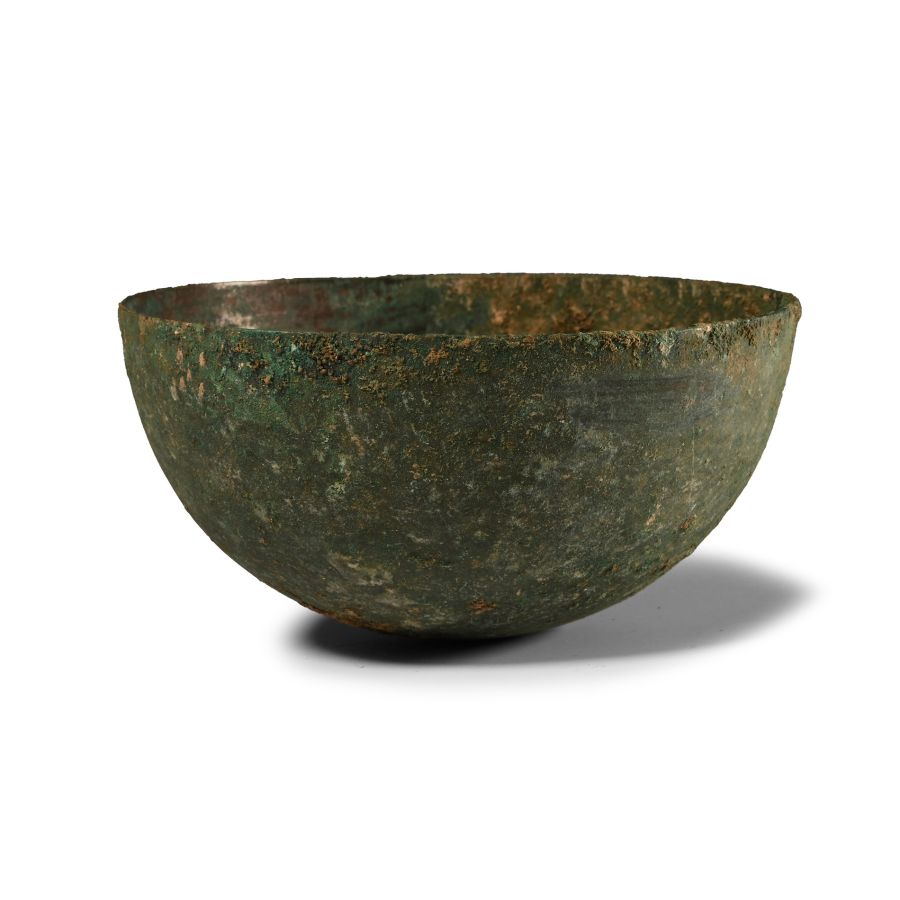
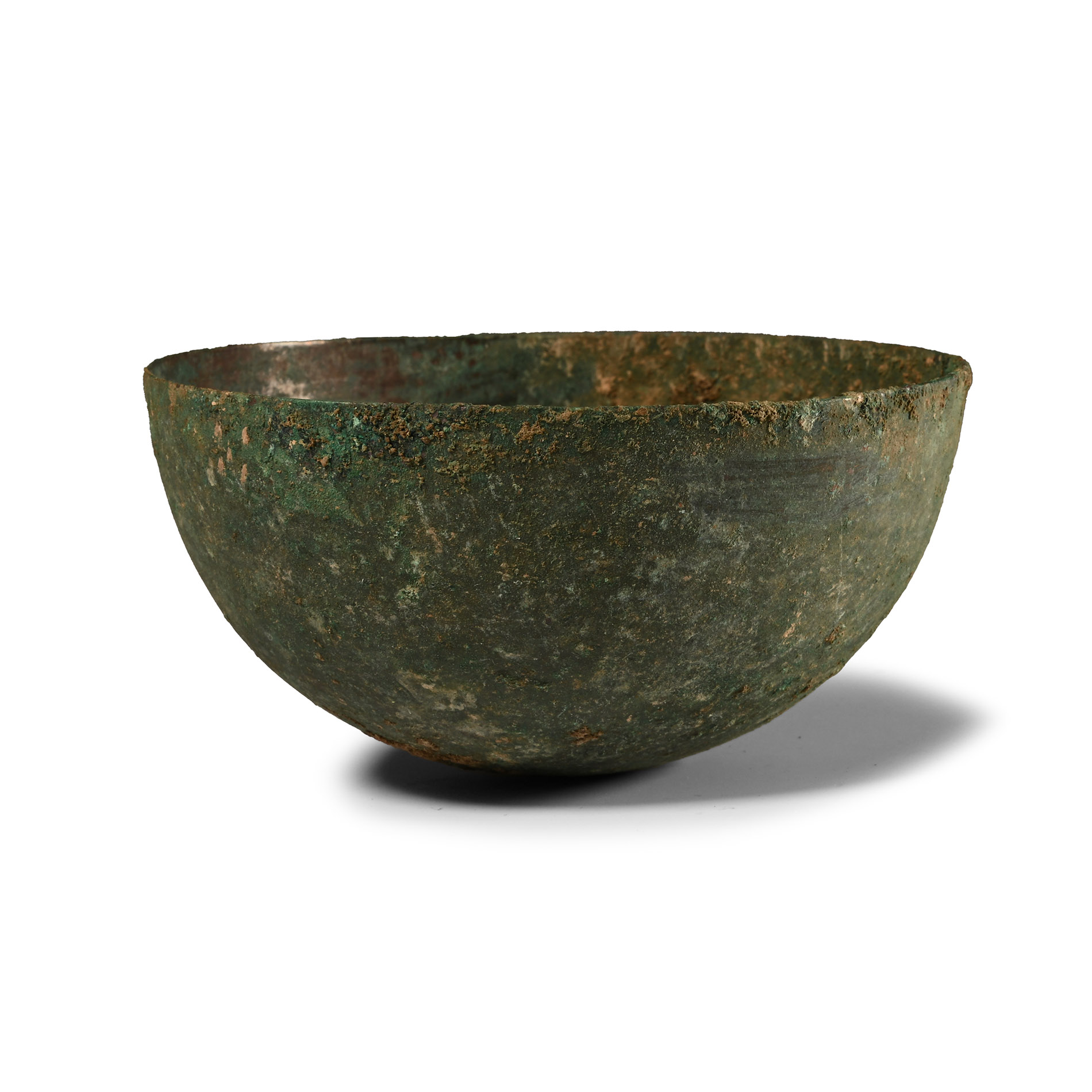
Western Asiatic Bronze Round Cup
2ND-1ST MILLENNIUM B.C.
4 1/8 in. (96 grams total, 10.5 cm).
Hemispherical in profile with flat rim. [No Reserve]
ProvenanceAcquired 1980-2015.
Ex Abelita family collection.
TimeLine Auctions follows a vetting process to ensure the authenticity and legality of all items, reinforcing our commitment to integrity and responsible trading. Each antiquity, antique, and coin lot undergoes thorough examination by a vetting committee of at least ten external specialists, professional trade association members, scientists, and archaeologists: Our Vetting Process
AUCTIONS:
TimeLine is a leading auction house specialising in antiquities, ancient art, collectables, natural history, coins, medals, and books. Our auctions offer museums, collectors, historians, and enthusiasts the opportunity to acquire unique and historically significant pieces.
-
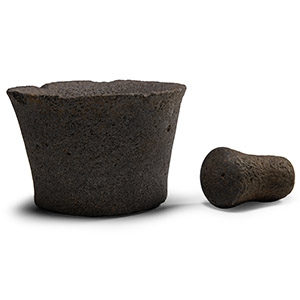
Western Asiatic Basalt Mortar and Pestle
1st millennium B.C.Sold for (Inc. bp): £98
Squat mortar with slightly everted rim, stub pestle with rounded grinding face. 852 grams total, 5.8-11 cm
From a collection acquired on the UK art market from various auction houses and collections mostly before 2000. From an important Cambridgeshire estate; thence by descent. -
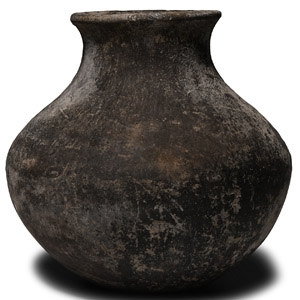
Western Asiatic Grey Ware Storage Vessel
Late Bronze Age, 1st millennium B.C.Sold for (Inc. bp): £85
With biconvex profile, broad rounded underside and trumpet-shaped mouth. 823 grams, 16.3 cm wide
From a collection acquired on the UK art market from various auction houses and collections mostly before 2000. From an important Cambridgeshire estate; thence by descent. -
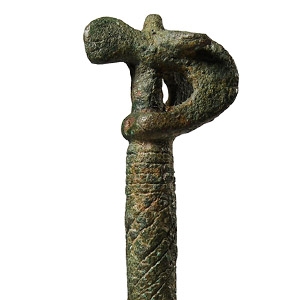
Large Western Asiatic Bronze Animal-Headed Cloak Pin
1st millennium B.C.Sold for (Inc. bp): £143
With barrel-shaped upper and tapering body, modelled with coil detailing around the upper body, tiered rings above and finial of an ibex's head with horns returned to form a collar; mounted on a custom-made stand. 347 grams total, 25.5 cm including stand
From a collection acquired on the UK art market from various auction houses and collections mostly before 2000. From an important Cambridgeshire estate; thence by descent.
