
Loading, please wait...

LOT 1262
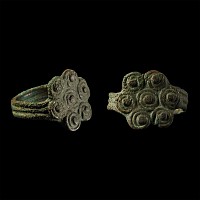
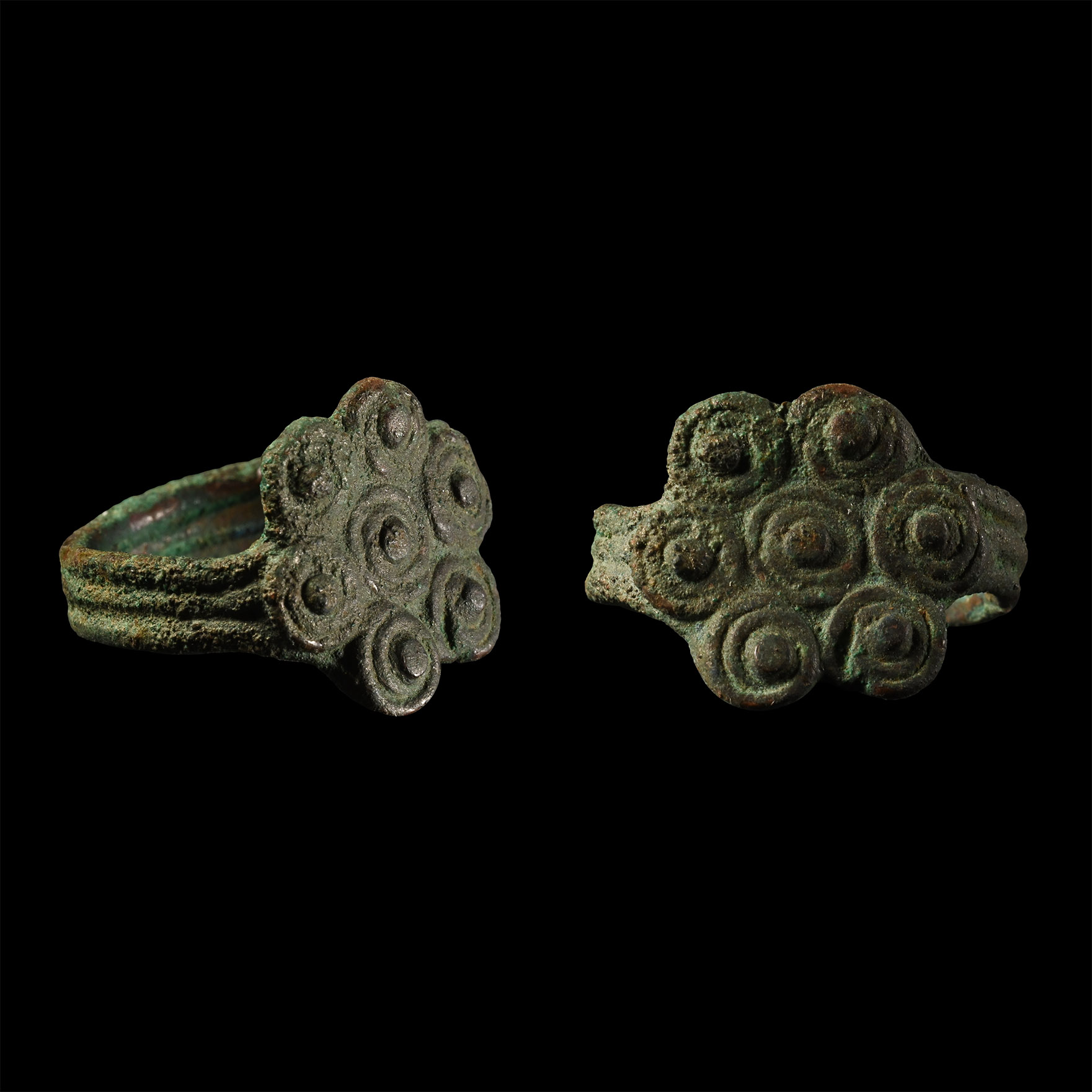
Western Asiatic Bronze Ring with Geometric Circles
1ST MILLENNIUM B.C.
7/8 in. (5.59 grams, 22.79 mm overall, 18.72 mm internal diameter (approximate size British O, USA 7, Europe 14.98, Japan 14)).
With a ribbed hoop, the bezel formed of seven circlets with central pellets, arranged as a six-petalled flower. [No Reserve]
ProvenanceAcquired 1980-2015.
Ex Abelita family collection.
TimeLine Auctions follows a vetting process to ensure the authenticity and legality of all items, reinforcing our commitment to integrity and responsible trading. Each antiquity, antique, and coin lot undergoes thorough examination by a vetting committee of at least ten external specialists, professional trade association members, scientists, and archaeologists: Our Vetting Process
AUCTIONS:
TimeLine is a leading auction house specialising in antiquities, ancient art, collectables, natural history, coins, medals, and books. Our auctions offer museums, collectors, historians, and enthusiasts the opportunity to acquire unique and historically significant pieces.
-
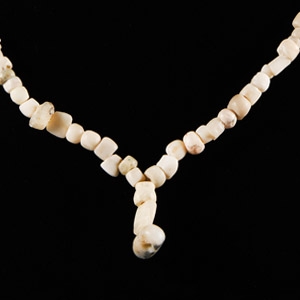
Western Asiatic Stone and Other Bead Necklace String
1st millennium B.C. and laterSold for (Inc. bp): £13
Restrung with three central feature beads; composed of graduated beads of various types of stone, glass and shell. 18.66 grams, 46 cm long
UK gallery, early 2000s.
Similar beads were found during the excavations of the royal tombs of Nimrud. Thousands of beads were discovered in the sarcophagi, including those of Nimrud’s Queens; they probably originally formed part of wide collars with multiple strands. -
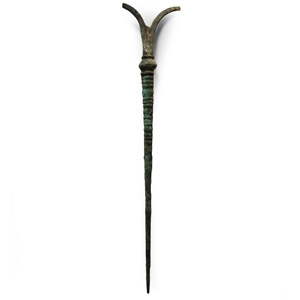
Luristan Bronze Cloak Pin
13th-7th century B.C.Sold for (Inc. bp): £33
With tapering round-section shank, stepped profile to the upper section and biconvex bulb; divergent antenna arms above. 60 grams total, 22.5 cm
From a 1990s German collection. Ex London, UK, gallery. -
-s.jpg)
Assyrian Bronze Arm and Hand Type Brooch
Circa 7th-5th century B.C.Sold for (Inc. bp): £59
The bow decorated with circumferential grooves, one arm ending with the partially preserved wire coil; the catchplate in the form of a hand engraved with an X; accompanied by a display frame with information ticket. 186 grams total, 10 x 10.3 cm including frame
Ex Robin Symes Gallery, London, UK, 1990s. From a Leicestershire, UK, collection.
Fibulae with triangular bows (type 3 of Curtis classification) were the most common in Assyria. At least 66 bronze examples have been found at Nimrud, 32 in the graves and tombs at Ashur, 14 at Kouyunjik (some of them represented only by fragments), three at Nebbi Yunus, six at Khorsabad, three at Sharif Khan, all fragmentary, and single examples at Tell Billa and Tell al Rimah.
