
Loading, please wait...
LOT 1214
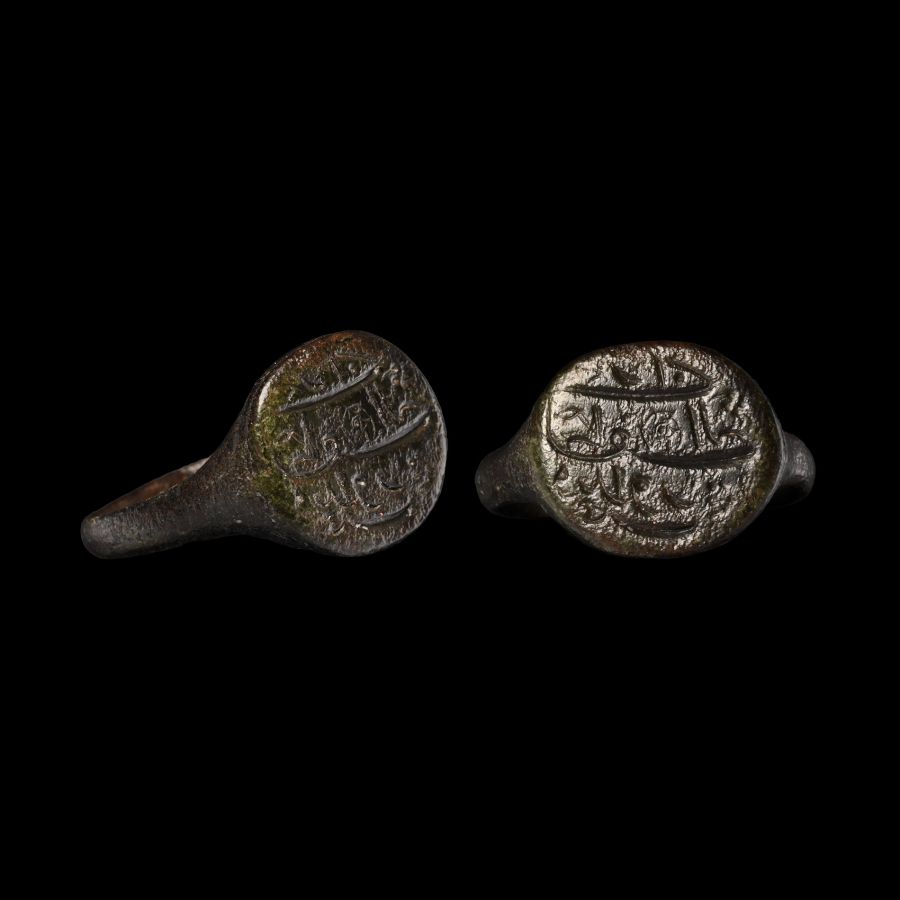
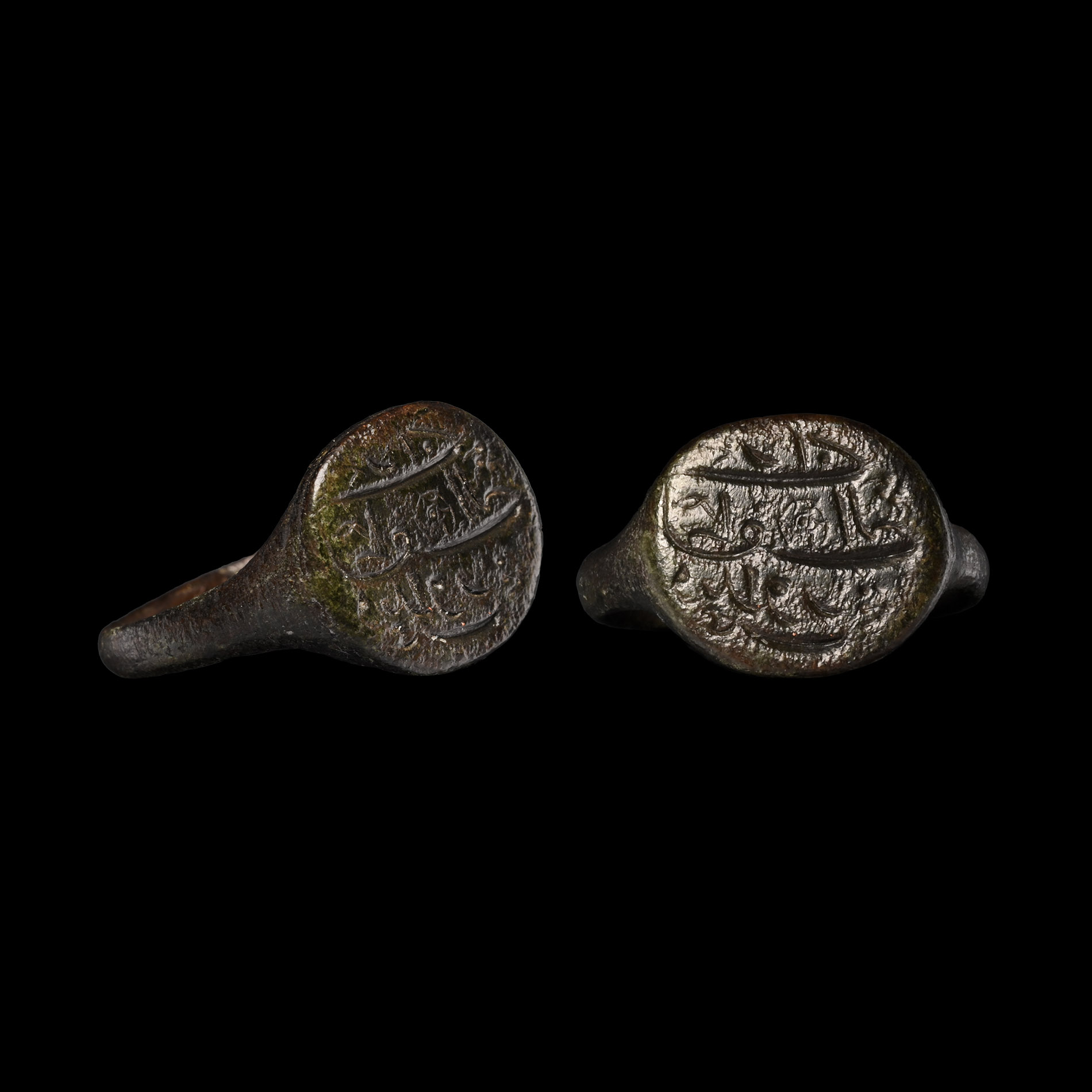
Western Asiatic Bronze Ring with Calligraphic Inscription
CIRCA 15TH CENTURY A.D.
7/8 in. (6.21 grams, 22.86 mm overall, 16.99 mm internal diameter (approximate size British O, USA 7, Europe 14.98, Japan 14)).
Comprising a narrow hoop with bulb to the underside, discoid bezel with calligraphic nastaliq-script legend; possibly Timurid period. [No Reserve]
ProvenancePrivate collection formed since the 1940s.
UK art market.
Property of an Essex, UK, gentleman.
Cf. Chadour, A.B., Rings. The Alice and Louis Koch Collection, volume I, Leeds, 1994, item 533, for type.
CONDITIONTimeLine Auctions follows a vetting process to ensure the authenticity and legality of all items, reinforcing our commitment to integrity and responsible trading. Each antiquity, antique, and coin lot undergoes thorough examination by a vetting committee of at least ten external specialists, professional trade association members, scientists, and archaeologists: Our Vetting Process
AUCTIONS:
TimeLine is a leading auction house specialising in antiquities, ancient art, collectables, natural history, coins, medals, and books. Our auctions offer museums, collectors, historians, and enthusiasts the opportunity to acquire unique and historically significant pieces.
LOT 1214
Western Asiatic Bronze Ring with Calligraphic Inscription
Sold for (Inc. bp): £20
-

Western Asiatic Bronze Pendant with Cross
1st millennium B.C.Sold for (Inc. bp): £104
Ellipsoid loop developing to a short shank, biconvex bulb with eight vents and four stub arms, short shank below and lentoid loop with stub arms; possibly a liturgical thurible censer. 31 grams, 75 mm
From a collection acquired on the UK art market from various auction houses and collections mostly before 2000. From an important Cambridgeshire estate; thence by descent. -
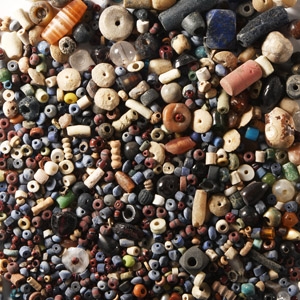
Western Asiatic Mixed Stone and Glass Necklace Bead Collection
1st millennium B.C. and laterSold for (Inc. bp): £234
Comprising a large quantity of variously shaped beads in lapis lazuli, carnelian, agate, glass and other materials. 87.1 grams total, 2-21 mm
UK gallery, early 2000s.
Glass is the premier bead material. Invented in the Middle East around 2500 B. C., glass making spread slowly. There are mainly two types of beads, drawn beads (when the tubes are cut in a short segments, which are usually agitated over heat to smooth off the sharp edges) or wound beads (made by wrapping molten glass around a rock, stick or wire. Once the bead is built up, it can be further pressed or paddled into shape, placed in a mold, or decorated with other colours of glass. -

Miniature Sumerian Terracotta 'Bulla Envelope' with Impressed Decoration
15th-16th century B.C.Sold for (Inc. bp): £520
Complete and of irregular pyramidal form, containing clay 'tokens'; the outer face impressed with enigmatic motifs. 19.8 grams, 32 mm
Specialised collection of cuneiform texts, the property of a London gentleman and housed in London before 1988. Thence by descent to family members. Examined by Professor Wilfrid George Lambert FBA (1926-2011), historian, archaeologist, and specialist in Assyriology and Near Eastern archaeology, in the late 1980s and early 1990s. The collection is exceptional for the variety of types, including some very rare and well preserved examples. Accompanied by an illustrated two page previous cataloguing document.
