
Loading, please wait...
_900x900.jpg "Western Asiatic Bronze Ring with Armed Warrior")
_200x200.jpg "Western Asiatic Bronze Ring with Armed Warrior")
.jpg "Western Asiatic Bronze Ring with Armed Warrior")
LOT 1154
Western Asiatic Bronze Ring with Armed Warrior
MID 1ST MILLENNIUM B.C.
3/4 in. (2.06 grams, 18.52 mm overall, 15.90 mm internal diameter (approximate size British I 1/2, USA 4 1/2, Europe 8.07, Japan 7)).
The slender hoop with worn remains of decorative notching to shoulders, oval bezel engraved with stylised standing figure holding shield and a spear or other weapon. [No Reserve]
ProvenancePrivate collection formed since the 1940s.
UK art market.
Property of an Essex gentleman.
TimeLine Auctions follows a vetting process to ensure the authenticity and legality of all items, reinforcing our commitment to integrity and responsible trading. Each antiquity, antique, and coin lot undergoes thorough examination by a vetting committee of at least ten external specialists, professional trade association members, scientists, and archaeologists: Our Vetting Process
AUCTIONS:
TimeLine is a leading auction house specialising in antiquities, ancient art, collectables, natural history, coins, medals, and books. Our auctions offer museums, collectors, historians, and enthusiasts the opportunity to acquire unique and historically significant pieces.
-
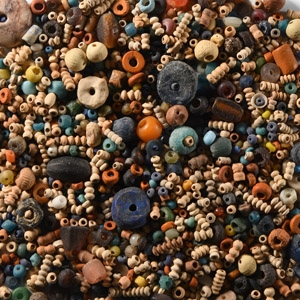
Western Asiatic Mixed Bead Group
1st millennium B.C. and laterSold for (Inc. bp): £111
A mix of Asian, African, faience, terracotta, stone and shell beads. 65 grams total, 1-16 mm
Acquired 1980-2015. Ex Abelita family collection. -
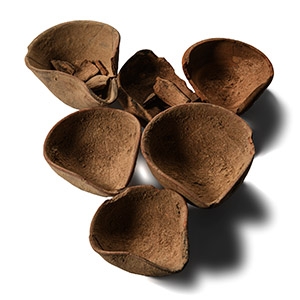
Canaanite Terracotta Lamp Fragment Group
Circa 1550-1200 B.C.Sold for (Inc. bp): £78
Comprising wheel-made buff clay oil lamps with classic 'pinched' nozzle and rounded bottoms; repaired. 323 grams total, 75-88 mm
UK gallery, early 2000s. -
.jpg)
Western Asiatic Gold Bead Group
7th-6th century B.C.Estimate: £500 - 700 (+bp*)
Opening Bid: £275
Mixed group beads of melon, oblate, and other types. 9.90 grams, 7-13 mm
Collected from 1969-1999. From the collection of the late Mr S.M., London, UK.
In the Phoenician civilization, there are numerous necklaces documenting a varied range of combinations of multiform beads with a prevalence of gold and silver pendants.
